
Already eaten — what now?
For dogs and cats
After a few pieces of plain popcorn with no symptoms, observation is reasonable. Keep the package and check the ingredients of any prepared or flavoured product. Call a veterinarian straight away for chocolate or onion or garlic powder. Do not induce vomiting yourself.
Variants and ingredients
Plain air-popped popcornFor dogs and cats: Acceptable
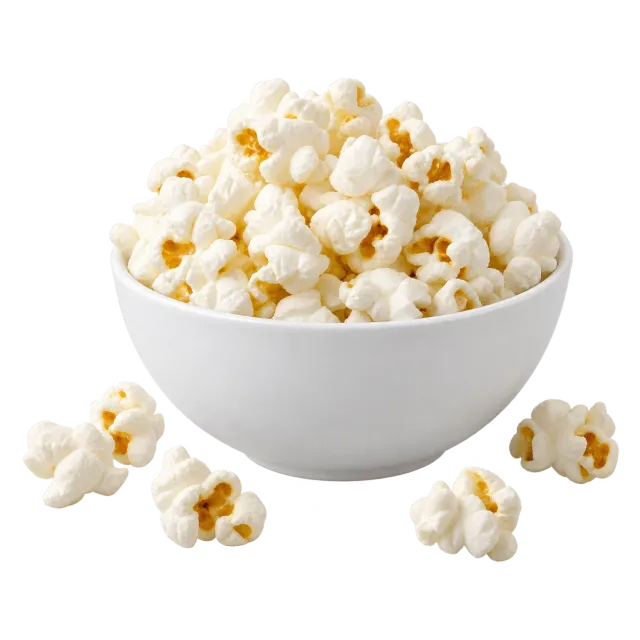
Fully popped kernels made with hot air and no salt, fat, sugar, sweeteners or seasoning.
For dogs and cats
Conditions and restrictions
Offer only a few fully popped pieces made with hot air and no salt, fat, sugar or seasoning. Remove hard unpopped kernels. All treats combined should provide less than 10% of daily calories. Ask your veterinarian first if your pet is on a prescribed diet.
Benefits
An optional small treat. Popcorn does not need to be added to a complete diet for health benefits.
Risks
- A large serving of unfamiliar food may upset the gut, and regular extra calories can lead to weight gain.
- A hard unpopped kernel can lodge between teeth, damage a tooth or cause choking.
Already eaten — what now?
If your pet ate a few pieces of plain popcorn and seems normal, remove the rest and observe. Call your veterinarian for vomiting, diarrhoea, pain or reduced appetite. Choking or breathing difficulty needs immediate help.
With salt or fatFor dogs and cats: With restrictions
Salted, buttered, cinema or microwave popcorn with known ingredients and no chocolate or dangerous seasonings.
For dogs and cats
Conditions and restrictions
Do not deliberately offer it. This variant covers popcorn with a little salt, butter or oil, but no chocolate, cocoa, onion, garlic or other dangerous additions. A prepared product needs its full ingredient list checked.
Benefits
No advantage over plain popcorn.
Already eaten — what now?
After a few pieces with no dangerous additions and no symptoms, observe and leave water available. Call a veterinarian if a large amount was eaten or the ingredients are unknown. Seek urgent advice for repeated vomiting, pain, intense thirst, weakness or unsteady walking. Do not force water or induce vomiting.
For dogs
Risks
- Extra salt and fat can cause digestive upset; a large amount of salt is dangerous.
- Fatty food can trigger pancreatitis in dogs, especially those predisposed to it.
For cats
Risks
- Extra salt and fat can cause digestive upset; a large amount of salt is dangerous.
Sweet without toxic additionsFor dogs and cats: With restrictions
Popcorn with sugar, syrup or a simple caramel coating when the full recipe contains no chocolate, cocoa, xylitol, raisins, nuts or spices.
For dogs and cats
Conditions and restrictions
Do not deliberately offer it. This variant covers only popcorn with sugar or syrup and a little fat or salt, with no chocolate, cocoa, xylitol, raisins, nuts or spices. Check the full ingredient list.
Benefits
There is no benefit that justifies offering sweet popcorn.
Risks
- Sugar, fat and extra calories may cause digestive upset and contribute to weight gain.
Already eaten — what now?
After a few pieces with known simple ingredients and no symptoms, observe. If a large amount was eaten, the ingredients are unknown or the product was sugar-free, keep the package and call a veterinarian. Vomiting, pain, weakness, unsteady walking, tremors or seizures need urgent care. Do not induce vomiting.
With chocolate or cocoaFor dogs and cats: Dangerous · Urgent help needed
Popcorn with milk, dark or white chocolate, cocoa powder or chocolate coating.
For dogs and cats
Conditions and restrictions
Do not offer popcorn with chocolate, cocoa powder or chocolate coating. The coating colour does not establish the risk; the chocolate type, amount and pet’s weight matter.
Benefits
There is no benefit that justifies offering chocolate popcorn.
Risks
- Theobromine and caffeine can cause vomiting, agitation, a fast or abnormal heart rhythm, tremors and seizures.
Already eaten — what now?
Remove what remains and call a veterinarian straight away without waiting for symptoms. Give the species, weight, chocolate type, approximate amount and time; keep the package. Do not induce vomiting yourself. For seizures, collapse or breathing difficulty, leave for an open veterinary clinic immediately.
With onion or garlicFor dogs and cats: Dangerous · Urgent help needed
Flavoured popcorn containing any onion, garlic, leek, chives, powder or dried flakes.
For dogs and cats
Conditions and restrictions
Do not offer popcorn containing onion, garlic, leek, chives, or powders or dried flakes made from these plants. Cooking does not remove the risk.
Benefits
There is no benefit that justifies offering this seasoning.
Already eaten — what now?
Remove what remains and call a veterinarian straight away, even if your pet seems well. Give the species, weight, time, possible amount and full seasoning ingredients. Do not induce vomiting yourself. For weakness, pale gums, rapid breathing, dark urine, jaundice or collapse, go to an open veterinary clinic immediately.
For dogs
Risks
- Allium compounds can cause oxidative red blood cell damage and haemolytic anaemia; signs may take several days to appear.
For cats
Risks
- Allium compounds can cause oxidative red blood cell damage and haemolytic anaemia; signs may take several days to appear.
- Cats are more susceptible to Allium toxicosis than dogs.
Conditions and risks
For dogs and cats
Conditions and restrictions
Check the cooking method and full ingredient list first. Only a few fully popped pieces of plain air-popped popcorn are suitable. Do not offer a seasoned mix until every addition has been checked.
Benefits
An optional small treat. Popcorn does not need to be added to a complete diet for health benefits.
Risks
- Salt, fat, sugar and serving size change the risk, while hard unpopped kernels may injure the mouth or cause choking.
- Chocolate and onion or garlic powder make the product dangerous.
This card covers food-grade popcorn. It is made from corn, but its form and additions need separate assessment. Plain cooked kernels and the cob are covered in our corn card.
If the popcorn was noticeably salty or your pet ate a large serving, assess the amount and leave water available. Our salt card explains what to do after excess sodium.
Chocolate coating calls for the steps in our chocolate card. Onion or garlic powder in cheese and other seasonings is dangerous; our garlic card explains the risk.
Sources
- ASPCA: Sharing is Caring, Foods You Can Safely Share with Your Pet
- Pet Poison Helpline: What are some foods safe to feed pets?
- WSAVA: Feeding treats to your dog
- WSAVA: Feeding treats to your cat
- de-Oliveira et al., 2008: Effects of six carbohydrate sources in cats
- Gajda et al., 2005: Corn hybrid and nutrient digestibility in dogs
- Merck Veterinary Manual: Salt Toxicosis in Animals
- Merck Veterinary Manual: Pancreatitis in Dogs and Cats
- Merck Veterinary Manual: Chocolate Toxicosis in Animals
- Merck Veterinary Manual: Garlic and Onion (Allium spp) Toxicosis in Animals
- ASPCA: Is It Ever Safe to Induce Vomiting?
- Cats Protection: Feeding your cat
Comments
No comments yet.