
Already eaten — what now?
For dogs and cats
Urgent help neededRemove what remains and call a veterinarian straight away, even if your pet looks well. Signs of anaemia can take several days to appear. Give the species, weight, product form, possible amount and time eaten. Keep the package or recipe for a dish or seasoning. Do not induce vomiting or give home remedies unless a veterinarian instructs you. Leave for an open clinic immediately if you notice weakness, pale gums, fast breathing, dark urine, jaundice or collapse.
Variants and ingredients
Fresh or cooked garlicFor dogs and cats: Dangerous · Urgent help needed
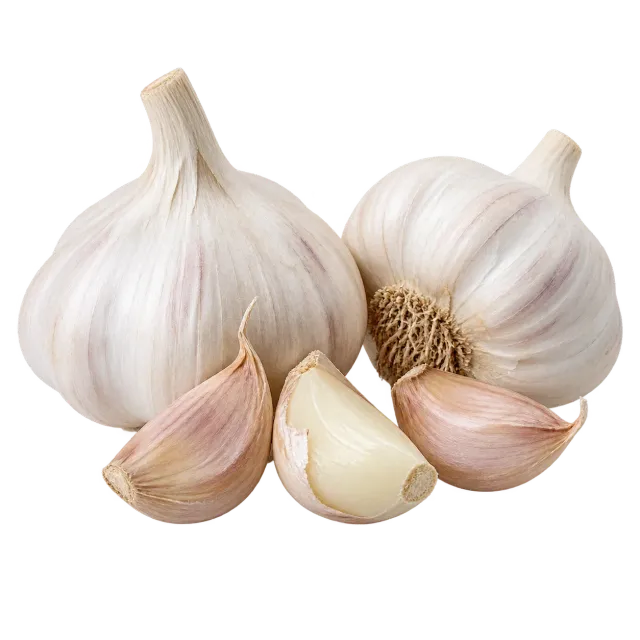
Whole or chopped cloves, garlic paste and garlic cooked in a dish.
For dogs and cats
Conditions and restrictions
Do not offer raw cloves, garlic paste, fried, boiled or baked garlic. Cooking does not remove the red-cell risk.
Benefits
There is no benefit that justifies feeding garlic to a pet. A complete diet already provides the nutrients they need.
Already eaten — what now?
Remove what remains and call a veterinarian straight away, even if your pet looks well. Signs of anaemia can take several days to appear. Give the species, weight, product form, possible amount and time eaten. Keep the package or recipe for a dish or seasoning. Do not induce vomiting or give home remedies unless a veterinarian instructs you. Leave for an open clinic immediately if you notice weakness, pale gums, fast breathing, dark urine, jaundice or collapse.
For dogs
Risks
- Garlic sulphur compounds can oxidise red blood cells and lead to Heinz bodies, methaemoglobinaemia and haemolytic anaemia.
- Vomiting and other gastrointestinal signs may begin earlier, while weakness, pallor, fast breathing, dark urine and jaundice can take several days to appear.
For cats
Risks
- Garlic sulphur compounds can oxidise red blood cells and lead to Heinz bodies, methaemoglobinaemia and haemolytic anaemia.
- Cats are particularly susceptible to oxidative red-cell injury. Vomiting may begin earlier, while weakness, pallor, fast breathing, dark urine and jaundice can take several days to appear.
Dried, powdered or granulated garlicFor dogs and cats: Dangerous · Urgent help needed
Concentrated dry forms and seasoning blends that contain them.
For dogs and cats
Conditions and restrictions
Do not offer dried, granulated or powdered garlic. Check the full ingredients of seasoning blends, dry soups, sauces, stock products and prepared foods.
Benefits
There is no benefit that justifies feeding garlic to a pet. A complete diet already provides the nutrients they need.
Already eaten — what now?
Call a veterinarian straight away. Powder and granules are concentrated, so even a small measuring spoon or an unknown amount matters. Keep the package and report the weight, time and possible amount. Do not wait for symptoms or induce vomiting yourself.
For dogs
Risks
- Garlic sulphur compounds can oxidise red blood cells and lead to Heinz bodies, methaemoglobinaemia and haemolytic anaemia.
- Dry forms are concentrated, so a small volume may contain a substantial amount of garlic.
For cats
Risks
- Garlic sulphur compounds can oxidise red blood cells and lead to Heinz bodies, methaemoglobinaemia and haemolytic anaemia.
- Cats are particularly susceptible to oxidative injury, and dry forms are concentrated.
Conditions and risks
For dogs and cats
Conditions and restrictions
Do not offer garlic on its own or in prepared food. Check sauces, stocks, seasonings, baby food and home-cooked dishes. Boiling, baking and drying do not make garlic safe.
Benefits
There is no benefit that justifies feeding garlic to a pet. A complete diet already provides the nutrients they need.
For dogs
Risks
- Garlic sulphur compounds can oxidise red blood cells and lead to Heinz bodies, methaemoglobinaemia and haemolytic anaemia.
- Vomiting and other gastrointestinal signs may begin earlier, while weakness, pallor, fast breathing, dark urine and jaundice can take several days to appear.
- Repeated small servings also matter. No safe home feeding dose of garlic has been established.
For cats
Risks
- Garlic sulphur compounds can oxidise red blood cells and lead to Heinz bodies, methaemoglobinaemia and haemolytic anaemia.
- Cats are particularly susceptible to oxidative red-cell injury. Vomiting may begin earlier, while weakness, pallor, fast breathing, dark urine and jaundice can take several days to appear.
- Allium toxicosis in cats is often linked to concentrated forms. No safe home feeding dose of garlic has been established.
This card covers ordinary culinary garlic (Allium sativum). The red rating applies to cloves, cooked garlic, dried flakes, granules and powder. With a mixed dish, the whole recipe matters because garlic may come with onion, salt, fat or other hazardous ingredients.
Sources
- Merck Veterinary Manual: Garlic and Onion (Allium spp) Toxicosis in Animals
- ASPCA Animal Poison Control: Garlic
- Lee et al. (2000): Hematologic changes after garlic extract in dogs
- Yamato et al. (2005): Heinz body hemolytic anemia after Chinese chive and garlic in a dog
- Cortinovis and Caloni (2016): Household Food Items Toxic to Dogs and Cats
Comments
No comments yet.