
Already eaten — what now?
For dogs and cats
Remove the remainder, prevent grooming of powder from fur and keep the package. After one tiny accidental lick of plain mild paprika, observation is usually enough. Call a veterinarian if the pepper is hot, the ingredients or amount are unknown, powder reached an eye, or signs develop. Do not induce vomiting or give oil or milk unless a veterinarian tells you to.
Variants and ingredients
Plain sweet paprikaFor dogs and cats: With restrictions
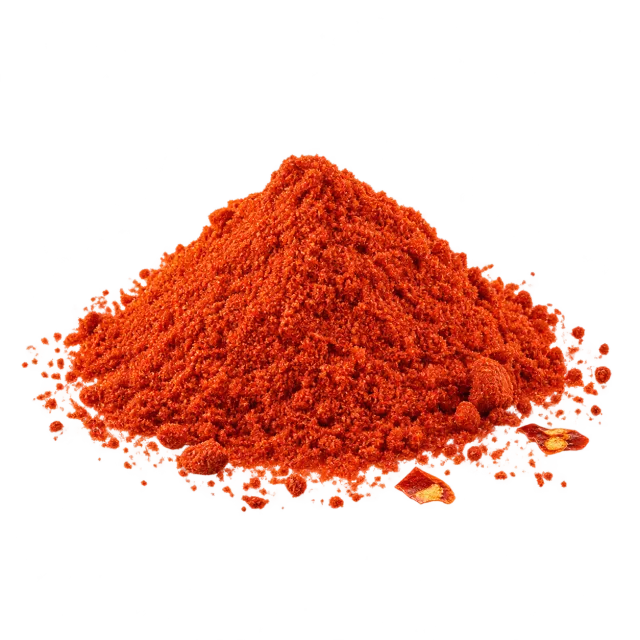
Non-pungent powder made from dried sweet pepper with no additions.
For dogs and cats
Conditions and restrictions
Only plain sweet paprika with no salt, onion, garlic or other additions. Do not feed it deliberately. This variant covers a tiny accidental lick or a trace culinary amount in food with known ingredients.
Benefits
There is no nutritional reason to feed red pepper to a pet.
Risks
- Even non-pungent powder can irritate the eyes and airways, especially when spilled.
- An unfamiliar spice or seasoned food may cause drooling, vomiting or diarrhoea.
Already eaten — what now?
Remove the rest, keep ordinary water available and observe. Call a veterinarian for vomiting, diarrhoea, coughing, eye pain or more than a tiny taste. Do not induce vomiting.
Hot chilli or cayenneFor dogs and cats: Dangerous
Pungent Capsicum powder containing capsaicinoids and no other ingredients.
For dogs and cats
Conditions and restrictions
Do not feed cayenne, ground chilli or another hot pepper powder. Keep it tightly closed and avoid spilling it near a pet.
Benefits
There is no nutritional reason to feed red pepper to a pet.
Risks
- Capsaicinoids in hot pepper irritate the lining of the mouth, throat, stomach and intestines. Drooling, vomiting, abdominal pain and diarrhoea may follow.
- Fine powder can reach the eyes and airways, causing pain, tearing, sneezing, coughing or breathing difficulty.
- Onion, garlic, salt and other ingredients in a blend have their own risks.
Already eaten — what now?
Remove the powder and prevent eye rubbing or grooming of contaminated fur. Keep the package and call a veterinarian if more than a lick was swallowed, the amount is unknown or signs develop. Repeated vomiting, breathing difficulty, marked pain or collapse needs immediate care. Do not induce vomiting.
Blend with onion or garlicFor dogs and cats: Dangerous · Urgent help needed
A red seasoning whose label lists onion, garlic, onion powder or garlic powder.
For dogs and cats
Conditions and restrictions
Do not feed a blend that contains onion or garlic in any form. Read the label on the seasoning, sauce or prepared dish.
Benefits
This kind of blend has no benefit for a pet.
Risks
- Onion and garlic, including dried powders, can oxidise red blood cells and cause haemolytic anaemia.
- Vomiting and diarrhoea may appear first, while weakness, pale gums, fast breathing and dark urine can develop several days later.
Already eaten — what now?
Keep the package and call a veterinarian immediately, even if your pet looks well. Give the full ingredient list, species, weight, amount and time. Do not wait for signs and do not induce vomiting yourself.
Conditions and risks
For dogs and cats
Conditions and restrictions
Do not add the spice to your pet’s food. Store loose powder so that an animal cannot lick it, groom it from fur or inhale it. Check whether the product is mild paprika, hot pepper or a blend.
Benefits
There is no nutritional reason to feed red pepper to a pet.
Risks
- Capsaicinoids in hot pepper irritate the lining of the mouth, throat, stomach and intestines. Drooling, vomiting, abdominal pain and diarrhoea may follow.
- Fine powder can reach the eyes and airways, causing pain, tearing, sneezing, coughing or breathing difficulty.
- Onion, garlic, salt and other ingredients in a blend have their own risks.
This card covers plain powder made from dried Capsicum fruits. The same everyday name may describe mild paprika, hot chilli or a multi-ingredient seasoning. Read the label because pungency and added ingredients change the assessment.
If the seasoning contains garlic, onion or a large amount of salt, assess each ingredient separately. Allium powders are concentrated and can damage red blood cells.
Sources
- Merck Veterinary Manual: Plants Poisonous to Animals (Capsicum annuum)
- Merck Veterinary Manual: Herbal Medicine in Veterinary Patients (cayenne or capsaicin)
- Kuzma et al. (2019): Toxicokinetic Study of a Gastroprotective Dose of Capsaicin in Dogs
- Chanda et al. (2005): Toxicity studies with pure trans-capsaicin delivered to dogs
- Bertero et al. (2021): Animal poisonings in Europe, a 10-year report
- Merck Veterinary Manual: Garlic and Onion (Allium spp) Toxicosis in Animals
Comments
No comments yet.