
Already eaten — what now?
For dogs and cats
Urgent help neededRemove the remaining food and call a veterinarian immediately, even if there are no symptoms yet. Report the species, weight, form of onion, time and possible amount. Keep the package or recipe. Do not induce vomiting or give home remedies unless a veterinarian tells you to. Leave for emergency care immediately if your pet becomes weak, develops pale or yellow gums, breathes rapidly or with effort, passes dark urine or collapses.
Variants and ingredients
Raw or cooked onionFor dogs and cats: Dangerous · Urgent help needed
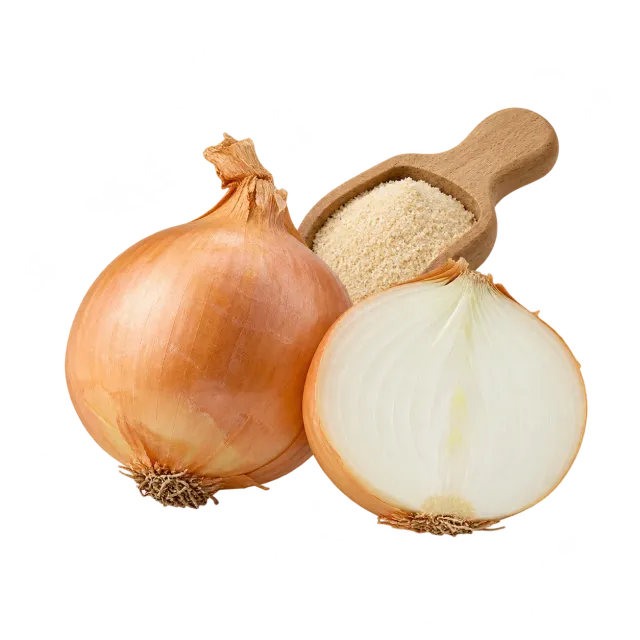
Pieces of fresh, boiled, fried, baked or caramelised bulb onion.
For dogs and cats
Conditions and restrictions
Do not offer raw, boiled, fried, baked or caramelised onion.
Benefits
Onion has no benefit for a pet. Do not use it as a treat or diet supplement.
Risks
- Sulfur-containing oxidants damage red blood cells, cause Heinz body formation and can lead to haemolytic anaemia.
- Vomiting and diarrhoea may occur. Several days later, a pet may become weak or stop eating, develop pale or yellow gums, rapid breathing and heart rate, dark urine or collapse.
- Repeated smaller exposures can also create a cumulative toxic dose.
Already eaten — what now?
Remove the remaining food and call a veterinarian immediately, even if there are no symptoms yet. Report the species, weight, form of onion, time and possible amount. Keep the package or recipe. Do not induce vomiting or give home remedies unless a veterinarian tells you to. Leave for emergency care immediately if your pet becomes weak, develops pale or yellow gums, breathes rapidly or with effort, passes dark urine or collapses.
Dried onion and onion powderFor dogs and cats: Dangerous · Urgent help needed
Flakes, granules, powder, dry seasoning or soup mix.
For dogs and cats
Conditions and restrictions
Do not offer dried, granulated or powdered onion. Check seasoning blends and dry soup mixes.
Benefits
Onion has no benefit for a pet. Do not use it as a treat or diet supplement.
Risks
- Dried and ground onion is concentrated, so a small volume can contain a substantial amount of onion.
- Sulfur-containing oxidants damage red blood cells, cause Heinz body formation and can lead to haemolytic anaemia.
- Vomiting and diarrhoea may occur. Several days later, a pet may become weak or stop eating, develop pale or yellow gums, rapid breathing and heart rate, dark urine or collapse.
- Repeated smaller exposures can also create a cumulative toxic dose.
Already eaten — what now?
Remove the remaining food and call a veterinarian immediately, even if there are no symptoms yet. Report the species, weight, form of onion, time and possible amount. Keep the package or recipe. Do not induce vomiting or give home remedies unless a veterinarian tells you to. Leave for emergency care immediately if your pet becomes weak, develops pale or yellow gums, breathes rapidly or with effort, passes dark urine or collapses.
Food containing onionFor dogs and cats: Dangerous · Urgent help needed
Soup, stock, sauce, gravy, meat mixture, baby food or another prepared dish.
For dogs and cats
Conditions and restrictions
Do not offer a prepared food if it contains onion or the ingredients are unknown.
Benefits
Onion has no benefit for a pet. Do not use it as a treat or diet supplement.
Risks
- The amount of onion in a sauce, stock, gravy, burger, soup or baby food may be unclear, and other ingredients may add separate risks.
- Sulfur-containing oxidants damage red blood cells, cause Heinz body formation and can lead to haemolytic anaemia.
- Vomiting and diarrhoea may occur. Several days later, a pet may become weak or stop eating, develop pale or yellow gums, rapid breathing and heart rate, dark urine or collapse.
- Repeated smaller exposures can also create a cumulative toxic dose.
Already eaten — what now?
Keep the package or recipe and call a veterinarian immediately. Report your pet's weight, the approximate amount of food, the time and the full ingredient list. Do not induce vomiting unless instructed. Leave immediately if symptoms develop.
Conditions and risks
For dogs and cats
Benefits
Onion has no benefit for a pet. Do not use it as a treat or diet supplement.
Risks
- Sulfur-containing oxidants damage red blood cells, cause Heinz body formation and can lead to haemolytic anaemia.
- Vomiting and diarrhoea may occur. Several days later, a pet may become weak or stop eating, develop pale or yellow gums, rapid breathing and heart rate, dark urine or collapse.
- Repeated smaller exposures can also create a cumulative toxic dose.
For dogs
Conditions and restrictions
Do not offer onion in any form. Check the full ingredient list of stocks, sauces, gravies, soups, baby food and prepared mixes.
For cats
Conditions and restrictions
Do not offer onion in any form. Cats are especially susceptible to oxidative damage to red blood cells. Check the full ingredient list of prepared food and baby food.
This card covers bulb onion, Allium cepa, and its forms in food. Cooking does not remove the risk, while drying and grinding make the product more concentrated. Garlic, leeks and chives are also Allium species, but their risk cannot be calculated from this bulb onion card.
Sources
- MSD Veterinary Manual: Garlic and Onion (Allium spp) Toxicosis in Animals
- Tang, Xia and Yu (2008): An experimental study of hemolysis induced by onion poisoning in dogs
- Harvey and Rackear (1985): Experimental onion-induced hemolytic anemia in dogs
- Robertson, Christopher and Rogers (1998): Heinz body formation in cats fed baby food containing onion powder
- Cope (2005): Allium species poisoning in dogs and cats
Comments
No comments yet.