
Already eaten — what now?
For dogs
Especially dangerousCall the clinic immediately and travel when instructed, even if your dog still looks well. Bring the package and report the dog's weight, time, product name and possible amount. Do not induce vomiting unless a veterinarian tells you to.
For cats
Check the full ingredient list and keep the package. If the ingredients or amount are unknown, or your cat swallowed a medicine or hygiene product, call the clinic to assess that product. Repeated vomiting, marked weakness, poor coordination, tremors or seizures need urgent care. Do not induce vomiting yourself.
Variants and ingredients
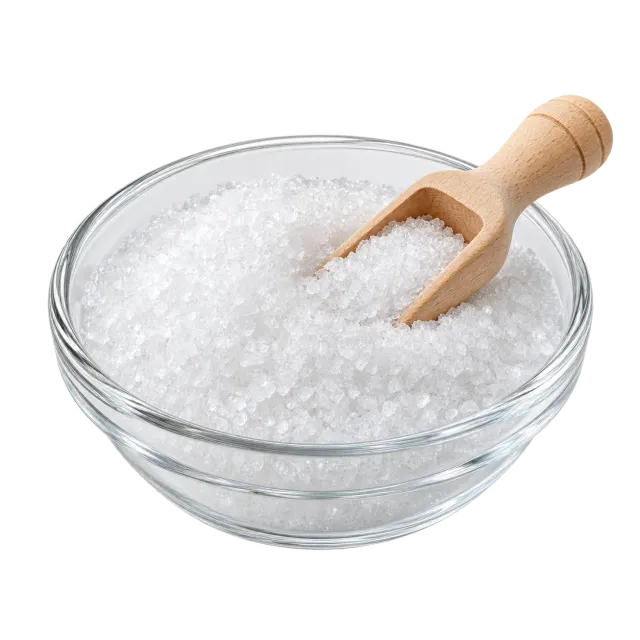
Pure xylitol granules or powderFor dogs: Dangerous · Especially dangerousFor cats: With restrictions
A culinary sweetener with no other ingredients.
For dogs
Conditions and restrictions
Do not give xylitol to a dog and keep it out of reach. Check labels for xylitol, E967, birch sugar or wood sugar. Look beyond food: syrups, medicines, vitamins and oral-care products may also contain it.
Benefits
There is no benefit for a dog.
Risks
- Xylitol triggers a rapid, dose-dependent release of insulin in dogs. Blood glucose can fall sharply, causing weakness, poor coordination, tremors, seizures, collapse and coma.
- Some dogs develop severe liver injury or failure. It can appear later and does not always come with obvious hypoglycaemia.
- Absorption may be delayed in some chewing-gum products, so a dog is not safe simply because no signs appear straight away.
Already eaten — what now?
Call the clinic immediately and travel when instructed, even if your dog still looks well. Bring the package and report the dog's weight, time, product name and possible amount. Do not induce vomiting unless a veterinarian tells you to.
For cats
Conditions and restrictions
Do not add xylitol to a cat’s diet. A small study did not find the dog-like hypoglycaemia or liver injury in healthy cats, but it did not test regular use and does not cover a finished product.
Benefits
There is no benefit for a cat.
Risks
- A study in six healthy cats found no hypoglycaemia or liver injury after single exposures; it did not assess the safety of regular use.
- Other ingredients in a finished product may be harmful to a cat independently of xylitol.
Already eaten — what now?
Check the full ingredient list and keep the package. If the ingredients or amount are unknown, or your cat swallowed a medicine or hygiene product, call the clinic to assess that product. Repeated vomiting, marked weakness, poor coordination, tremors or seizures need urgent care. Do not induce vomiting yourself.
Food or chewing gum with xylitolFor dogs: Dangerous · Especially dangerousFor cats: With restrictions
A product with a complete ingredient list in which chocolate, raisins, caffeine, alcohol, nuts and other ingredients have been assessed separately.
For dogs
Conditions and restrictions
Do not give xylitol to a dog and keep it out of reach. Check labels for xylitol, E967, birch sugar or wood sugar. Look beyond food: syrups, medicines, vitamins and oral-care products may also contain it.
Benefits
There is no benefit for a dog.
Risks
- Xylitol triggers a rapid, dose-dependent release of insulin in dogs. Blood glucose can fall sharply, causing weakness, poor coordination, tremors, seizures, collapse and coma.
- Some dogs develop severe liver injury or failure. It can appear later and does not always come with obvious hypoglycaemia.
- Absorption may be delayed in some chewing-gum products, so a dog is not safe simply because no signs appear straight away.
Already eaten — what now?
Call the clinic immediately and travel when instructed, even if your dog still looks well. Bring the package and report the dog's weight, time, product name and possible amount. Do not induce vomiting unless a veterinarian tells you to.
For cats
Conditions and restrictions
Do not give this product to a cat. The yellow rating applies only to xylitol; fat, chocolate, caffeine, raisins and other ingredients can change both the rating and urgency.
Benefits
There is no benefit for a cat.
Risks
- A study in six healthy cats found no hypoglycaemia or liver injury after single exposures; it did not assess the safety of regular use.
- Other ingredients in a finished product may be harmful to a cat independently of xylitol.
Already eaten — what now?
Check the full ingredient list and keep the package. If the ingredients or amount are unknown, or your cat swallowed a medicine or hygiene product, call the clinic to assess that product. Repeated vomiting, marked weakness, poor coordination, tremors or seizures need urgent care. Do not induce vomiting yourself.
Medicine, syrup or supplement with xylitolFor dogs: Dangerous · Especially dangerousFor cats: Dangerous · Urgent help needed
A human medicine, liquid formulation, chewable vitamin or supplement listing xylitol as a sweetener or inactive ingredient.
For dogs
Conditions and restrictions
Do not give a human medicine or supplement unless a veterinarian prescribed it. Both xylitol and the active ingredient may matter, so the amount of each must be checked from the package.
Benefits
There is no benefit for a dog.
Risks
- Xylitol triggers a rapid, dose-dependent release of insulin in dogs. Blood glucose can fall sharply, causing weakness, poor coordination, tremors, seizures, collapse and coma.
- Some dogs develop severe liver injury or failure. It can appear later and does not always come with obvious hypoglycaemia.
- Absorption may be delayed in some chewing-gum products, so a dog is not safe simply because no signs appear straight away.
Already eaten — what now?
Call the clinic immediately. Bring the package or leaflet and report the dog’s weight, medicine name, active ingredient, strength, possible amount and time. Do not wait for signs or induce vomiting yourself.
For cats
Conditions and restrictions
Do not give a human medicine or supplement unless a veterinarian prescribed it. The red rating covers accidental ingestion of the finished product because its active ingredient may be hazardous independently of xylitol.
Benefits
There is no benefit for a cat.
Risks
- Xylitol did not show the dog-like toxicity in a study of six healthy cats, but the active ingredient and dose determine the safety of a particular medicine.
- A chewable or liquid formulation may contain several active and inactive ingredients.
Already eaten — what now?
Call the clinic promptly and keep the package. Report the medicine name, active ingredient, strength, possible amount, time and the cat’s weight. Weakness, poor coordination, tremors, seizures, repeated vomiting or altered breathing need emergency care. Do not induce vomiting yourself.
Conditions and risks
For dogs
Conditions and restrictions
Do not give xylitol to a dog and keep it out of reach. Check labels for xylitol, E967, birch sugar or wood sugar. Look beyond food: syrups, medicines, vitamins and oral-care products may also contain it.
Benefits
There is no benefit for a dog.
Risks
- Xylitol triggers a rapid, dose-dependent release of insulin in dogs. Blood glucose can fall sharply, causing weakness, poor coordination, tremors, seizures, collapse and coma.
- Some dogs develop severe liver injury or failure. It can appear later and does not always come with obvious hypoglycaemia.
- Absorption may be delayed in some chewing-gum products, so a dog is not safe simply because no signs appear straight away.
For cats
Conditions and restrictions
Do not add xylitol to a cat’s diet. A small study did not find the dog-like hypoglycaemia or liver injury in healthy cats, but it did not test regular use and does not cover a finished product.
Benefits
There is no benefit for a cat.
Risks
- A study in six healthy cats found no hypoglycaemia or liver injury after single exposures; it did not assess the safety of regular use.
- Other ingredients in a finished product may be harmful to a cat independently of xylitol.
Xylitol, or E967, is found in some sugar-free foods, chewing gum, baked goods, peanut butter, syrups, medicines, vitamins and oral-care products. It may also be called birch sugar or wood sugar. Ordinary table sugar has a different rating in its own catalog card.
Assess a finished product by its complete ingredient list. Peanut butter, sweets and baked goods may also contain chocolate, raisins, caffeine or other hazardous ingredients. For nut butter, also use the peanut card.
Sources
- FDA: Paws Off Xylitol; It’s Dangerous for Dogs
- Merck Veterinary Manual: Xylitol Toxicosis in Dogs
- Jerzsele et al. (2018): Effects of p.o. administered xylitol in cats
- Xia et al. (2009): Experimental acute toxicity of xylitol in dogs
- Dunayer and Gwaltney-Brant (2006): Acute hepatic failure and coagulopathy associated with xylitol ingestion in eight dogs
- Schmid and Hovda (2016): Acute Hepatic Failure in a Dog after Xylitol Ingestion
Comments
No comments yet.