
Already eaten — what now?
For dogs
If your dog ate a small amount of ordinary sugar and is well, observe and keep water available. If xylitol is possible, call the clinic immediately without waiting for symptoms. Keep the package and ingredient list. Weakness, poor coordination, tremors, collapse or seizures need emergency care. Do not induce vomiting yourself.
For cats
If your cat ate a small amount of ordinary sugar and is well, observe and keep water available. If it was a prepared sweet or a sugar-free product, check the ingredients. Call the clinic for unknown ingredients, a large amount, vomiting, diarrhoea, lethargy or poor coordination. Do not induce vomiting yourself.
Variants and ingredients
Plain table sugarFor dogs and cats: With restrictions
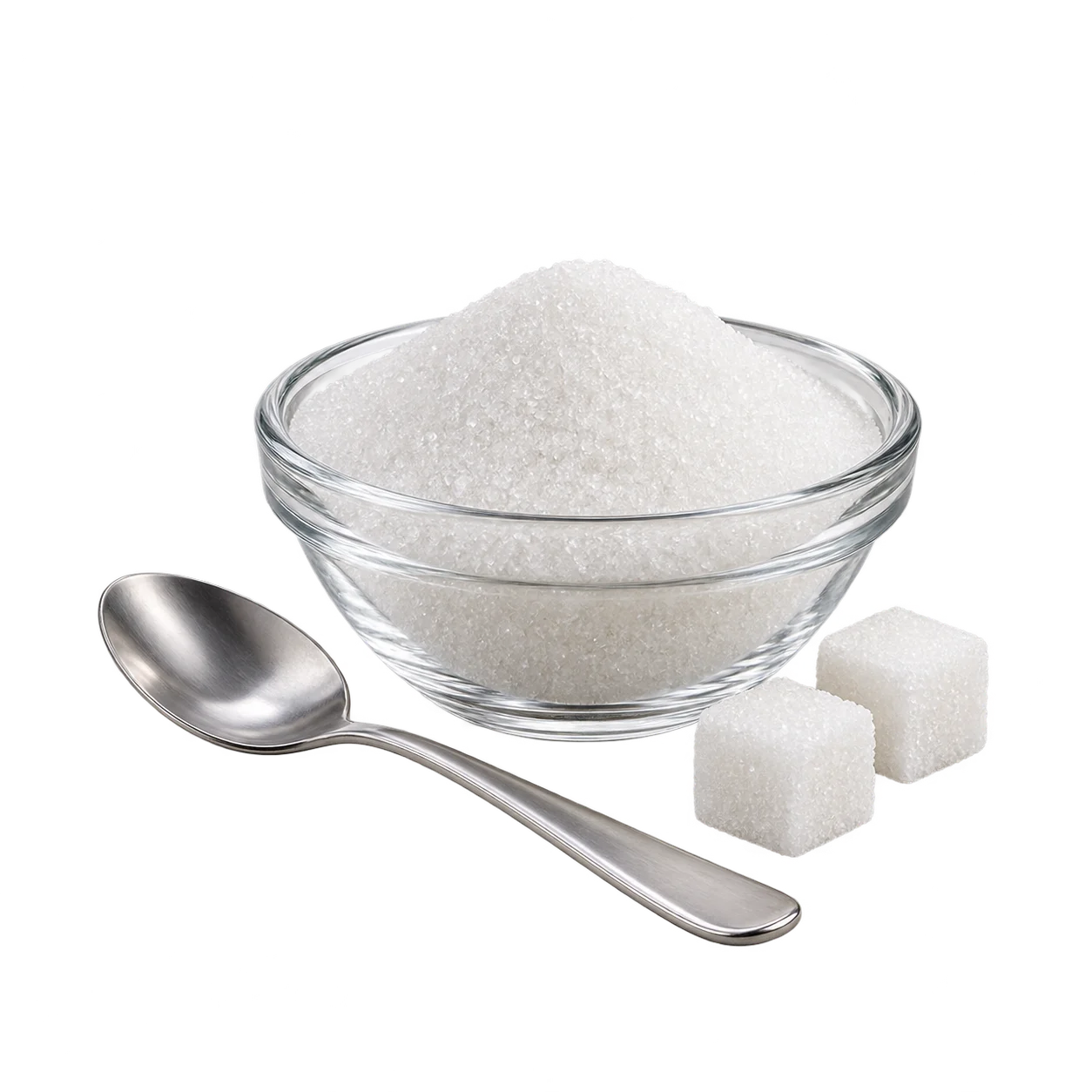
White or brown granulated sugar and sugar cubes with no other ingredients.
For dogs and cats
Conditions and restrictions
Do not offer sugar as a treat. A small accidental cube or pinch is not usually dangerous.
Benefits
Ordinary sugar supplies only quick calories. A dog or cat eating a complete diet does not need added sugar.
Risks
- A large amount may cause diarrhoea, gas and discomfort.
Already eaten — what now?
After a small amount with no symptoms, observation is enough. Call a veterinarian after a large amount or for repeated vomiting, marked diarrhoea, pain or lethargy.
Xylitol (E967)For dogs: Dangerous · Especially dangerousFor cats: With restrictions
This rating applies to the sweetener itself. Other ingredients in a sweet, medicine or hygiene product need a separate assessment.
For dogs
Conditions and restrictions
Do not offer xylitol and keep it out of reach. Check gum, candy, baked goods, peanut butter, toothpaste, syrups, chewable vitamins and medicines.
Benefits
There is no benefit for a dog.
Risks
- Xylitol can rapidly cause profound hypoglycaemia, weakness, poor coordination, seizures and coma. Some dogs develop severe liver injury.
Already eaten — what now?
Call the clinic immediately and travel when instructed, even if your dog still looks well. Bring the package and report the dog's weight, time, product name and possible amount. Do not induce vomiting unless a veterinarian tells you to.
For cats
Conditions and restrictions
Xylitol itself did not show the toxicity seen in dogs in a small study of healthy cats. There is no need to add it to the diet. This rating does not cover the finished product: check its other ingredients, the amount and your cat’s condition.
Benefits
There is no benefit for a cat.
Risks
- A study in six healthy cats found no hypoglycaemia or liver injury after single exposures; it did not assess the safety of regular use.
- Other ingredients in a finished product may be harmful to a cat independently of xylitol.
Already eaten — what now?
Check the full ingredient list and keep the package. If the ingredients or amount are unknown, or your cat swallowed a medicine or hygiene product, call the clinic to assess that product. Repeated vomiting, marked weakness, poor coordination, tremors or seizures need urgent care. Do not induce vomiting yourself.
Conditions and risks
For dogs and cats
Conditions and restrictions
Do not offer sugar on its own or make it a regular treat. All treats together should stay within 10% of daily calories. Ask your veterinarian about sweet extras if your pet has diabetes, excess weight or a prescribed diet. Assess sweets and drinks by their full ingredient list, not just their sugar content.
Benefits
Ordinary sugar supplies only quick calories. A dog or cat eating a complete diet does not need added sugar.
For dogs
Risks
- An overload of simple sugars may cause osmotic diarrhoea and flatulence.
- Regular sweets add unnecessary calories and may displace balanced food.
- A sweet product may contain xylitol, chocolate, raisins, caffeine, alcohol or other hazardous ingredients.
For cats
Risks
- An overload of simple sugars may cause osmotic diarrhoea and flatulence.
- Regular sweets add unnecessary calories and may displace balanced food.
- A sweet product may contain chocolate, raisins, caffeine, alcohol or other ingredients hazardous to cats.
This card covers ordinary table sugar, or sucrose. A small accidental taste does not usually require emergency care. An overload of simple sugars can cause diarrhoea and flatulence, while regular sweets add unnecessary calories.
Candy, baked goods, desserts and sweet drinks can have very different recipes. The rating for ordinary sugar does not apply to them. Check all ingredients, particularly chocolate, raisins, caffeine and alcohol; xylitol is especially dangerous for dogs. Remove the remaining product and keep the package. Call the clinic if the ingredients or amount are unknown, and call immediately if a dog may have eaten xylitol. Do not induce vomiting yourself.
Sources
- Merck Veterinary Manual: Nutritional Requirements of Small Animals
- AAHA: Prevention of Obesity
- WSAVA Nutrition Committee: Feeding Treats to Your Dog
- WSAVA Nutrition Committee: Feeding Treats to Your Cat
- FDA: Paws Off Xylitol; It's Dangerous for Dogs
- Merck Veterinary Manual: Xylitol Toxicosis in Dogs
- Jerzsele et al.: Effects of orally administered xylitol in cats
- Batchelor et al.: Intestinal sugar transport and disaccharidase expression in dogs and cats
- Jerzsele and Karancsi: Effects of orally administered xylitol in cats — primary study conference abstract
Comments
No comments yet.