
Already eaten — what now?
For dogs and cats
If your pet ate a little plain sweet pepper and seems well, remove the rest and observe them. Call a veterinarian for repeated vomiting, marked diarrhoea, pain, bloating or lethargy. If a large tough piece, the stalk or a whole pepper was swallowed, tell the veterinarian its size and the approximate amount. Choking, breathing difficulty or collapse needs immediate care. Contact a veterinarian straight away after a dish containing onion or garlic. Do not induce vomiting yourself.
Variants and ingredients
Fresh or cooked plain fleshFor dogs and cats: Acceptable
Washed sweet pepper with stalk and core removed, cut into small pieces; raw, boiled, steamed or baked without additions.
For dogs and cats
Conditions and restrictions
Make sure it is a sweet Capsicum annuum pepper. Wash it, remove the stalk, core and seeds, then cut the flesh into small pieces. Serve it raw or softly cooked without salt, oil, sauce or seasoning. Start with a small piece. All treats together should provide less than 10% of daily calories. Ask your veterinarian first if your pet is on a therapeutic or elimination diet.
Risks
- An oversized piece can cause choking.
- Too much may upset the digestive system.
Already eaten — what now?
If your pet ate a little plain sweet pepper and seems well, remove the rest and observe them. Call a veterinarian for repeated vomiting, marked diarrhoea, pain, bloating or lethargy. If a large tough piece, the stalk or a whole pepper was swallowed, tell the veterinarian its size and the approximate amount. Choking, breathing difficulty or collapse needs immediate care. Contact a veterinarian straight away after a dish containing onion or garlic. Do not induce vomiting yourself.
For dogs
Benefits
It can be a low-calorie treat if your dog enjoys it. There is no need to add sweet pepper to a complete diet.
For cats
Benefits
Cats do not need sweet pepper, but a small piece of plain flesh is acceptable if your cat likes it. The vegetable does not replace complete cat food.
Whole pepper, stalk or large piecesFor dogs and cats: With restrictions
An unprepared pepper or large tough parts that a pet may swallow.
For dogs and cats
Conditions and restrictions
Do not offer a whole pepper, the stalk, core or large tough pieces. Separate the soft flesh and cut it to a size suitable for your pet before offering it.
Benefits
A whole pepper or its tough parts offer no benefit. A little separated soft flesh is safer.
Risks
- A large or tough piece can lodge in the throat.
- A whole pepper or large swallowed section can become a gastrointestinal foreign body.
- A large amount may cause vomiting, diarrhoea, gas and abdominal pain.
Already eaten — what now?
Remove the rest. If your pet swallowed a whole pepper, the stalk or a large tough piece, call a veterinarian and report the animal’s size, the piece size, timing and any signs. Coughing, unproductive retching, heavy drooling, breathing difficulty, repeated vomiting, pain or bloating needs urgent care. Do not pull at a lodged object or induce vomiting yourself.
Dish containing onion or garlicFor dogs and cats: Dangerous · Urgent help needed
Stuffed pepper, salad, stew, sauce or another food known to contain Allium.
For dogs and cats
Conditions and restrictions
Do not offer sweet pepper prepared with bulb or spring onion, garlic, leek, chives or their powders. Cooking does not remove the Allium risk.
Benefits
The dish offers no benefit that justifies the onion or garlic risk.
Already eaten — what now?
Remove the rest and call a veterinarian straight away, even if your pet seems well. Keep the recipe or packaging and report the species, weight, ingredients, approximate amount and time. Do not induce vomiting or give home remedies unless instructed by a veterinarian. Weakness, pale gums, rapid breathing, dark urine, jaundice or collapse requires immediate travel to an open clinic.
For dogs
Risks
- Onion and garlic can oxidise red blood cells and cause haemolytic anaemia.
- Vomiting and diarrhoea may appear first, while weakness, pallor, rapid breathing, dark urine and jaundice can develop over several days.
- Powdered forms are concentrated, and repeated small exposures also matter.
For cats
Risks
- Onion and garlic can oxidise red blood cells and cause haemolytic anaemia.
- Feline red blood cells are particularly susceptible to oxidative injury, and signs may be delayed.
- Powdered forms are concentrated, and repeated small exposures also matter.
Conditions and risks
For dogs and cats
Conditions and restrictions
Make sure it is a sweet Capsicum annuum pepper. Wash it, remove the stalk, core and seeds, then cut the flesh into small pieces. Serve it raw or softly cooked without salt, oil, sauce or seasoning. Start with a small piece. All treats together should provide less than 10% of daily calories. Ask your veterinarian first if your pet is on a therapeutic or elimination diet.
Risks
- Large or tough pieces can cause choking.
- A large amount of unfamiliar plant food may cause gas, vomiting or diarrhoea.
- Hot peppers and dishes containing spices, onion or garlic have different risks and are not covered by this rating.
For dogs
Benefits
It can be a low-calorie treat if your dog enjoys it. There is no need to add sweet pepper to a complete diet.
For cats
Benefits
Cats do not need sweet pepper, but a small piece of plain flesh is acceptable if your cat likes it. The vegetable does not replace complete cat food.
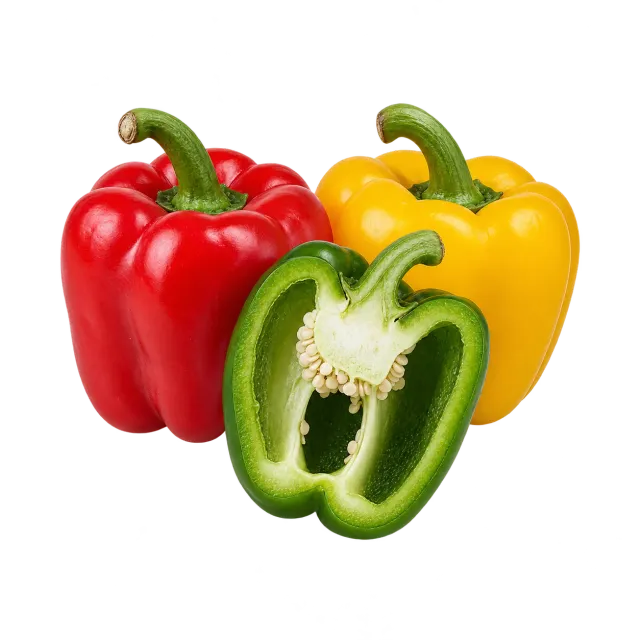
This card covers ordinary sweet or bell peppers, Capsicum annuum, including red, yellow, orange and green fruit. Hot peppers, chilli, cayenne and black pepper are outside its scope. Check every ingredient in a mixed dish: onion and garlic change the rating.
Sources
- PetMD: Can Dogs Eat Bell Peppers?
- Cornell University College of Veterinary Medicine: The biggest health problem in canine medicine — obesity
- WSAVA Nutrition Committee: Feeding treats to your dog
- Webvet: Can Cats Eat Bell Peppers?
- WSAVA Nutrition Committee: Feeding treats to your cat
- Merck Veterinary Manual: Dog and Cat Foods
- Merck Veterinary Manual: Herbal Medicine in Veterinary Patients
- Merck Veterinary Manual: Garlic and Onion (Allium spp) Toxicosis in Animals
- Robertson et al. (1998): Heinz body formation in cats fed baby food containing onion powder
- Hall et al. (2020): Cats Have Increased Protein Digestibility as Compared to Dogs
Comments
No comments yet.