
Already eaten — what now?
For dogs and cats
After one small piece of plain, thoroughly cooked meat with no symptoms, observation is usually enough. Check the marinade ingredients. If onion, garlic, raw meat, a bone or a skewer was involved, open the matching variant below and call the clinic. Breathing difficulty, repeated unproductive retching, severe pain, repeated vomiting, marked weakness or collapse need emergency care. Do not induce vomiting yourself.
Variants and ingredients
Plain thoroughly cooked boneless meatFor dogs and cats: Acceptable
A small lean piece with no marinade, additions, visible fat or charred parts.
For dogs and cats
Conditions and restrictions
Cook lean meat thoroughly, let it cool, and remove every bone and visible fat. Set aside a small piece before adding salt, marinade, onion, garlic, sauce or seasoning.
Benefits
A small piece can be an occasional protein treat and does not replace complete food.
Risks
- A large serving adds excess calories and may upset digestion.
Already eaten — what now?
After a small piece with no symptoms, observe. Contact a veterinarian if repeated vomiting, diarrhoea, pain or lethargy develops.
Fatty, salty or spicyFor dogs and cats: With restrictions
Shashlik without onion or garlic but with visible fat, a lot of salt, hot seasoning or sauce.
For dogs and cats
Conditions and restrictions
Do not use fatty, salty or spicy shashlik as a treat. Even without onion or garlic, it is unsuitable for a pet with pancreatitis, digestive disease or a prescribed diet.
Benefits
There is no special benefit compared with lean meat.
Risks
- Fatty food may cause vomiting and diarrhoea and is associated with pancreatitis risk in susceptible dogs.
- Excess salt may cause marked thirst and other problems, especially after a large serving or when water is restricted.
Already eaten — what now?
Keep the recipe and provide fresh water. After a small piece with no symptoms, observe. Call a veterinarian after a large serving or if repeated vomiting, pain, marked thirst, tremors, lethargy or refusal of food develops.
With onion, garlic or an unknown marinadeFor dogs and cats: Dangerous · Urgent help needed
Fresh, cooked or powdered onion and garlic remain toxic. An unknown recipe cannot rule out this risk.
For dogs and cats
Conditions and restrictions
Do not offer shashlik containing onion, garlic, onion powder or garlic powder. Cooking does not make these ingredients safe. Cats are especially susceptible.
Benefits
There is no benefit for the pet.
Risks
- Onion and garlic damage red blood cells and can cause haemolytic anaemia. Fresh, cooked and powdered forms are dangerous.
- Weakness, pale or yellow gums, rapid breathing and dark urine may take several days to appear.
Already eaten — what now?
Call the clinic straight away even if there are no symptoms. Give the pet’s weight, time, amount and exact ingredients, and keep the recipe. Do not induce vomiting unless a veterinarian directly instructs you to.
Raw or undercookedFor dogs and cats: Dangerous
The meat remained raw inside or was not cooked thoroughly.
For dogs and cats
Conditions and restrictions
Do not offer raw or undercooked shashlik. Freezing and marinating do not eliminate all disease-causing bacteria.
Benefits
There is no proven benefit over thoroughly cooked meat.
Risks
- Raw meat may contain Salmonella, Listeria, E. coli, Campylobacter and other pathogens that can harm the pet and people in the home.
- A pet may shed bacteria in faeces even when it appears healthy.
Already eaten — what now?
Remove the leftovers and wash hands, the bowl and contaminated surfaces. Watch for appetite loss, vomiting, diarrhoea, blood in the stool and lethargy. Call a veterinarian if symptoms develop, a large amount was eaten, or the pet is very young, old or unwell.
With a boneFor dogs and cats: Dangerous · Urgent help needed
A raw or cooked bone, including ribs and fragments.
For dogs and cats
Conditions and restrictions
Do not offer raw or cooked bones from shashlik. A cooked bone may splinter, while a large raw bone can still damage teeth or lodge.
Benefits
A safe dental benefit has not been established.
Risks
- A bone can fracture a tooth, lodge in the mouth or oesophagus, or cause choking, constipation, obstruction or perforation.
- Danger signs include drooling, retching, repeated attempts to swallow, vomiting, pain and refusal of food.
Already eaten — what now?
If your pet swallowed a bone or fragment, call the clinic immediately and describe its size, type, time and any signs. Do not induce vomiting, give food to “push it through”, or pull on a lodged fragment. Travel at once for breathing difficulty, repeated unproductive retching or severe pain.
A skewer or stick was swallowedFor dogs and cats: Dangerous · Especially dangerous
A metal skewer, wooden stick, splinter or broken piece.
For dogs and cats
Conditions and restrictions
Do not let a pet lick or chew a skewer. Put metal and wooden skewers away immediately after cooking.
Benefits
There is no benefit: a metal skewer or wooden stick is not food or a toy.
Risks
- A sharp skewer or splinter can puncture the mouth, oesophagus, stomach or intestine. It may also cause choking or obstruction.
- A pet that looks comfortable may still have internal injury after swallowing a sharp object.
Already eaten — what now?
If a skewer, stick or any part of one was swallowed, travel to an open veterinary clinic immediately and call on the way. Do not induce vomiting, give food or oil, or pull on any visible part of the object.
Conditions and risks
For dogs and cats
Conditions and restrictions
Offer only a small piece of thoroughly cooked lean meat after removing every bone and all visible fat. It must contain no salt, onion, garlic, sauce or seasoning. Count it within treats, which should usually stay below 10% of daily calories.
Benefits
A small piece of lean cooked meat can be an occasional protein treat, but shashlik has no special benefit over a suitable complete food.
Risks
- Marinade may contain toxic onion or garlic; salt, hot spices and sauces add separate risks.
- Fatty meat and a large serving may cause vomiting or diarrhoea. Table scraps are associated with pancreatitis risk in susceptible dogs.
- A large piece can cause choking. Bones and skewers can lodge, obstruct or injure the digestive tract.
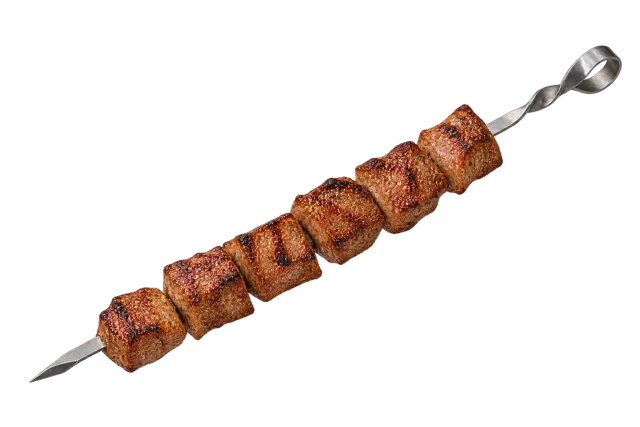
Shashlik can be made from different meats and marinades, so the dish does not automatically share the rating of one ingredient. For a plain piece, see the separate cards for beef and pork. Onion, garlic, bones, fat, salt, sauce and doneness need separate assessment.
Sources
- WSAVA Global Nutrition Committee: Frequently Asked Questions and Myths
- FDA Center for Veterinary Medicine: Raw Pet Food Diets Can Be Dangerous
- MSD Veterinary Manual: Garlic and Onion (Allium spp) Toxicosis in Animals
- Lee et al.: Hematologic changes after garlic extract in dogs
- Robertson et al.: Heinz body formation in cats fed onion powder
- MSD Veterinary Manual: Pancreatitis in Dogs and Cats
- MSD Veterinary Manual: Gastrointestinal Obstruction in Small Animals
- MSD Veterinary Manual: Esophageal Foreign Bodies in Small Animals
- FDA: Potentially Dangerous Items for Your Pet
Comments
No comments yet.