
Already eaten — what now?
For dogs and cats
If your pet ate one small piece of thoroughly cooked lean pork with no bone or additives, returning to the regular diet and watching them is usually enough. Call the clinic if the pork was raw, fatty, smoked, salty, contained onion or garlic, a bone was swallowed, the amount was large, or vomiting, diarrhoea, pain, loss of appetite or lethargy develops. Choking, breathing difficulty or collapse needs immediate care.
Variants and ingredients
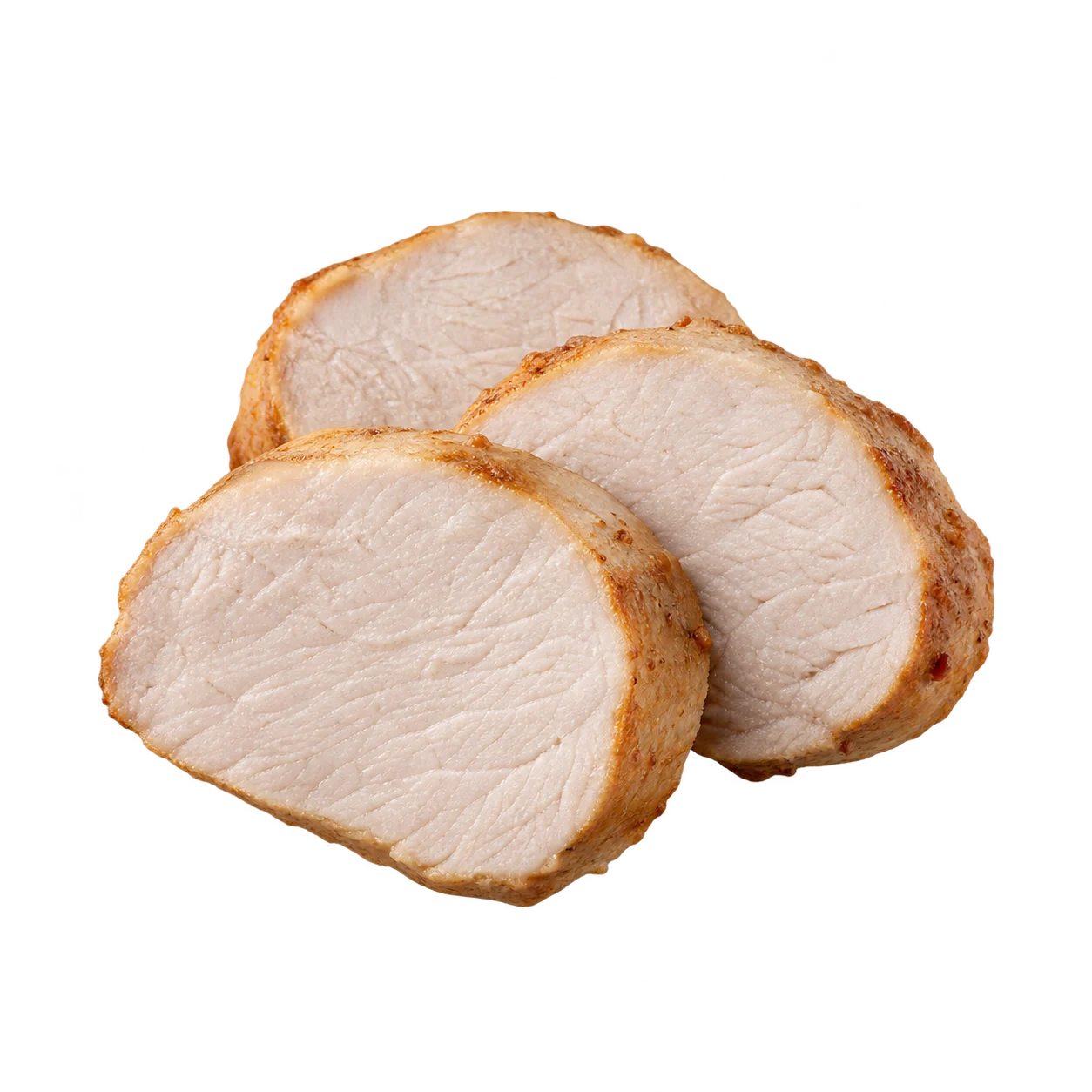
Thoroughly cooked lean porkFor dogs and cats: Acceptable
A small piece with no bone, visible fat, salt, sauce or seasoning.
For dogs and cats
Conditions and restrictions
Cook it thoroughly, trim visible fat and remove every bone. Add no salt, onion, garlic, sauce or spices. Offer only a small amount and count it within the daily treat allowance.
Benefits
It can be an occasional protein-rich treat if your pet tolerates pork.
Risks
- Even lean meat can cause digestive upset or an individual food reaction.
- Regular large portions displace nutrients from a complete food.
Already eaten — what now?
After a small plain piece, watching your pet is usually enough. Stop offering it and call your veterinarian if repeated vomiting, diarrhoea, pain, itching, swelling or lethargy develops.
Raw or undercooked porkFor dogs and cats: Dangerous · Urgent help needed
Pork meat and offal that has not been thoroughly cooked, including wild boar meat.
For dogs and cats
Conditions and restrictions
Do not feed raw or undercooked pork. Freezing does not eliminate every bacterium or parasite. Wild boar meat and raw pig offal are particularly concerning because of infections including Aujeszky's disease.
Benefits
There is no proven benefit over cooked meat.
Already eaten — what now?
Remove the remaining meat and call the clinic the same day. Give the type and source of the meat, the part of the carcass, the estimated amount and the time. Seek immediate care after wild boar meat or raw offal, or if vomiting, diarrhoea, intense itching, abnormal behaviour, weakness or poor coordination develops. Do not induce vomiting unless a veterinarian tells you to.
For dogs
Risks
- Possible pathogens include Salmonella, Listeria, Yersinia and Trichinella.
- Aujeszky's disease in dogs after exposure to infected pork or wild boar is often fatal.
- A pet may shed some bacteria without obvious illness and expose people in the household.
For cats
Risks
- Possible pathogens include Salmonella, Listeria, Yersinia and Trichinella; raw meat can also transmit Toxoplasma.
- Aujeszky's disease in cats after exposure to infected pork can be fatal.
- A pet may shed some bacteria without obvious illness and expose people in the household.
Fatty pork, bacon, ham and sausageFor dogs and cats: With restrictions
Fatty cuts and processed products often contain a lot of salt, smoke flavour, spices, onion or garlic.
For dogs and cats
Conditions and restrictions
Do not use these as regular treats. Ingredients vary widely, so check the label for salt, onion, garlic, spices and other additives.
Benefits
They offer no advantage over a small piece of lean cooked meat.
Risks
- A large amount of fat can cause vomiting, diarrhoea and pancreatitis.
- Excess salt is dangerous, especially when an animal cannot drink normally.
- Onion and garlic remain toxic when cooked or powdered.
Already eaten — what now?
After one small bite with no dangerous additives, provide fresh water and watch your pet. Call the clinic after a large amount, an unknown recipe, a history of gastrointestinal or pancreatic disease, or if vomiting, diarrhoea, pain, excessive thirst, weakness or tremors develops. Do not try to induce vomiting yourself.
Pork bonesFor dogs and cats: Dangerous · Urgent help needed
Raw and cooked bones, including ribs and pork chop bones.
For dogs and cats
Conditions and restrictions
Do not offer pork bones. Cooked bones can splinter, while raw bones still cause injury, obstruction and exposure to pathogens.
Benefits
They have no safe nutritional benefit, and bones are not needed to clean teeth.
Risks
- A bone can lodge in the mouth, throat, oesophagus or intestine and cause choking or obstruction.
- Sharp fragments can injure or perforate the digestive tract.
- A very hard bone can fracture a tooth; severe constipation is also possible.
Already eaten — what now?
If a bone was swallowed or part of it is missing, call the clinic immediately. Give your pet's size, the type and size of bone, whether it was cooked, and the time. Choking, drooling, unproductive retching, pain, swelling of the abdomen, blood, weakness or breathing difficulty needs immediate care. Do not induce vomiting or pull forcefully on a lodged bone.
Conditions and risks
For dogs and cats
Conditions and restrictions
Offer only thoroughly cooked lean meat with no bone, visible fat, salt, onion, garlic, sauce or other seasoning. Use a small piece as an occasional treat. All treats together should usually stay within 10% of daily calories. Ask your veterinarian first if your pet is on a therapeutic diet or has gastrointestinal disease or a history of pancreatitis.
Benefits
Pork provides protein, but it offers no special benefit over a suitable complete pet food.
Risks
- Fatty pork can cause digestive upset and raise the risk of pancreatitis.
- Onion and garlic in marinades or seasoning are toxic to dogs and cats; salt and other additives create separate risks.
- Large portions of treats unbalance the diet and add excess calories.
The overall rating is yellow because preparation and ingredients change the answer. For a healthy pet, the simplest acceptable option is a small piece of thoroughly cooked lean meat with no bone or additives. Raw pork, bones, fat and processed pork products have separate ratings below.
Sources
- AVMA: Raw diets for dogs and cats
- FDA: Raw Pet Food Diets Can Be Dangerous
- WSAVA: Raw Meat Based Diets for Pets
- WSAVA: Feeding Treats to Your Dog
- Merck Veterinary Manual: Garlic and Onion Toxicosis
- Merck Veterinary Manual: Salt Poisoning
- WOAH: Infection with Aujeszky Disease Virus
- Merck Veterinary Manual: Pseudorabies in Pigs
- CDC: Preventing Toxoplasmosis
- Merck Veterinary Manual: Trichinellosis in Cats
- PetMD: Can Dogs Eat Pork?
Comments
No comments yet.