
Already eaten — what now?
For dogs
After a small plain piece with no signs, remove the rest and monitor. Coughing, choking or difficult breathing needs emergency care. Call a veterinarian for repeated vomiting, pain, swelling of the abdomen, refusal of food or lethargy.
For cats
After a tiny plain piece with no signs, remove the rest and monitor. Coughing, choking or difficult breathing needs emergency care. Call a veterinarian for repeated vomiting, pain, swelling of the abdomen, refusal of food or lethargy.
Variants and ingredients
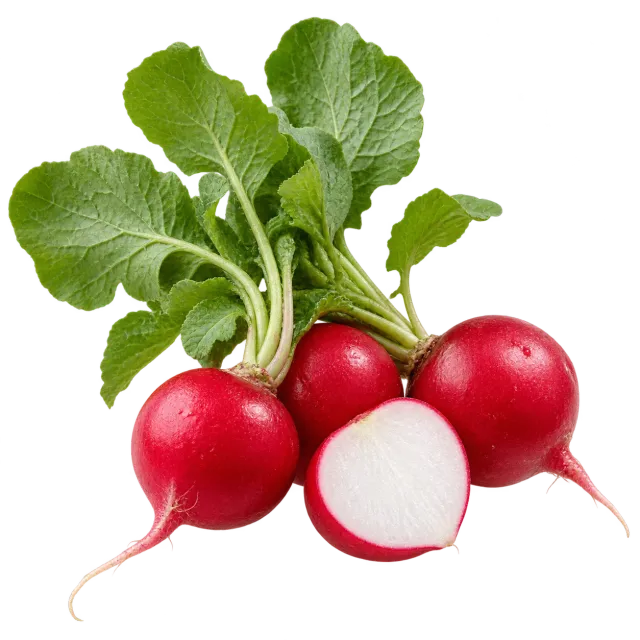
Plain radish in small piecesFor dogs and cats: With restrictions
Washed root with no greens, salt, oil, sauce or seasoning, either raw in thin slices or cooked and cooled.
For dogs and cats
Conditions and restrictions
Offer a very small amount cut for the pet’s size. Introduce it separately so that any reaction is easier to spot.
Benefits
An occasional low-calorie treat with no necessary dietary benefit.
Risks
- Drooling, gas, vomiting or diarrhoea may occur.
Already eaten — what now?
Monitor if there are no signs. Call a veterinarian for repeated vomiting, pain, abdominal swelling, refusal of food or lethargy.
Whole radish or large firm pieceFor dogs and cats: Dangerous · Urgent help needed
A whole small root or a piece the pet could swallow with little chewing.
For dogs and cats
Conditions and restrictions
Do not offer whole radishes or large firm pieces. Cut them for the pet’s size.
Benefits
There is no benefit to serving radish in this form.
Risks
- The piece can block the airway, lodge in the oesophagus or cause intestinal obstruction.
Already eaten — what now?
Leave for emergency care if your pet is coughing, choking, struggling to breathe or repeatedly trying to swallow. If a large piece was swallowed but breathing is normal, call a veterinarian now and report the size of the piece and the pet. Do not induce vomiting yourself.
Pickled or salted radishFor dogs and cats: With restrictions
A prepared product with vinegar, salt, sugar, spices or brine, with confirmed absence of onion and garlic.
For dogs and cats
Conditions and restrictions
Do not offer it deliberately. If it was eaten, check the label or recipe, especially for onion, garlic and salt.
Benefits
There is no useful reason to offer pickled or salted radish.
Risks
- Salt, acid and spices may cause thirst and digestive upset; other ingredients can be more hazardous than the radish itself.
Already eaten — what now?
After a small amount with no signs, provide water and monitor. Call a veterinarian if the ingredients are unknown, the amount was large, or there is repeated vomiting, marked thirst, weakness or poor coordination.
Dish containing onion or garlicFor dogs and cats: Dangerous · Urgent help needed
A salad, pickle, appetiser or other dish containing onion, garlic, onion powder or garlic powder.
For dogs and cats
Conditions and restrictions
Do not offer dishes containing onion or garlic, including cooked or powdered forms.
Benefits
There is no benefit for the pet.
Risks
- Onion and garlic can damage red blood cells and cause haemolytic anaemia; signs may be delayed for several days.
Already eaten — what now?
Keep the package or recipe and call a veterinarian now, even if there are no signs. Report the species, weight, time, ingredients and possible amount. Do not induce vomiting unless a veterinarian tells you to.
Conditions and risks
For dogs
Conditions and restrictions
Wash the radish, remove the greens and cut the root into thin, small pieces. Offer it plain and only occasionally if your dog tolerates new foods.
Benefits
A small piece can be an occasional low-calorie treat. Radish is not needed in a balanced diet.
Risks
- The sharp taste and plant fibre may cause drooling, gas, vomiting or diarrhoea.
- A whole radish or large firm piece can lodge in the throat, oesophagus or intestine.
For cats
Conditions and restrictions
Offer only a tiny soft or very finely chopped piece with no additions. Do not make a cat eat vegetables or add radish to the regular diet.
Benefits
Cats do not need radish. If a cat likes it, a tiny piece can be an occasional treat and must not displace complete cat food.
Risks
- The sharp taste and plant material may cause drooling, vomiting, gas or diarrhoea.
- A whole radish or large firm piece can lodge in the throat, oesophagus or intestine.
This card covers the common red food radish, Raphanus sativus. It does not cover horseradish, black radish, daikon, sprouts, seeds, wild radish or an unidentified plant.
If the radish came from a salad, pickle or prepared dish, check every ingredient. Onion and garlic are dangerous to dogs and cats even after cooking.
Sources
- American Kennel Club: Can Dogs Eat Radishes?
- Preventive Vet: Safe and Unsafe Vegetables for Dogs and Cats
- Webvet: Can Cats Eat Radishes?
- AAHA: Nutritional Risk Factors
- Cornell Feline Health Center: Feeding Your Cat
- ASPCA Animal Poison Control: Toxic and Non-Toxic Plants List
- Merck Veterinary Manual: Gastrointestinal Obstruction in Small Animals
- Merck Veterinary Manual: Garlic and Onion (Allium spp) Toxicosis in Animals
- ASPCA Animal Poison Control: Wild Radish
Comments
No comments yet.