
Already eaten — what now?
For dogs
If your dog ate a small piece of correctly identified, plain cooked porcini and seems well, remove the rest and observe. Call a veterinary clinic immediately after raw, dried, foraged or unidentified mushrooms, and keep a sample and the packaging. Do not wait for signs or induce vomiting yourself. Vomiting, drooling, diarrhoea, tremors, an unsteady gait, seizures, weakness or refusal to eat need urgent care.
For cats
Urgent help neededRemove the rest and call a veterinary clinic immediately, even if your cat still seems well. Keep a mushroom sample, food remnants and packaging. Do not induce vomiting or give home remedies. Vomiting, heavy drooling, diarrhoea, tremors, an unsteady gait, seizures, weakness or refusal to eat need urgent assessment.
Variants and ingredients
Confirmed, thoroughly cooked porciniFor dogs: With restrictionsFor cats: Dangerous · Urgent help needed
Boletus edulis with no oil, salt, sauce or seasoning.
For dogs
Conditions and restrictions
If you still choose to offer it, use only a small piece of store-bought or expert-confirmed Boletus edulis, thoroughly cooked with no oil, salt, onion, garlic or sauce. Ask your veterinarian first for puppies, dogs with a sensitive digestive system, liver or kidney disease, or a prescribed diet.
Benefits
Porcini is not needed by dogs and does not replace part of a complete diet.
Risks
- Even edible mushrooms may cause vomiting, diarrhoea or abdominal pain.
- Mistaking one wild mushroom for another can cause severe neurologic, liver or kidney injury.
- No safe serving size of Boletus edulis has been established for dogs.
Already eaten — what now?
If your dog ate a small piece of correctly identified, plain cooked porcini and seems well, remove the rest and observe. Call a veterinary clinic immediately after raw, dried, foraged or unidentified mushrooms, and keep a sample and the packaging. Do not wait for signs or induce vomiting yourself. Vomiting, drooling, diarrhoea, tremors, an unsteady gait, seizures, weakness or refusal to eat need urgent care.
For cats
Conditions and restrictions
Do not offer porcini raw, dried or cooked. Keep foraged mushrooms, prepared dishes and scraps out of reach.
Benefits
Cats do not need porcini.
Risks
- A kitten developed gastrointestinal, neurologic and systemic signs after eating a mixture of raw edible mushrooms that included Boletus edulis; the responsible species was not established.
- Human edibility does not establish safety for cats.
- If the species is misidentified, another mushroom may injure the nervous system, liver or kidneys.
Already eaten — what now?
Remove the rest and call a veterinary clinic immediately, even if your cat still seems well. Keep a mushroom sample, food remnants and packaging. Do not induce vomiting or give home remedies. Vomiting, heavy drooling, diarrhoea, tremors, an unsteady gait, seizures, weakness or refusal to eat need urgent assessment.
Raw or dried porciniFor dogs: With restrictions · Urgent help neededFor cats: Dangerous · Urgent help needed
Confirmed Boletus edulis that has not been thoroughly cooked.
For dogs
Conditions and restrictions
Do not offer raw or merely dried porcini: drying is not cooking.
Benefits
Porcini is not needed by dogs and does not replace part of a complete diet.
Risks
- Even edible mushrooms may cause vomiting, diarrhoea or abdominal pain.
- Mistaking one wild mushroom for another can cause severe neurologic, liver or kidney injury.
- No safe serving size of Boletus edulis has been established for dogs.
Already eaten — what now?
If your dog ate a small piece of correctly identified, plain cooked porcini and seems well, remove the rest and observe. Call a veterinary clinic immediately after raw, dried, foraged or unidentified mushrooms, and keep a sample and the packaging. Do not wait for signs or induce vomiting yourself. Vomiting, drooling, diarrhoea, tremors, an unsteady gait, seizures, weakness or refusal to eat need urgent care.
For cats
Conditions and restrictions
Do not offer porcini raw, dried or cooked. Keep foraged mushrooms, prepared dishes and scraps out of reach.
Benefits
Cats do not need porcini.
Risks
- A kitten developed gastrointestinal, neurologic and systemic signs after eating a mixture of raw edible mushrooms that included Boletus edulis; the responsible species was not established.
- Human edibility does not establish safety for cats.
- If the species is misidentified, another mushroom may injure the nervous system, liver or kidneys.
Already eaten — what now?
Remove the rest and call a veterinary clinic immediately, even if your cat still seems well. Keep a mushroom sample, food remnants and packaging. Do not induce vomiting or give home remedies. Vomiting, heavy drooling, diarrhoea, tremors, an unsteady gait, seizures, weakness or refusal to eat need urgent assessment.
Foraged or unidentified mushroomFor dogs and cats: Dangerous · Urgent help needed
A mushroom found outdoors, from a mixed foraged batch, or not identified by a specialist.
For dogs and cats
Conditions and restrictions
Do not allow pets to eat mushrooms found outdoors, self-foraged, mixed or unidentified.
Benefits
There is no benefit for a pet.
Risks
- Appearance is easy to misread. Poisonous mushrooms may cause vomiting and diarrhoea, neurologic signs, liver or kidney injury, and death.
- Some toxins act quickly, while others cause noticeable signs only hours later.
Already eaten — what now?
Contact a veterinary clinic immediately. Photograph the mushroom where it grew, keep a whole sample in a paper bag, and report the time and possible amount. Do not wait for signs or induce vomiting yourself.
Dish with onion, garlic or unknown sauceFor dogs and cats: Dangerous · Urgent help needed
Soup, stew, sauce, filling or another porcini mixture.
For dogs and cats
Conditions and restrictions
Do not offer mushroom dishes containing onion, garlic, alcohol or unknown ingredients.
Benefits
There is no benefit for a pet.
Risks
- Fresh, cooked or powdered onion and garlic may damage red blood cells in dogs and cats and cause anaemia.
- Fatty or salty sauce adds a digestive risk; the full risk depends on every ingredient.
Already eaten — what now?
Check the ingredients and call a veterinary clinic immediately with the ingredients, time and amount. Do not induce vomiting yourself. Weakness, pale gums, rapid breathing, dark urine, repeated vomiting or collapse need urgent care; signs of anaemia may be delayed.
Conditions and risks
For dogs
Conditions and restrictions
If you still choose to offer it, use only a small piece of store-bought or expert-confirmed Boletus edulis, thoroughly cooked with no oil, salt, onion, garlic or sauce. Ask your veterinarian first for puppies, dogs with a sensitive digestive system, liver or kidney disease, or a prescribed diet.
Benefits
Porcini is not needed by dogs and does not replace part of a complete diet.
Risks
- Even edible mushrooms may cause vomiting, diarrhoea or abdominal pain.
- Mistaking one wild mushroom for another can cause severe neurologic, liver or kidney injury.
- No safe serving size of Boletus edulis has been established for dogs.
For cats
Conditions and restrictions
Do not offer porcini raw, dried or cooked. Keep foraged mushrooms, prepared dishes and scraps out of reach.
Benefits
Cats do not need porcini.
Risks
- A kitten developed gastrointestinal, neurologic and systemic signs after eating a mixture of raw edible mushrooms that included Boletus edulis; the responsible species was not established.
- Human edibility does not establish safety for cats.
- If the species is misidentified, another mushroom may injure the nervous system, liver or kidneys.
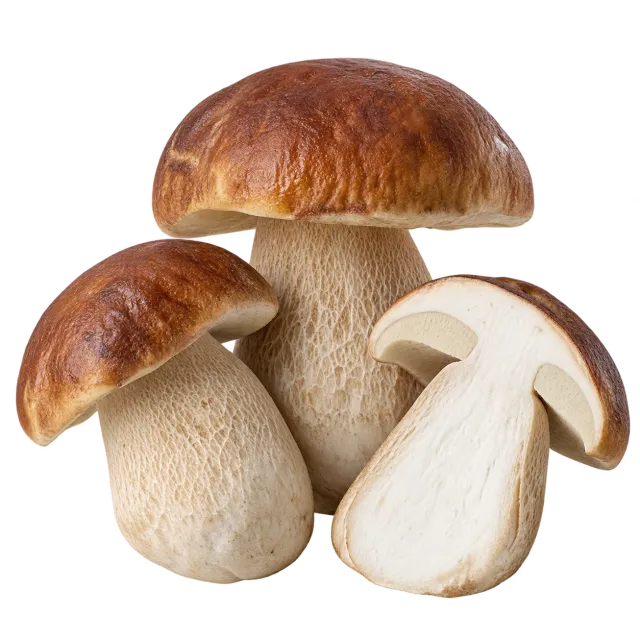
This card covers only Boletus edulis, also called porcini, cep, penny bun or king bolete. A casual photograph cannot confirm a species reliably, and a mixture of foraged mushrooms cannot be assessed as porcini.
Assess mushroom soup, sauce, stews and fillings by the full ingredient list. Onion and garlic remain toxic after cooking.
Sources
- Hellenic Journal of Companion Animal Medicine: Exposure of a cat to human-edible mushrooms
- Merck Veterinary Manual: Overview of Mushrooms Toxic to Animals
- Puschner & Wegenast (2018): Mushroom Poisoning Cases in Dogs and Cats
- Di Maro et al. (2021): Ribotoxin-like proteins from Boletus edulis
- Pet Poison Helpline: Mushrooms
- ASPCApro: Allium species poisoning in dogs and cats
Comments
No comments yet.