
Already eaten — what now?
For dogs and cats
Remove the rest, leave water available, and keep the package or recipe. If this was only a small trace of plain condiment and your pet seems well, observe. Call a veterinarian after a noticeable or unknown amount, or if your pet has digestive disease, drooling, pain, vomiting or diarrhoea. Do not induce vomiting or give home remedies unless instructed. Breathing difficulty, inability to swallow, repeated vomiting, blood or marked weakness require urgent care.
Variants and ingredients
Fresh or grated rootFor dogs and cats: With restrictions
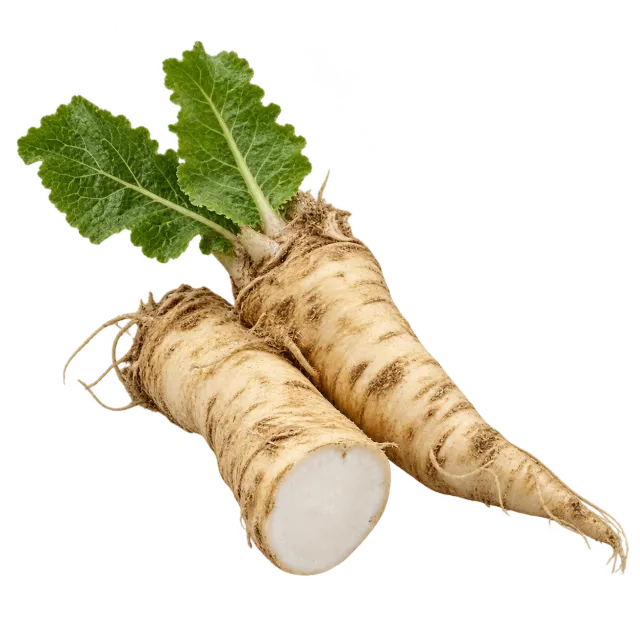
Whole, sliced or freshly grated Armoracia rusticana root with no other ingredients.
For dogs and cats
Conditions and restrictions
Do not deliberately add horseradish to pet food. If a pet licked the condiment or ate a dish containing it, identify the product form, full ingredients and approximate amount.
Benefits
Horseradish provides no benefit that justifies feeding it to a pet. A complete diet is already formulated for a dog or cat's needs.
Risks
- Cutting, grating or chewing the root converts glucosinolates into allyl isothiocyanate, a pungent compound that irritates mucous membranes.
- Oral burning, drooling, nausea, vomiting, abdominal pain or diarrhoea may occur. A large or unknown amount needs an individual assessment.
- A sauce presents more than a horseradish risk: onion, garlic, excess salt and fat may matter more than the pungent condiment itself.
Already eaten — what now?
Remove the rest, leave water available, and keep the package or recipe. If this was only a small trace of plain condiment and your pet seems well, observe. Call a veterinarian after a noticeable or unknown amount, or if your pet has digestive disease, drooling, pain, vomiting or diarrhoea. Do not induce vomiting or give home remedies unless instructed. Breathing difficulty, inability to swallow, repeated vomiting, blood or marked weakness require urgent care.
Prepared sauce without onion or garlicFor dogs and cats: With restrictions
Grated horseradish with vinegar or a creamy sauce containing no onion, garlic or other clearly hazardous additions.
For dogs and cats
Conditions and restrictions
Do not offer the sauce deliberately. Check the label: this assessment applies only to known ingredients with no onion, garlic or xylitol.
Benefits
Horseradish provides no benefit that justifies feeding it to a pet. A complete diet is already formulated for a dog or cat's needs.
Risks
- Horseradish remains irritating.
- Vinegar may increase oral discomfort, while cream, fat, salt and sugar can add digestive upset or conflict with a prescribed diet.
Already eaten — what now?
Remove the rest, leave water available, and keep the package or recipe. If this was only a small trace of plain condiment and your pet seems well, observe. Call a veterinarian after a noticeable or unknown amount, or if your pet has digestive disease, drooling, pain, vomiting or diarrhoea. Do not induce vomiting or give home remedies unless instructed. Breathing difficulty, inability to swallow, repeated vomiting, blood or marked weakness require urgent care.
Sauce containing onion or garlicFor dogs and cats: Dangerous · Urgent help needed
A prepared condiment or dish listing onion, onion powder, garlic or garlic powder.
For dogs and cats
Conditions and restrictions
Do not feed products containing onion or garlic. Cooking does not remove the risk, and dried powders are concentrated forms.
Benefits
There is no benefit that justifies feeding this sauce.
Risks
- Onion and garlic contain sulfur compounds that can damage red blood cells in dogs and cats and cause haemolytic anaemia.
- Vomiting and diarrhoea may appear first; weakness, pallor, fast breathing and dark urine can develop several days later.
Already eaten — what now?
Keep the package or recipe and call a veterinarian immediately, even if your pet seems well. Give the species, weight, ingredients, approximate amount and time. Do not induce vomiting yourself. Weakness, pale or yellow gums, fast breathing, dark urine or collapse require immediate travel to an open clinic.
Conditions and risks
For dogs and cats
Conditions and restrictions
Do not deliberately add horseradish to pet food. If a pet licked the condiment or ate a dish containing it, identify the product form, full ingredients and approximate amount.
Benefits
Horseradish provides no benefit that justifies feeding it to a pet. A complete diet is already formulated for a dog or cat's needs.
Risks
- Cutting, grating or chewing the root converts glucosinolates into allyl isothiocyanate, a pungent compound that irritates mucous membranes.
- Oral burning, drooling, nausea, vomiting, abdominal pain or diarrhoea may occur. A large or unknown amount needs an individual assessment.
- A sauce presents more than a horseradish risk: onion, garlic, excess salt and fat may matter more than the pungent condiment itself.
This card covers common horseradish, Armoracia rusticana: fresh root, the grated condiment and sauces made from it. Wasabi, radish and mustard are different products and should not be assessed from this card.
Read every ingredient in a prepared condiment. Garlic and bulb onion remain dangerous to dogs and cats after cooking, while cream, salt, sugar and fat add separate restrictions.
Sources
- CliniTox, University of Zurich: Armoracia rusticana
- CliniTox, University of Zurich: Brassica species toxicology
- Ku et al. (2015): Allyl isothiocyanate formation in horseradish roots
- Kashyap et al. (2015): Allyl isothiocyanate and colonic motility in conscious dogs
- Merck Veterinary Manual: Garlic and Onion (Allium spp) Toxicosis in Animals
- ASPCA Animal Poison Control: When should I seek help?
Comments
No comments yet.