
Already eaten — what now?
For dogs
Remove the rest and check the label or recipe. If your dog licked a little plain honey and feels well, leave water available and observe. Call a veterinarian immediately for xylitol or alcohol without waiting for signs. A large amount, unknown ingredients, repeated vomiting, weakness, poor coordination, tremors, seizures or collapse need urgent assessment. Do not induce vomiting yourself.
For cats
Remove the rest and check the label or recipe. If your cat licked a little plain honey and feels well, leave water available and observe. Call a veterinarian immediately for alcohol. If the product contains xylitol, keep the package and call: the dog-specific toxicity has not been demonstrated in cats, but one small study does not establish the safety of every mixture. A large amount, unknown ingredients, repeated vomiting, weakness, poor coordination, seizures or collapse need urgent assessment. Do not induce vomiting yourself.
Variants and ingredients
Plain honey, small amountFor dogs and cats: Acceptable
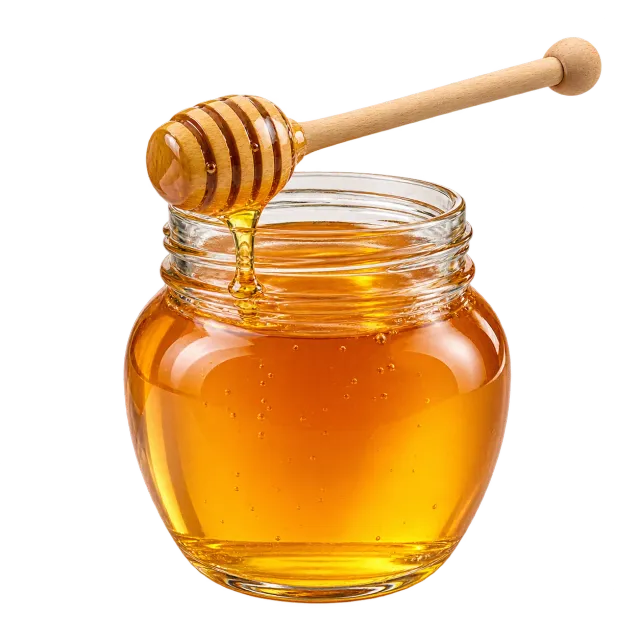
Ordinary food honey with no additions, given in a very small amount to a healthy adult pet.
For dogs and cats
Conditions and restrictions
Use only plain honey with no xylitol, alcohol, chocolate, caffeine or other additions. Offer a very small amount to a healthy adult pet and count those calories among all treats.
Benefits
A small amount of plain honey can be an occasional treat, but it has no special nutritional or therapeutic benefit.
Risks
- Too much honey can cause digestive upset.
- Even small regular servings add sugar and calories.
For dogs
Already eaten — what now?
Remove the rest and check the label or recipe. If your dog licked a little plain honey and feels well, leave water available and observe. Call a veterinarian immediately for xylitol or alcohol without waiting for signs. A large amount, unknown ingredients, repeated vomiting, weakness, poor coordination, tremors, seizures or collapse need urgent assessment. Do not induce vomiting yourself.
For cats
Already eaten — what now?
Remove the rest and check the label or recipe. If your cat licked a little plain honey and feels well, leave water available and observe. Call a veterinarian immediately for alcohol. If the product contains xylitol, keep the package and call: the dog-specific toxicity has not been demonstrated in cats, but one small study does not establish the safety of every mixture. A large amount, unknown ingredients, repeated vomiting, weakness, poor coordination, seizures or collapse need urgent assessment. Do not induce vomiting yourself.
Baked food, sauce or syrup with honeyFor dogs and cats: With restrictions
A prepared product containing ingredients besides honey; this rating applies only when no known toxic addition is present.
For dogs and cats
Conditions and restrictions
Do not offer the product until you have read the full ingredient list. This variant covers only foods without xylitol, alcohol, chocolate, caffeine, grapes, raisins, onion, garlic or another hazardous ingredient.
Benefits
Honey does not make a baked food, sauce or syrup beneficial for a pet.
Risks
- Sugar and fat can upset digestion and add many calories.
- Salt, dairy and spices can cause additional problems depending on the amount and the pet’s health.
- An unknown sweetener or incomplete recipe cannot be assessed as plain honey.
For dogs
Already eaten — what now?
Remove the rest and check the label or recipe. If your dog licked a little plain honey and feels well, leave water available and observe. Call a veterinarian immediately for xylitol or alcohol without waiting for signs. A large amount, unknown ingredients, repeated vomiting, weakness, poor coordination, tremors, seizures or collapse need urgent assessment. Do not induce vomiting yourself.
For cats
Already eaten — what now?
Remove the rest and check the label or recipe. If your cat licked a little plain honey and feels well, leave water available and observe. Call a veterinarian immediately for alcohol. If the product contains xylitol, keep the package and call: the dog-specific toxicity has not been demonstrated in cats, but one small study does not establish the safety of every mixture. A large amount, unknown ingredients, repeated vomiting, weakness, poor coordination, seizures or collapse need urgent assessment. Do not induce vomiting yourself.
Product containing xylitolFor dogs: Dangerous · Especially dangerousFor cats: With restrictions
A syrup, spread or sweet product with xylitol, E967, birch sugar or wood sugar.
For dogs and cats
Conditions and restrictions
Any honey, syrup, spread or sweet product listing xylitol, E967, birch sugar or wood sugar.
Benefits
There is no benefit.
For dogs
Risks
- Xylitol can rapidly cause severe hypoglycaemia.
- Some dogs may develop acute liver injury, and signs can be delayed.
Already eaten — what now?
Call a veterinarian immediately with the dog’s weight, time, possible amount and xylitol concentration. Keep the package. Do not wait for weakness or seizures, and do not induce vomiting unless instructed.
For cats
Risks
- A study in only six healthy cats did not find the hypoglycaemia or liver injury seen in dogs. That is not enough to call every product safe.
- The prepared mixture may contain other hazardous ingredients and may upset digestion.
Already eaten — what now?
Keep the package and call a veterinarian to assess the full ingredient list, amount and your cat’s condition. Leave immediately for vomiting, weakness, poor coordination, tremors, seizures or collapse. Do not induce vomiting yourself.
Mead or fermented honeyFor dogs and cats: Dangerous · Urgent help needed
An alcoholic honey drink or a product with clear signs of fermentation.
For dogs and cats
Conditions and restrictions
Mead, another alcoholic drink containing honey, or a product with clear fermentation signs such as an alcoholic smell or gas production.
Benefits
There is no benefit.
Risks
- Ethanol depresses the nervous system and can cause vomiting, poor coordination, weakness and hypothermia.
- Severe poisoning can lead to hypoglycaemia, seizures, coma and respiratory depression.
Already eaten — what now?
Call a veterinarian immediately. Report the drink or product, alcohol strength, amount, time and pet’s weight. Do not wait for poor coordination or drowsiness, and do not induce vomiting yourself. Leave for an open clinic immediately if breathing is abnormal, seizures occur or consciousness is lost.
Conditions and risks
For dogs and cats
Conditions and restrictions
First identify exactly what your pet ate and how much. Only a small amount of plain honey with no sweetener or other additions is suitable as a treat. All treats together should stay within 10% of daily calories. Do not offer honey without veterinary advice if your pet has diabetes, excess weight, a food reaction or a prescribed diet.
Benefits
Honey mainly supplies sugars and calories. Complete pet food already meets a dog’s or cat’s needs, so there is no reason to add honey for vitamins or to “boost immunity”.
Risks
- A large amount of concentrated sugars can cause vomiting, diarrhoea and abdominal pain.
- Regular honey adds calories and may displace balanced pet food.
- Assess a prepared dish or syrup from its full ingredient list, including every addition.
This card covers ordinary edible bee honey. Its variety, colour and “raw”, “organic” or “natural” label do not remove the limits that apply to sugars. Medical-grade wound honey is used under veterinary direction, not as a treat.
Sources
- Merck Veterinary Manual: Nutritional Requirements of Small Animals
- AAHA: 2021 Nutrition and Weight Management Guidelines, Feeding Plans
- WSAVA Nutrition Committee: Feeding Treats to Your Dog
- WSAVA Nutrition Committee: Feeding Treats to Your Cat
- Bogdanov et al. (2008): Honey for nutrition and health
- Ochoa et al. (2021): A Scoping Review of the Evidence for the Medicinal Use of Natural Honey in Animals
- Merck Veterinary Manual: Xylitol Toxicosis in Dogs
- FDA: Paws Off Xylitol; It’s Dangerous for Dogs
- Jerzsele et al. (2018): Effects of p.o. administered xylitol in cats
- Merck Veterinary Manual: Toxicoses From Alcohols in Animals
Comments
No comments yet.