
Already eaten — what now?
For dogs and cats
Urgent help neededRemove the remains and establish where the mushrooms came from and what else was in the food. After one small piece of plain, fully cooked shop-bought mushroom with no signs, monitor the pet. Call a veterinarian straight away if it was wild, the identity or amount is unknown, it was raw, or vomiting, diarrhoea, drooling, weakness, poor coordination, tremors or seizures develop. Keep the package, photographs and a sample; do not induce vomiting at home.
Variants and ingredients
Plain shop-bought, fully cookedFor dogs and cats: Acceptable
One small piece of a food-grade product without sauce or seasoning.
For dogs and cats
Conditions and restrictions
Only a food-grade shop-bought product, plain and fully cooked, with one small piece eaten accidentally.
Benefits
There is no nutritional reason to add honey mushrooms to a pet’s diet.
Risks
- A sensitive pet may develop vomiting, diarrhoea or abdominal pain.
- Large pieces and larger amounts are harder to digest.
Already eaten — what now?
Remove the remains and monitor. Call a veterinarian for vomiting, diarrhoea, pain, lethargy or deterioration. If the source or ingredients are not actually known, follow the advice for wild or mixed mushrooms.
Raw, undercooked or poorly storedFor dogs and cats: With restrictions · Urgent help needed
Food-grade honey mushrooms that were not fully cooked or were stored poorly.
For dogs and cats
Conditions and restrictions
Raw, undercooked or poorly stored honey mushrooms, even when sold as food.
Benefits
There is no benefit.
Risks
- Vomiting, diarrhoea and abdominal pain are more likely than with a fully cooked product.
- Appearance alone cannot confirm adequate cooking, safe storage or exact species.
Already eaten — what now?
Remove the remains and call a veterinarian the same day to assess the amount and timing. Leave for an open clinic immediately for repeated vomiting, profound weakness, poor coordination, tremors, seizures or breathing difficulty.
Wild or unidentified mushroomsFor dogs and cats: Dangerous · Especially dangerous
A mushroom from outdoors or without confirmed identification.
For dogs and cats
Conditions and restrictions
Any mushroom from a garden, woodland or market without reliable professional identification, even when someone called it a honey mushroom.
Benefits
There is no benefit.
Risks
- Deadly species can resemble edible mushrooms.
- Dangerous toxins may cause delayed liver or kidney injury before early signs appear.
- Severe vomiting and diarrhoea, drooling, poor coordination, tremors, seizures, respiratory depression and loss of consciousness are possible.
Already eaten — what now?
Call a veterinarian immediately without waiting for signs. Report the pet’s species and weight, the time, possible amount and where the mushroom grew. Take several photographs and keep one whole mushroom in a paper bag away from the animal. Do not induce vomiting or give home remedies unless instructed. If any signs develop, leave for an open clinic immediately.
Pickled or salted without onion or garlicFor dogs and cats: With restrictions
A commercial product with known ingredients; risk depends on the amount of brine and additions.
For dogs and cats
Conditions and restrictions
Commercial pickled or salted honey mushrooms with a complete label and no onion, garlic or other dangerous additions.
Benefits
There is no benefit.
Risks
- Brine, vinegar, salt, sugar and spices may cause thirst, vomiting or diarrhoea.
- A large serving increases the salt and fat load when oil is present in the marinade.
Already eaten — what now?
Provide fresh water and keep the label. After one small piece with no signs, monitor the pet. Call a veterinarian if a larger amount was eaten, drinking or urination changes, vomiting or lethargy develops, or the ingredients are unknown.
With onion or garlicFor dogs and cats: Dangerous · Urgent help needed
A marinade, sauce or dish containing any form of onion or garlic.
For dogs and cats
Conditions and restrictions
Honey mushrooms or a dish containing onion, garlic, onion powder or garlic powder.
Benefits
There is no benefit.
Risks
- Alliums damage red blood cells; weakness, pallor, rapid breathing and dark urine may be delayed.
- Mushrooms, marinade or seasonings may also cause vomiting, diarrhoea and abdominal pain.
Already eaten — what now?
Call a veterinarian straight away with the full ingredient list, amount, time and pet’s weight. Keep the package. Do not wait for pallor or dark urine, and do not induce vomiting unless instructed. Leave immediately for weakness, breathing difficulty, collapse or repeated vomiting.
Conditions and risks
For dogs and cats
Conditions and restrictions
Do not offer them deliberately. First establish the source, preparation and full ingredient list. Assess a wild mushroom, an unlabelled product or an unknown mixture under the more dangerous scenario.
Benefits
They offer no necessary dietary benefit. A suitable complete pet food provides the nutrients a pet needs.
Risks
- Vomiting, diarrhoea, abdominal pain and lethargy can occur even after genuine Armillaria.
- A wild lookalike mistaken for a honey mushroom may injure the liver, kidneys or nervous system.
- Onion, garlic, excess salt and other ingredients in a prepared dish change the risk.
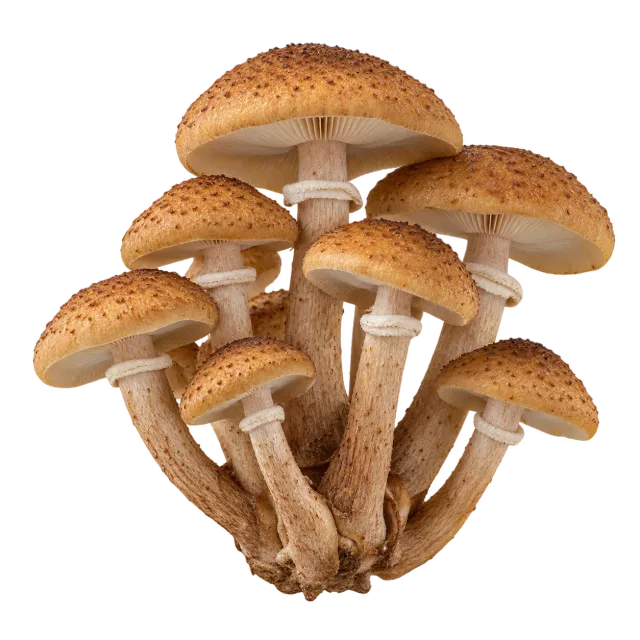
The name “honey mushroom” is used for food products and for several similar-looking wild mushrooms. Those are not equivalent for a pet. A packaged product with a known ingredient list can be assessed from its label; treat a mushroom found in a garden or woodland as unidentified until a mycologist identifies it.
Read the full ingredient list on pickled honey mushrooms. Onion and garlic are dangerous to dogs and cats even after cooking; brine, vinegar and spices may add stomach irritation.
Sources
- ASPCA Animal Poison Control: The Fungus Among Us — Mushroom Toxicosis
- Merck Veterinary Manual: Overview of Mushrooms Toxic to Animals
- Puschner & Wegenast (2018): Mushroom Poisoning Cases in Dogs and Cats
- North American Mycological Association: Mushroom Poisonings in Dogs and Cats
- Feldman et al. (2026): A 25-year analysis of Armillaria poisoning in Wisconsin
- Merck Veterinary Manual: Garlic and Onion (Allium spp) Toxicosis in Animals
- Հայաստանի սնկերը: Բազպանոտն մեղրագույն (Armillaria mellea)
Comments
No comments yet.