
Already eaten — what now?
For dogs and cats
If your pet licked a trace of pepper from otherwise safe food and seems well, remove the rest, leave water available and observe. Call a veterinarian after a noticeable or unknown amount, powder in the eyes or nose, or if your pet takes medication or has digestive disease. Do not induce vomiting or give home remedies unless instructed. Breathing difficulty, persistent coughing, repeated vomiting or sudden marked weakness need urgent care.
Variants and ingredients
Trace in food with no hazardous additionsFor dogs and cats: With restrictions
A small amount of seasoning in a dish whose full ingredients are known and safe for the pet.
For dogs and cats
Conditions and restrictions
Do not deliberately add black pepper to pet food. Assess traces of the spice together with the whole dish. If your pet has stomach or intestinal disease or takes medication, discuss any piperine-containing supplement with a veterinarian.
Benefits
There is no benefit that justifies seasoning a pet's food with black pepper. A complete diet is already formulated for the pet's needs.
Risks
- Piperine gives pepper its pungency. Ground spice may irritate the mouth and digestive tract; drooling, vomiting or diarrhoea are possible.
- Fine dry powder can reach the eyes and airways and cause burning, sneezing or coughing.
- Studies of controlled feed additives do not establish a safe home serving of ordinary ground pepper.
Already eaten — what now?
If your pet licked a trace of pepper from otherwise safe food and seems well, remove the rest, leave water available and observe. Call a veterinarian after a noticeable or unknown amount, powder in the eyes or nose, or if your pet takes medication or has digestive disease. Do not induce vomiting or give home remedies unless instructed. Breathing difficulty, persistent coughing, repeated vomiting or sudden marked weakness need urgent care.
Dry powder or an unknown amountFor dogs and cats: With restrictions · Urgent help needed
Pepper was spilled, eaten directly from the container, or reached the eyes, nose or airways.
For dogs and cats
Conditions and restrictions
Keep the container closed and do not use the powder near an animal's face. Do not use pepper as a deterrent.
Benefits
There is no benefit that justifies seasoning a pet's food with black pepper. A complete diet is already formulated for the pet's needs.
Risks
- Piperine gives pepper its pungency. Ground spice may irritate the mouth and digestive tract; drooling, vomiting or diarrhoea are possible.
- Fine dry powder can reach the eyes and airways and cause burning, sneezing or coughing.
- Studies of controlled feed additives do not establish a safe home serving of ordinary ground pepper.
Already eaten — what now?
Move the pet away from spilled powder and provide fresh air. Do not rinse the eyes with harsh solutions or induce vomiting. Call a veterinarian straight away if the amount is noticeable or unknown, coughing persists, the eye remains painful, or vomiting and lethargy develop. Leave for care immediately if breathing is difficult.
Blend containing garlic or onionFor dogs and cats: Dangerous · Urgent help needed
A seasoning blend or prepared dish listing garlic, garlic powder, onion or onion powder.
For dogs and cats
Conditions and restrictions
Do not offer blends containing garlic or onion. Check the full ingredients of seasonings, sauces, stock products and prepared foods.
Benefits
There is no benefit that justifies giving this blend.
Risks
- Garlic and onion can damage red blood cells in dogs and cats; dried powder is a concentrated form.
- Salt, fat, pungent spices and other ingredients add separate risks.
Already eaten — what now?
Keep the package or recipe and call a veterinarian straight away. Give the species and weight, full ingredients, approximate amount and time. Do not wait for signs of anaemia or induce vomiting yourself. Weakness, pale gums, fast breathing, dark urine or collapse require immediate travel to an open clinic.
Conditions and risks
For dogs and cats
Conditions and restrictions
Do not deliberately add black pepper to pet food. Assess traces of the spice together with the whole dish. If your pet has stomach or intestinal disease or takes medication, discuss any piperine-containing supplement with a veterinarian.
Benefits
There is no benefit that justifies seasoning a pet's food with black pepper. A complete diet is already formulated for the pet's needs.
Risks
- Piperine gives pepper its pungency. Ground spice may irritate the mouth and digestive tract; drooling, vomiting or diarrhoea are possible.
- Fine dry powder can reach the eyes and airways and cause burning, sneezing or coughing.
- Studies of controlled feed additives do not establish a safe home serving of ordinary ground pepper.
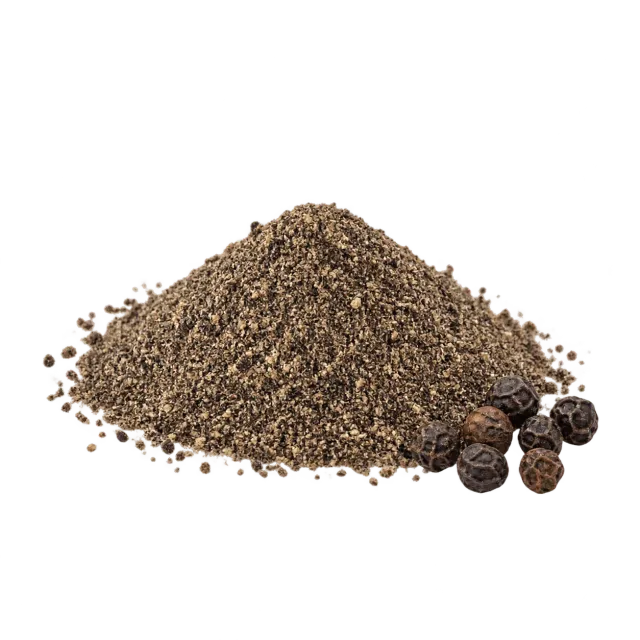
This card covers culinary black pepper, Piper nigrum, especially the ground spice. It does not establish a safe home dose and does not apply to pepper spray, chilli pepper, essential oil or supplements containing concentrated piperine.
If the pepper was part of a prepared dish, check every ingredient. Garlic and other ingredients may be more dangerous than the pinch of pepper itself, and a large amount of salt changes the assessment.
Sources
- EFSA FEEDAP, 2022: Safety and efficacy of black pepper oil, oleoresin and supercritical extract for animal feed
- Commission Implementing Regulation (EU) 2024/261 on black pepper feed additives
- Boonyarattanasoonthorn et al., 2022: Piperine and pharmacokinetics in beagle dogs
- Li et al., 2020: Piperine metabolism in mouse, rat, dog and human hepatocytes
- Ziegenhagen et al., 2021: Safety aspects of isolated piperine ingested as a bolus
- Merck Veterinary Manual: Gastritis in small animals
- Merck Veterinary Manual: Garlic and onion toxicosis in animals
Comments
No comments yet.