
Already eaten — what now?
For dogs and cats
If your pet licked a little plain fructose and seems normal, remove the rest, leave water available and observe. Check the full ingredient list. Call a veterinarian after a large or unknown amount, or for repeated vomiting, marked diarrhoea, pain or lethargy. If a dog may have eaten xylitol, call immediately.
Variants and ingredients
Plain crystalline fructoseFor dogs and cats: With restrictions
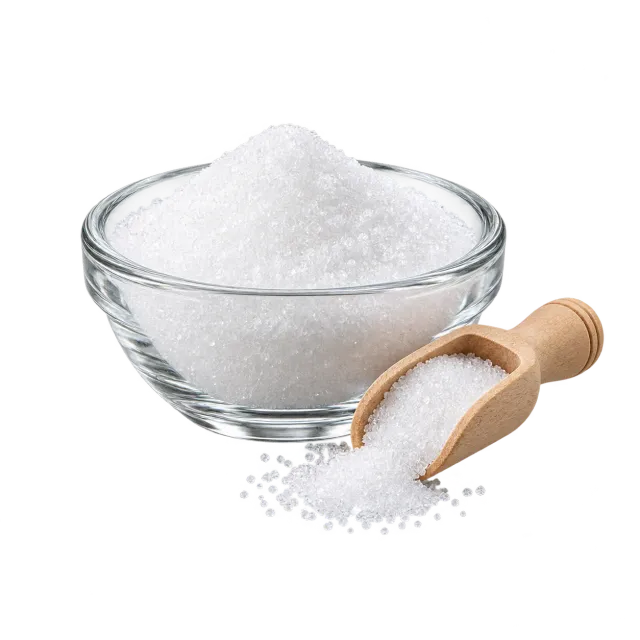
Food-grade white powder with no other ingredients.
For dogs and cats
Conditions and restrictions
Do not offer plain fructose as a treat or add it to the daily diet. Ask your veterinarian before using any sweet extra when your pet has diabetes, excess weight, liver disease or a prescribed diet.
Benefits
Fructose supplies energy, but a separate sweetener is not needed with a complete diet.
Risks
- A large amount of concentrated sugar may cause vomiting, gas or diarrhoea.
- A regular sweet extra adds unnecessary calories and may displace balanced food.
- A prepared product may contain xylitol, chocolate, raisins, caffeine, alcohol or other hazardous ingredients.
Already eaten — what now?
If your pet licked a little plain fructose and seems normal, remove the rest, leave water available and observe. Check the full ingredient list. Call a veterinarian after a large or unknown amount, or for repeated vomiting, marked diarrhoea, pain or lethargy. If a dog may have eaten xylitol, call immediately.
Fructose or glucose-fructose syrupFor dogs and cats: With restrictions
A concentrated food syrup with no xylitol or other hazardous additives.
For dogs and cats
Conditions and restrictions
Do not offer the syrup on its own or add it to water or food. Keep the sticky concentrate out of reach.
Benefits
Fructose supplies energy, but a separate sweetener is not needed with a complete diet.
Risks
- A large amount of concentrated sugar may cause vomiting, gas or diarrhoea.
- A regular sweet extra adds unnecessary calories and may displace balanced food.
- A prepared product may contain xylitol, chocolate, raisins, caffeine, alcohol or other hazardous ingredients.
Already eaten — what now?
If your pet licked a little plain fructose and seems normal, remove the rest, leave water available and observe. Check the full ingredient list. Call a veterinarian after a large or unknown amount, or for repeated vomiting, marked diarrhoea, pain or lethargy. If a dog may have eaten xylitol, call immediately.
Fructose blend with xylitol (E967)For dogs: Dangerous · Especially dangerousFor cats: With restrictions
A powder, syrup, sweet or supplement listing xylitol together with fructose.
For dogs
Conditions and restrictions
Do not offer the product and keep it out of reach. Check for xylitol, E967, birch sugar and wood sugar.
Benefits
There is no benefit for a dog.
Risks
- Xylitol can rapidly cause dangerous hypoglycaemia, weakness, poor coordination, seizures and liver injury.
Already eaten — what now?
Call the clinic immediately even if the dog looks well. Keep the package and report the dog’s weight, time and possible amount. Do not induce vomiting unless a veterinarian tells you to.
For cats
Conditions and restrictions
There is no reason to offer fructose. Assess a xylitol-containing product by its full ingredient list: feline data are limited and other ingredients may be hazardous.
Benefits
Fructose supplies energy, but a separate sweetener is not needed with a complete diet.
Risks
- A large amount of concentrated sugar may cause vomiting, gas or diarrhoea.
- A regular sweet extra adds unnecessary calories and may displace balanced food.
- A prepared product may contain xylitol, chocolate, raisins, caffeine, alcohol or other hazardous ingredients.
Already eaten — what now?
Keep the package and check every ingredient. Call a veterinarian if the amount is unknown, the product is a medicine or hygiene item, or vomiting, weakness, poor coordination, tremors or seizures develop.
Conditions and risks
For dogs and cats
Conditions and restrictions
Do not offer plain fructose as a treat or add it to the daily diet. Ask your veterinarian before using any sweet extra when your pet has diabetes, excess weight, liver disease or a prescribed diet.
Benefits
Fructose supplies energy, but a separate sweetener is not needed with a complete diet.
Risks
- A large amount of concentrated sugar may cause vomiting, gas or diarrhoea.
- A regular sweet extra adds unnecessary calories and may displace balanced food.
- A prepared product may contain xylitol, chocolate, raisins, caffeine, alcohol or other hazardous ingredients.
This card covers food-grade fructose: crystalline powder, fructose syrup and glucose-fructose syrup. Fruit needs a separate assessment because its full composition, fibre, stones and other parts matter more than a single sugar.
Dogs and cats metabolise fructose, but that does not make a concentrated sweetener a useful treat. Studies of diets containing large proportions of fructose used deliberately formulated diets as models of metabolic disease. They do not establish a safe portion for home use.
Sources
- Kawasaki et al. (1999): Plasma fructose in dogs and cats and intravenous fructose in dogs
- Martinez et al. (1994): High-fructose feeding, insulin resistance and hypertension in dogs
- Gregory et al. (2023): High-fat and high-fructose diet in dogs
- Collison et al. (2011): High-fat, high-fructose feeding in cats
- Batchelor et al. (2011): Intestinal sugar transport in dogs and cats
- WSAVA Nutrition Committee: Feeding Treats to Your Dog
- WSAVA Nutrition Committee: Feeding Treats to Your Cat
- FDA: Paws Off Xylitol; It’s Dangerous for Dogs
Comments
No comments yet.