
Already eaten — what now?
For dogs and cats
Remove the rest and note the form, ingredients, approximate amount and time. After a small piece of plain pepper with no signs, leave water available and observe. Contact a veterinarian for repeated vomiting, diarrhoea, pain, marked drooling or refusal to eat. Coughing, breathing difficulty, concentrate in the eyes, or an unknown dish composition needs prompt advice. Do not induce vomiting yourself.
Variants and ingredients
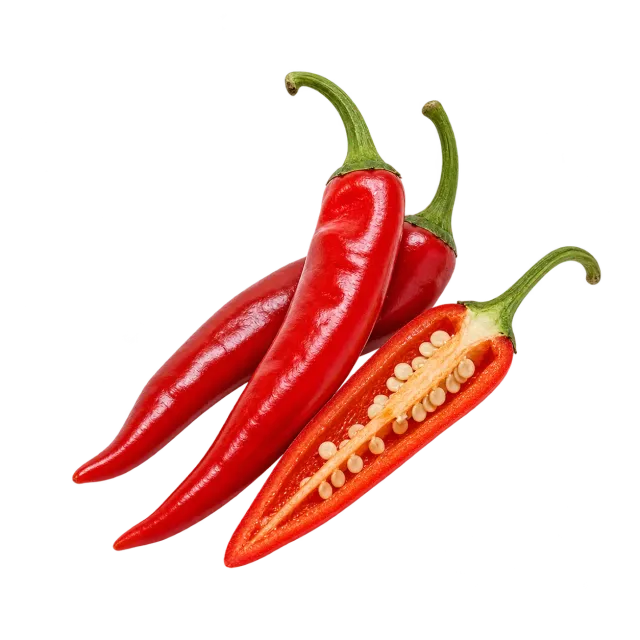
Fresh, dried or pickled chiliFor dogs and cats: Dangerous
Whole fruit or pieces without other ingredients; check the brine of a pickled product separately.
For dogs and cats
Conditions and restrictions
Do not give a pet fresh, dried or pickled hot pepper. Put the fruit and its pieces where the animal cannot reach them.
Benefits
There is no benefit that justifies feeding a hot pepper to a pet.
Risks
- Capsaicinoids irritate the stomach and intestines; vomiting and diarrhoea may occur.
- Pepper juice on the face, skin or eyes causes painful irritation.
- Pickling liquid adds separate risks from salt, vinegar, onion, garlic and other seasonings.
Already eaten — what now?
After a small piece of plain pepper with no signs, remove the rest, leave water available and observe. If juice reached the coat or skin, rinse it off with cool water without rubbing. Call a veterinarian for repeated vomiting, diarrhoea, pain, refusal to eat or eye irritation.
Chili powder and flakesFor dogs and cats: Dangerous
Ground chili, cayenne, flakes and dry seasoning blends.
For dogs and cats
Conditions and restrictions
Do not add ground chili, cayenne, flakes or blends containing them to pet food. Keep spices in a closed container.
Benefits
There is no benefit that justifies feeding a hot pepper to a pet.
Risks
- Fine particles irritate the mouth and gastrointestinal tract.
- Spilled powder readily reaches the nose and eyes, causing coughing, tearing and painful irritation.
- A spice blend may contain onion, garlic, a large amount of salt or other ingredients with separate risks.
Already eaten — what now?
Remove the powder without raising dust and ventilate the area. If it reached the eyes, rinse gently with cool water and contact a veterinarian. After ingestion, report the blend and amount; coughing or breathing difficulty needs urgent care.
Sauce or dish with onion or garlicFor dogs and cats: Dangerous · Urgent help needed
Hot sauce, marinade or prepared food listing onion, garlic, their powder or concentrate.
For dogs and cats
Conditions and restrictions
Do not give a pet hot sauce, marinade or a prepared dish containing onion, garlic, their powder or concentrate.
Benefits
There is no benefit that justifies feeding a hot pepper to a pet.
Risks
- Capsaicin irritates the gastrointestinal tract.
- Onion and garlic can damage red blood cells; weakness and signs of anaemia may be delayed.
- Salt, fat, alcohol and sweeteners in the prepared product can add separate hazards.
Already eaten — what now?
Contact a veterinarian promptly even if there are no signs yet. Give the product, ingredients, approximate amount, time and your pet’s weight. Pale gums, marked weakness, rapid breathing or breathing difficulty require immediate care. Do not induce vomiting unless instructed.
Capsaicin concentrate and pepper sprayFor dogs and cats: Dangerous · Urgent help needed
Oleoresin, repellent, aerosol and other products with a high capsaicinoid concentration.
For dogs and cats
Conditions and restrictions
Pepper spray, repellent, oleoresin and other capsaicin concentrates are not food. Keep them closed and separate from food.
Benefits
There is no benefit that justifies feeding a hot pepper to a pet.
Risks
- High concentrations cause severe irritation of the mouth, skin and eyes.
- Inhaling aerosol can cause coughing, airway inflammation and breathing difficulty.
- Solvents and other ingredients in the specific product may have their own toxicity.
Already eaten — what now?
Move your pet away from aerosol into fresh air without risking your own safety. Rinse contaminated eyes and skin with cool water and call a veterinarian promptly with the product packaging at hand. Go straight to a clinic for breathing difficulty. Do not induce vomiting or give oil or other home remedies unless instructed.
Conditions and risks
For dogs and cats
Conditions and restrictions
Do not offer chili fresh, dried or ground. Assess hot sauces and prepared dishes by their full ingredient list. Keep concentrated capsaicin products away from food and out of pets’ reach.
Benefits
There is no benefit that justifies feeding a hot pepper to a pet.
Risks
- Capsaicin irritates the lining of the mouth, stomach and intestines; vomiting and diarrhoea may follow.
- Powder or aerosol can reach the eyes or airways and cause marked irritation, coughing and breathing difficulty.
- Sauces and prepared dishes may contain onion, garlic, excess salt or fat, or other hazardous additions.
This card covers pungent Capsicum fruits, including chili, cayenne and jalapeño. It does not cover sweet bell pepper. A pepper’s size or colour does not reliably show its heat, and the seeds are not the only source of capsaicin.
The separate cards for bulb onion and garlic explain why either ingredient needs prompt assessment even when it is part of a sauce or seasoning.
Choose complete food for the daily diet. Our guide to choosing food for a dog or cat explains what to look for.
Sources
- Merck Veterinary Manual: Plants Poisonous to Animals
- National Pesticide Information Center: Capsaicin General Fact Sheet
- Shibata et al. (1999): Intragastric capsaicin stimulates motility of upper gut and proximal colon in conscious dogs
- Anuras et al. (1977): Effect of capsaicin on electrical slow waves in the isolated cat colon
- Merck Veterinary Manual: Garlic and Onion (Allium spp) Toxicosis in Animals
- RECOVER Guidelines (2026): First Aid for Dogs and Cats
Comments
No comments yet.