
Already eaten — what now?
For dogs and cats
After a small amount of plain cooked chicken with no symptoms, observation is usually enough. If it was raw or contained skin, bones or seasoning, use the relevant variant below. Seek urgent care for repeated vomiting, pain, abdominal swelling, difficulty breathing or marked weakness.
Variants and ingredients
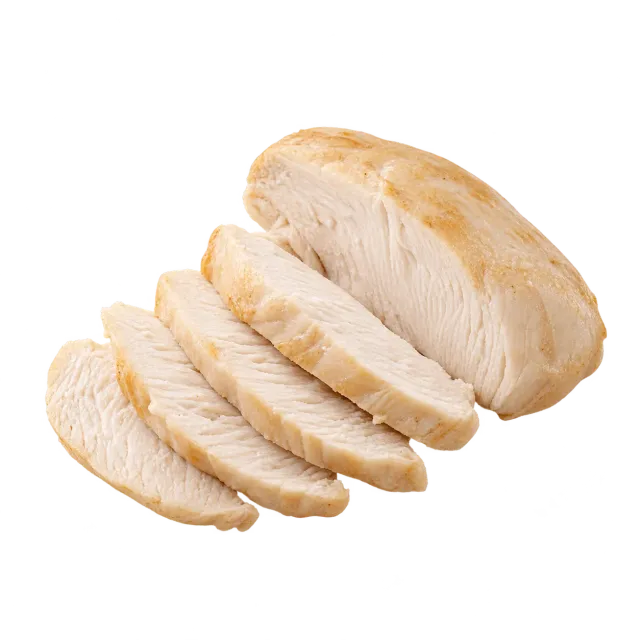
Plain fully cooked chickenFor dogs and cats: Acceptable
Lean meat without skin, bones, salt, oil, sauce or seasoning.
For dogs and cats
Conditions and restrictions
Use only lean meat, cooked thoroughly without skin, bones or added ingredients. Cool and cut into small pieces.
Risks
- Too many treats add excess calories and unbalance the diet.
Already eaten — what now?
After a small amount with no symptoms, observe. Contact a veterinarian for vomiting, diarrhoea, pain or lethargy.
For dogs
Benefits
Small pieces can be a protein-rich treat or reward. A dog eating a complete diet has no separate need for chicken.
For cats
Benefits
Small pieces can be an appealing protein-rich treat. Chicken alone does not provide a complete feline diet.
Raw or undercooked chickenFor dogs and cats: Dangerous
Raw chilled, frozen, freeze-dried or inadequately cooked meat.
For dogs and cats
Conditions and restrictions
Do not offer raw or undercooked chicken, including frozen, freeze-dried or dehydrated products that have not received an adequate kill step.
Benefits
No benefit over safely cooked meat has been established.
Risks
- Raw chicken can contain Salmonella, Campylobacter, Listeria and other pathogens.
- A pet may become ill or shed bacteria without obvious signs, contaminating bowls, surfaces and the home environment.
Already eaten — what now?
Remove leftovers and wash hands and surfaces. After a small amount with no signs, call a veterinarian for individual advice, especially for a puppy, kitten, senior or immunocompromised pet. Seek urgent care for repeated vomiting, bloody diarrhoea, fever, marked weakness or collapse. Do not induce vomiting yourself.
Chicken bonesFor dogs and cats: Dangerous · Urgent help needed
Raw or cooked bones, whole or fragmented.
For dogs and cats
Conditions and restrictions
Do not offer raw or cooked chicken bones. Do not judge safety by size, softness or whether the bone was cooked.
Benefits
There is no benefit. Safer dental-care options are available.
Risks
- A bone can lodge in the mouth, throat, oesophagus, stomach or intestines.
- Sharp fragments can injure tissue, while obstruction or perforation may require endoscopy or surgery.
Already eaten — what now?
Call an open clinic immediately even if there are no signs yet. Give the type and size of bone, amount, time and pet’s weight. Leave at once for difficulty breathing, drooling, repeated unproductive retching, repeated vomiting, pain, swelling or collapse. Do not induce vomiting or try to push the bone through with food.
Skin or fried chickenFor dogs and cats: With restrictions
Fatty skin, breading, oil, sauce or a seasoning mix with no confirmed onion or garlic.
For dogs and cats
Benefits
There is no nutritional advantage over lean meat.
Already eaten — what now?
After a small boneless piece with no hazardous ingredients and no signs, observe. Check the recipe. Call a veterinarian if the portion was large, the ingredients are unknown, or repeated vomiting, pain, a hunched posture, lethargy or loss of appetite develops.
For dogs
Conditions and restrictions
Do not offer skin or fried chicken as a treat. Assess a small accidental piece by its full recipe. If the dog has pancreatitis, hypertriglyceridaemia, excess weight or a prescribed diet, ask the veterinarian even about a small amount.
Risks
- Fatty or fried food can cause vomiting and diarrhoea. In some dogs, fatty table scraps are associated with pancreatitis episodes.
- Breading, sauce and seasoning may contain salt, onion, garlic or other hazardous ingredients.
For cats
Conditions and restrictions
Do not offer skin or fried chicken as a treat. Assess a small accidental piece by its full recipe. Ask the veterinarian first if the cat has excess weight, sensitive digestion or a prescribed diet.
Risks
- Fatty or fried food can cause vomiting or diarrhoea and adds many calories.
- Breading, sauce and seasoning may contain salt, onion, garlic or other hazardous ingredients.
Chicken with onion or garlicFor dogs and cats: Dangerous · Urgent help needed
A dish, marinade, sauce or seasoning containing onion, garlic or their powders.
For dogs and cats
Conditions and restrictions
Do not offer chicken containing onion, garlic, onion powder or garlic powder. Keep the packaging or recipe if the full ingredient list is unknown.
Benefits
There is no benefit.
Risks
- Onion and garlic can damage red blood cells and cause anaemia; signs may be delayed.
- Sauces and seasoning mixes may contain concentrated powder and additional hazardous ingredients.
Already eaten — what now?
Call a veterinarian the same day with the pet’s weight, ingredients, possible amount and time. Do not wait for pale gums, weakness, rapid breathing, dark urine or collapse. Leave immediately if these signs appear. Do not induce vomiting yourself.
Conditions and risks
For dogs
Conditions and restrictions
Cook lean meat thoroughly, remove the skin and every bone, cool it and cut it into small pieces. Add no salt, oil, sauce or seasoning. All treats together should provide no more than 10% of daily calories. Ask your veterinarian first if your dog has a food reaction, pancreatitis or a prescribed diet.
Benefits
Small pieces can be a protein-rich treat or reward. A dog eating a complete diet has no separate need for chicken.
Risks
- A large portion or abrupt diet change can cause vomiting or diarrhoea.
- Chicken can be a food allergen. Do not use it during an elimination diet unless the veterinarian included it in the plan.
For cats
Conditions and restrictions
Cook lean meat thoroughly, remove the skin and every bone, cool it and cut it very small. Add no salt, oil, sauce or seasoning. All treats together should provide no more than 10% of daily calories. Ask your veterinarian first if your cat has a food reaction or a prescribed diet.
Benefits
Small pieces can be an appealing protein-rich treat. Chicken alone does not provide a complete feline diet.
Risks
- A large portion or abrupt diet change can cause vomiting or diarrhoea.
- A large piece can lodge if a cat swallows it without chewing.
The green rating applies only to a small portion of lean, fully cooked chicken without skin, bones, salt, oil, sauce, onion or garlic. Chicken eggs have a separate card. A prepared food containing chicken must be assessed by its full recipe, not by one ingredient.
If the dish contained onion or garlic, use the relevant card. Cooking and powdered forms do not remove the risk.
Sources
- CDC: About Pet Food Safety
- FDA: Raw Pet Food Diets Can Be Dangerous
- Joffe and Schlesinger: Preliminary assessment of Salmonella risk in dogs fed raw chicken diets
- van Bree et al.: Zoonotic bacteria and parasites found in raw meat-based diets for cats and dogs
- AAHA: Feeding Plans for Healthy, Appropriate Weight Cats and Dogs
- MSD Veterinary Manual: Nutritional Requirements of Small Animals
- FDA: Potentially Dangerous Items for Your Pet
- MSD Veterinary Manual: Gastrointestinal Obstruction in Small Animals
- MSD Veterinary Manual: Nutrition in Disease Management in Small Animals
- Yamka et al.: High fat, high risk? Dietary fat and pancreatitis in dogs
Comments
No comments yet.