
Already eaten — what now?
For dogs and cats
If your pet licked or ate a small piece of plain butter and seems well, remove the rest, leave water available and observe. Call a veterinarian after a large amount or if repeated vomiting, severe diarrhoea, pain, loss of appetite or lethargy develops. Do not induce vomiting or give home remedies unless instructed.
Variants and ingredients
Plain unsalted butterFor dogs and cats: With restrictions
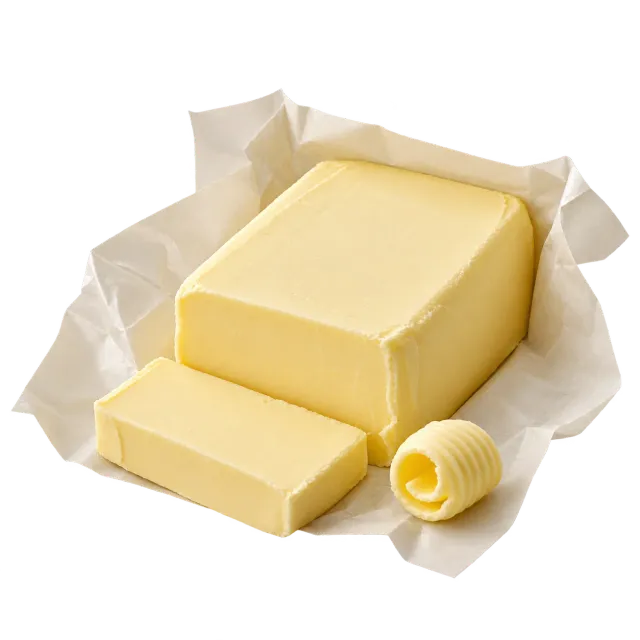
Fresh dairy butter with no salt, seasoning or other additions.
For dogs and cats
Conditions and restrictions
It is better not to offer butter deliberately. If a healthy adult pet has a one-off taste, keep it to a very small piece of fresh unsalted butter with no seasoning or additions. Do not offer it without veterinary agreement if your pet has pancreatitis, high triglycerides, excess weight or a prescribed diet.
Benefits
A pet eating a complete diet does not need butter. It mainly adds fat and calories.
Risks
- Butter contains at least 80% milk fat. A large amount may cause vomiting, diarrhoea and abdominal pain, while regular extras make calorie and weight control harder.
- Butter has far less lactose than milk, so fat is the main concern. A sensitive pet may still develop digestive upset after a dairy product.
Already eaten — what now?
If your pet licked or ate a small piece of plain butter and seems well, remove the rest, leave water available and observe. Call a veterinarian after a large amount or if repeated vomiting, severe diarrhoea, pain, loss of appetite or lethargy develops. Do not induce vomiting or give home remedies unless instructed.
Salted butterFor dogs and cats: With restrictions
Dairy butter with added salt; sodium content varies by product and recipe.
For dogs and cats
Conditions and restrictions
Do not offer salted butter as a treat. If your pet accidentally tasted some, check the label for onion, garlic, sweeteners or other additions. Discuss even a small amount with your veterinarian if your pet has heart or kidney disease or a prescribed sodium-restricted diet.
Benefits
A pet eating a complete diet does not need butter. It mainly adds fat and calories.
Risks
- Sodium adds to the concerns from a large amount of fat. The amount varies by product, so assess the exposure from the label and your pet’s weight.
- A large portion may cause vomiting, diarrhoea and abdominal pain. Regular treats add unnecessary calories.
Already eaten — what now?
After a small piece with no symptoms, remove the rest, leave water available and observe. Call a veterinarian if a noticeable part of the pack was eaten, your pet is small, has heart or kidney disease, or develops vomiting, diarrhoea, pain, marked thirst, weakness or unsteadiness. Keep the packaging and do not induce vomiting yourself.
Clarified butter or gheeFor dogs and cats: With restrictions
Milk fat with almost all water and most milk solids removed.
For dogs and cats
Conditions and restrictions
Do not offer clarified butter or ghee deliberately. It contains very little lactose but is almost entirely fat. Avoid it without veterinary agreement if your pet has pancreatitis, high triglycerides, excess weight or a prescribed diet.
Benefits
A pet eating a complete diet does not need ghee. Removing water and most lactose does not turn milk fat into a useful treat.
Risks
- A large amount of concentrated fat may cause vomiting, diarrhoea and abdominal pain.
- Low lactose does not reduce the calorie load or make the product suitable for regular feeding.
Already eaten — what now?
After a small accidental amount with no symptoms, remove the rest, leave water available and observe. Call a veterinarian if a large amount was eaten or repeated vomiting, severe diarrhoea, pain, loss of appetite or lethargy develops. Do not induce vomiting yourself.
With onion, garlic or other AlliumFor dogs and cats: Dangerous · Urgent help needed
Butter or a prepared blend containing garlic, onion, spring onion, chives, leek or their powders.
For dogs and cats
Conditions and restrictions
Do not offer butter containing onion, garlic, spring onion, chives, leek, onion powder or garlic powder. Heating does not remove the risk, and powders may be concentrated.
Benefits
There is no benefit for a pet.
Already eaten — what now?
Remove the product, keep the packaging or recipe, and call a veterinarian as soon as possible even if there are no symptoms. Give your pet’s species and weight, the ingredients, possible amount and time. Weakness, pale or yellow mucous membranes, rapid breathing, dark urine or collapse require immediate veterinary care. Do not induce vomiting yourself.
For dogs
Risks
- Onion, garlic and related plants damage red blood cells and may cause haemolytic anaemia. Dogs are susceptible, and the amount of seasoning in prepared butter is often unknown.
- Weakness, pale or yellow mucous membranes, rapid breathing, dark urine and collapse may take several days to appear.
For cats
Risks
- Onion, garlic and related plants damage red blood cells and may cause haemolytic anaemia. Cats are particularly susceptible, and powders or dry mixes are often more concentrated.
- Weakness, pale or yellow mucous membranes, rapid breathing, dark urine and collapse may take several days to appear.
Conditions and risks
For dogs and cats
Conditions and restrictions
It is better not to offer butter deliberately. If a healthy adult pet has a one-off taste, keep it to a very small piece of fresh unsalted butter with no seasoning or additions. Do not offer it without veterinary agreement if your pet has pancreatitis, high triglycerides, excess weight or a prescribed diet.
Benefits
A pet eating a complete diet does not need butter. It mainly adds fat and calories.
Risks
- Butter contains at least 80% milk fat. A large amount may cause vomiting, diarrhoea and abdominal pain, while regular extras make calorie and weight control harder.
- Butter has far less lactose than milk, so fat is the main concern. A sensitive pet may still develop digestive upset after a dairy product.
The main rating covers fresh unsalted dairy butter with no additions. Butter contains at least 80% fat. Spreads, margarine, nut butters and prepared foods made with butter need to be assessed from their full ingredient list.
Butter contains far less lactose than milk, but dairy tolerance varies. See the cow’s milk card for more on lactose.
Butter containing garlic, onion or their powders has a red rating. Our garlic card explains the different forms and delayed signs of poisoning.
Sources
- FDA: Butter adulteration and minimum milk-fat content
- Portnoi and MacDonald: Lactose and galactose content of butter, ghee and butter oil
- Batchelor et al.: Intestinal lactase expression in domestic dogs and cats
- Merck Veterinary Manual: Pancreatitis in dogs and cats
- Yamka, Sires and Wakshlag: High fat, high risk? Dietary fat and pancreatitis in dogs
- Cortinovis and Caloni: Household food items toxic to dogs and cats
- Merck Veterinary Manual: Garlic and onion toxicosis in animals
- WSAVA Nutrition Committee: Feeding treats to your dog
- WSAVA Nutrition Committee: Feeding treats to your cat
Comments
No comments yet.