
Already eaten — what now?
For dogs
If a symptom-free dog ate a small amount of plain buckwheat once, remove the rest and observe; the study did not describe acute poisoning from a single serving. Call a veterinarian if buckwheat was fed regularly, a large amount was eaten, the dog already has liver disease, or you notice loss of appetite, vomiting, marked lethargy, yellow gums or eyes, unusual thirst or abdominal swelling. Do not induce vomiting or give medicines on your own.
For cats
If a cat ate a little plain cooked buckwheat and feels well, remove the rest and observe. Contact a veterinarian after a large serving, regular feeding, or if vomiting, diarrhoea, refusal to eat or lethargy develops. For a mixed dish, identify every ingredient first.
Variants and ingredients
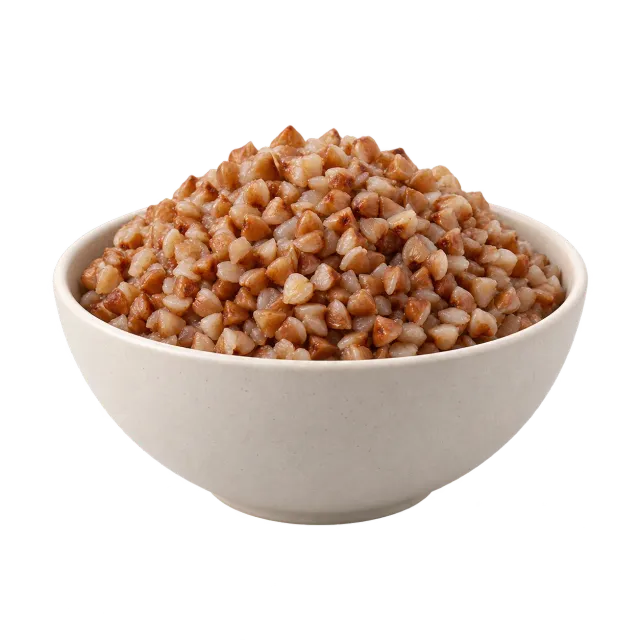
Plain cooked buckwheatFor dogs: DangerousFor cats: With restrictions
Well-cooked groats made with water and no salt, milk, butter or seasoning.
For dogs
Conditions and restrictions
Do not add buckwheat to a dog’s home-prepared diet or use it to replace part of a complete food. If it is included in a recipe prescribed by a veterinary nutritionist or in a commercial complete food, do not change the diet on your own; discuss that specific product with the professional.
Benefits
Buckwheat gives dogs no essential benefit that cannot be obtained from a suitable complete diet. Because one veterinary study raised a possible liver risk, we do not recommend it as a treat or part of a home-prepared diet.
Risks
- Liver disease was more frequent among buckwheat-fed dogs in the German consultation sample, while the Russian sample showed no such association.
- The study was retrospective and did not prove that buckwheat caused the disease. The reason for the difference between the two samples remained unknown.
- A home-prepared mixture of meat, grain and vegetables can be nutritionally incomplete without a properly formulated recipe, regardless of the grain chosen.
Already eaten — what now?
If a symptom-free dog ate a small amount of plain buckwheat once, remove the rest and observe; the study did not describe acute poisoning from a single serving. Call a veterinarian if buckwheat was fed regularly, a large amount was eaten, the dog already has liver disease, or you notice loss of appetite, vomiting, marked lethargy, yellow gums or eyes, unusual thirst or abdominal swelling. Do not induce vomiting or give medicines on your own.
For cats
Conditions and restrictions
If you want to offer buckwheat to a cat, use only a very small amount of well-cooked groats made with water and no salt, milk, butter, onion, garlic or seasoning. All extras together should stay at or below 10% of the diet. Ask your veterinarian first if the cat has liver, kidney or digestive disease, diabetes, excess weight or a prescribed diet.
Benefits
Buckwheat has no proven special benefit for cats. A small serving can only be an occasional extra if the cat enjoys it; a complete food should provide the required nutrients.
Risks
- No direct studies of ordinary buckwheat in cats were found, so regular feeding cannot be declared safe and findings in dogs cannot simply be transferred to cats.
- A large serving or unfamiliar food can cause vomiting, diarrhoea or refusal to eat.
- Porridge displaces complete food and can unbalance the diet if it becomes a meaningful part of the menu.
Already eaten — what now?
If a cat ate a little plain cooked buckwheat and feels well, remove the rest and observe. Contact a veterinarian after a large serving, regular feeding, or if vomiting, diarrhoea, refusal to eat or lethargy develops. For a mixed dish, identify every ingredient first.
Porridge with milk, butter or saltFor dogs: DangerousFor cats: With restrictions
Home-made porridge or side dishes containing dairy, fatty gravy, salt or seasoning.
For dogs
Conditions and restrictions
Do not offer buckwheat cooked with milk, butter, a lot of salt, fatty gravy or seasoning. We do not recommend even the plain version for dogs because of the unresolved signal of possible liver risk.
Benefits
Buckwheat gives dogs no essential benefit that cannot be obtained from a suitable complete diet. Because one veterinary study raised a possible liver risk, we do not recommend it as a treat or part of a home-prepared diet.
Risks
- Liver disease was more frequent among buckwheat-fed dogs in the German consultation sample, while the Russian sample showed no such association.
- The study was retrospective and did not prove that buckwheat caused the disease. The reason for the difference between the two samples remained unknown.
- A home-prepared mixture of meat, grain and vegetables can be nutritionally incomplete without a properly formulated recipe, regardless of the grain chosen.
- Milk can upset digestion, while fatty and salty food adds separate risks, especially in animals with chronic disease.
Already eaten — what now?
If a symptom-free dog ate a small amount of plain buckwheat once, remove the rest and observe; the study did not describe acute poisoning from a single serving. Call a veterinarian if buckwheat was fed regularly, a large amount was eaten, the dog already has liver disease, or you notice loss of appetite, vomiting, marked lethargy, yellow gums or eyes, unusual thirst or abdominal swelling. Do not induce vomiting or give medicines on your own.
For cats
Conditions and restrictions
Do not give a cat buckwheat made with milk, butter, a lot of salt, fatty gravy or seasoning. Do not offer a prepared dish if its full ingredient list is unknown.
Benefits
Buckwheat has no proven special benefit for cats. A small serving can only be an occasional extra if the cat enjoys it; a complete food should provide the required nutrients.
Risks
- No direct studies of ordinary buckwheat in cats were found, so regular feeding cannot be declared safe and findings in dogs cannot simply be transferred to cats.
- A large serving or unfamiliar food can cause vomiting, diarrhoea or refusal to eat.
- Porridge displaces complete food and can unbalance the diet if it becomes a meaningful part of the menu.
- Many adult cats tolerate lactose poorly; fatty and salty food can upset digestion and adds unnecessary calories.
Already eaten — what now?
If a cat ate a little plain cooked buckwheat and feels well, remove the rest and observe. Contact a veterinarian after a large serving, regular feeding, or if vomiting, diarrhoea, refusal to eat or lethargy develops. For a mixed dish, identify every ingredient first.
Buckwheat with onion or garlicFor dogs and cats: Dangerous · Urgent help needed
Porridge, a side dish or prepared food containing any onion, garlic or their powders.
For dogs and cats
Conditions and restrictions
Do not offer buckwheat with bulb or green onion, garlic, onion or garlic powder, stock mixes or sauces containing Allium. Cooking does not make these additions safe.
Benefits
A dish containing onion or garlic has no benefit that justifies the risk of red-cell injury.
Risks
- Onion and garlic can cause oxidative red-cell injury, Heinz body formation and haemolytic anaemia.
- Signs of anaemia may be delayed for several days and include weakness, pale gums, rapid breathing, dark urine, jaundice or collapse.
Already eaten — what now?
Remove the rest and call a veterinarian straight away, even if your pet looks well. Give the species, weight, time, possible amount and every ingredient; keep the package or recipe. Do not induce vomiting yourself. Leave for an open clinic immediately if you notice weakness, pale gums, rapid breathing, dark urine, jaundice or collapse.
Conditions and risks
For dogs
Conditions and restrictions
Do not add buckwheat to a dog’s home-prepared diet or use it to replace part of a complete food. If it is included in a recipe prescribed by a veterinary nutritionist or in a commercial complete food, do not change the diet on your own; discuss that specific product with the professional.
Benefits
Buckwheat gives dogs no essential benefit that cannot be obtained from a suitable complete diet. Because one veterinary study raised a possible liver risk, we do not recommend it as a treat or part of a home-prepared diet.
Risks
- Liver disease was more frequent among buckwheat-fed dogs in the German consultation sample, while the Russian sample showed no such association.
- The study was retrospective and did not prove that buckwheat caused the disease. The reason for the difference between the two samples remained unknown.
- A home-prepared mixture of meat, grain and vegetables can be nutritionally incomplete without a properly formulated recipe, regardless of the grain chosen.
For cats
Conditions and restrictions
If you want to offer buckwheat to a cat, use only a very small amount of well-cooked groats made with water and no salt, milk, butter, onion, garlic or seasoning. All extras together should stay at or below 10% of the diet. Ask your veterinarian first if the cat has liver, kidney or digestive disease, diabetes, excess weight or a prescribed diet.
Benefits
Buckwheat has no proven special benefit for cats. A small serving can only be an occasional extra if the cat enjoys it; a complete food should provide the required nutrients.
Risks
- No direct studies of ordinary buckwheat in cats were found, so regular feeding cannot be declared safe and findings in dogs cannot simply be transferred to cats.
- A large serving or unfamiliar food can cause vomiting, diarrhoea or refusal to eat.
- Porridge displaces complete food and can unbalance the diet if it becomes a meaningful part of the menu.
Grain alone does not make a complete home-prepared diet. Our guide to choosing pet food explains why a long-term recipe must account for every required nutrient.
Check every ingredient in a prepared dish. Bulb onion and garlic remain dangerous to dogs and cats after cooking, so that version needs a separate urgent assessment.
Sources
- Lineva et al. (2019): Liver disease history in dogs fed homemade diets with buckwheat
- WSAVA Global Nutrition Committee: Guidelines on Selecting Pet Foods
- FEDIAF: Nutritional Guidelines for Cats and Dogs
- Tang, Xia & Yu (2008): Hemolysis induced by onion poisoning in dogs
- Robertson, Christopher & Rogers (1998): Heinz bodies in cats fed onion powder
- MSD Veterinary Manual: Garlic and Onion (Allium spp) Toxicosis in Animals
- MSD Veterinary Manual: Disorders of the Liver and Gallbladder in Dogs
Comments
No comments yet.