
Already eaten — what now?
For dogs and cats
Remove the product and keep the label. After one small lick of ordinary culinary vinegar, a pet with no signs can have free access to water and be observed. Call a veterinarian after a noticeable amount, an unknown concentration, drooling, pain, vomiting or refusal to eat. Do not induce vomiting or try to neutralise the acid with baking soda.
Variants and ingredients
Small amount in prepared foodFor dogs and cats: Acceptable
Culinary vinegar as one ingredient in a dish with a fully known recipe.
For dogs and cats
Conditions and restrictions
Only a small amount of culinary vinegar in prepared food with a fully known ingredient list is suitable. It must contain no onion, garlic, xylitol or excess salt. Do not add vinegar deliberately.
Benefits
Vinegar can be an ordinary ingredient in prepared food, but it offers no separate benefit to a pet.
Risks
- Risk usually depends on the amount and the other ingredients in the dish.
- Acidic or unfamiliar food may upset digestion in a sensitive pet.
Already eaten — what now?
After a small bite of food containing a little vinegar and no hazardous additions, observation is usually enough. Contact a veterinarian for vomiting, diarrhoea, pain or lethargy and give the full ingredient list.
Table or apple cider vinegarFor dogs and cats: With restrictions
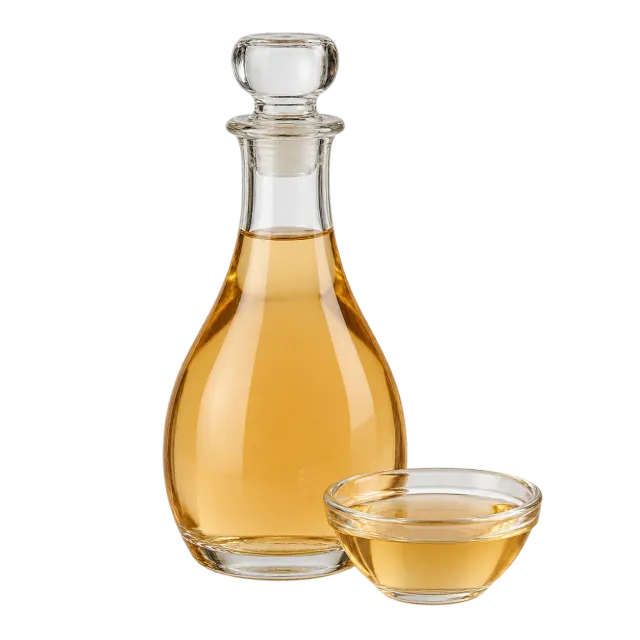
Ordinary culinary vinegar containing about 4 to 9% acetic acid and no other hazardous ingredients.
For dogs and cats
Conditions and restrictions
Do not offer vinegar by itself or add it to drinking water. Check the concentration and full ingredient list first. Assess higher concentrations and products with other ingredients separately.
Benefits
Acetic acid is used in food, but pets do not need household vinegar as a separate supplement.
Risks
- Undiluted culinary vinegar may cause oral irritation and pain, drooling, vomiting or diarrhoea.
- A large amount or a more concentrated product increases the risk of injury to the mouth, oesophagus and stomach.
- Cleaning products and prepared foods may contain other hazardous ingredients.
Already eaten — what now?
Remove the product and keep the label. After one small lick of ordinary culinary vinegar, a pet with no signs can have free access to water and be observed. Call a veterinarian after a noticeable amount, an unknown concentration, drooling, pain, vomiting or refusal to eat. Do not induce vomiting or try to neutralise the acid with baking soda.
Marinade with known ingredientsFor dogs and cats: With restrictions
A marinade or brine containing no onion, garlic, xylitol or other hazardous additions.
For dogs and cats
Conditions and restrictions
This variant covers a marinade with a fully known ingredient list and no onion, garlic, xylitol or other hazardous additions. Do not offer it deliberately. Assess the salt, fat, spices and amount separately.
Benefits
A marinade offers no dietary benefit that a pet needs.
Risks
- Salt, fat and spices may matter more than the vinegar and can cause digestive upset or other problems.
- An unknown recipe cannot be treated as safe because it merely contains vinegar.
Already eaten — what now?
Check the recipe and amount. Observe after a small amount with no hazardous additions. Call a veterinarian if the ingredients are unknown, a large amount was eaten, or vomiting, marked thirst, weakness, pain or refusal to eat develops.
Vinegar essence or concentrated acidFor dogs and cats: Dangerous · Especially dangerous
An acetic acid solution of 25% or more, including vinegar essence and glacial acetic acid.
For dogs and cats
Conditions and restrictions
Keep solutions of 25% or more sealed and out of reach. Do not give them by mouth or apply them to skin or coat. Do not confuse vinegar essence with ordinary culinary vinegar.
Benefits
Vinegar essence and concentrated acetic acid are unsuitable for feeding or pet care.
Risks
- Concentrated acid can cause chemical burns to the mouth, throat, oesophagus, stomach, skin and eyes.
- Severe pain, drooling, inability to swallow, bloody vomiting, breathing difficulty, shock and later oesophageal narrowing may occur.
- Vomiting can worsen the injury and allow acid to enter the airways.
Already eaten — what now?
Call a clinic and travel there immediately even if no signs are visible yet. Keep the package. Do not induce vomiting, give activated charcoal or neutralise the acid with baking soda. If your pet is alert and swallowing normally, you may offer a little water, but do not force it. Flush skin with plenty of water and rinse eyes with water or saline for at least 20 minutes.
With onion or garlicFor dogs and cats: Dangerous · Urgent help needed
A marinade, sauce, pickle or other dish containing Allium plants or their powder.
For dogs and cats
Conditions and restrictions
Do not feed marinades, sauces or pickles containing onion, garlic, leek, shallot, spring onion, chives or their powders. Cooking and vinegar do not remove the Allium hazard.
Benefits
A product containing onion or garlic is unsuitable for pets.
Risks
- Alliums damage red blood cells and may cause haemolytic anaemia. Cats are particularly susceptible.
- Weakness, pale or yellow gums, rapid breathing and dark urine may take several days to appear.
Already eaten — what now?
Contact a veterinarian immediately and give the ingredients, amount, time and your pet’s weight. Keep the package or recipe. Do not wait for signs of anaemia and do not induce vomiting unless instructed. Travel immediately for weakness, pale gums, difficult breathing, dark urine or collapse.
Mixed with chlorine bleachFor dogs and cats: Dangerous · Especially dangerous
Vinegar or another acid reached a hypochlorite product and may have released gas.
For dogs and cats
Conditions and restrictions
Never mix vinegar, other acids or cleaning products with chlorine bleach. Remove pets before cleaning and return them only after ventilation, rinsing and complete drying.
Benefits
A mixture of vinegar and chlorine bleach has no safe household use around a pet.
Risks
- Acid and hypochlorite can release toxic chlorine gas.
- Coughing, drooling, eye irritation, retching, breathing difficulty and delayed pulmonary oedema may occur.
Already eaten — what now?
Without re-entering the contaminated area, move your pet to fresh air and call a clinic immediately. Coughing, rapid or difficult breathing, blue-tinged gums, weakness or collapse need emergency care. Do not try to neutralise the mixture with another product.
Conditions and risks
For dogs and cats
Conditions and restrictions
Do not offer vinegar by itself or add it to drinking water. Check the concentration and full ingredient list first. Assess higher concentrations and products with other ingredients separately.
Benefits
Acetic acid is used in food, but pets do not need household vinegar as a separate supplement.
Risks
- Undiluted culinary vinegar may cause oral irritation and pain, drooling, vomiting or diarrhoea.
- A large amount or a more concentrated product increases the risk of injury to the mouth, oesophagus and stomach.
- Cleaning products and prepared foods may contain other hazardous ingredients.
The main rating covers ordinary culinary vinegar containing about 4 to 9% acetic acid. Vinegar essence, concentrated acid, prepared marinades and cleaning mixtures are covered separately.
The whole recipe determines the risk in a marinade, including its salt load, onion, garlic, sweeteners and spices. Check the salt card separately for salty liquids.
Sources
- ASPCA Animal Poison Control: Poisonous Household Products
- ASPCA Animal Poison Control: Pet Poisons, Household Products and Cleaning Agents
- Merck Veterinary Manual: Toxicoses From Corrosive Agents in Animals
- Cornell University College of Veterinary Medicine: Small Animal Toxins
- EFSA FEEDAP: Safety and efficacy of acetic acid and acetates in feed
- Naoum et al. (2002): Effect of acetic acid consumption on clinical laboratory values in the dog
- ECHA: Acetic acid registration dossier
- CDC: Chemical Disinfectants, chlorine and chlorine compounds
- Merck Veterinary Manual: Garlic and Onion (Allium spp) Toxicosis in Animals
Comments
No comments yet.