
Already eaten — what now?
For dogs and cats
After a few drops of plain edible oil, removing the rest, providing water and observing is usually enough. Call the clinic if your pet drank from a bottle or pan, the amount is unknown, or repeated vomiting, diarrhoea, pain, lethargy or loss of appetite develops. Coughing after vomiting, breathing difficulty, marked weakness or collapse needs immediate care. Do not induce vomiting or give more oil as a home remedy.
Variants and ingredients
Plain edible oil, a few dropsFor dogs and cats: With restrictions
Fresh oil with no salt, seasoning or other additions.
For dogs and cats
Conditions and restrictions
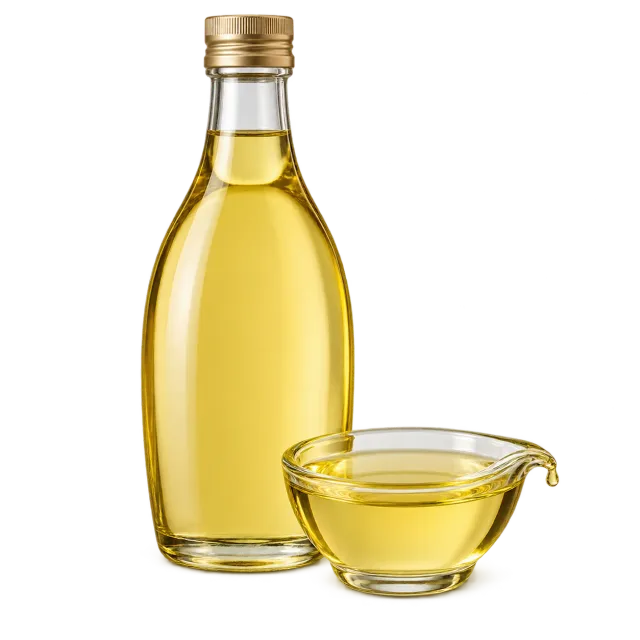
This variant covers fresh edible sunflower, rapeseed, corn, soybean or olive oil with no salt, seasoning or other additions. A few accidental drops usually need no treatment in a healthy pet, but do not add oil deliberately without a reason and a calculated amount.
Benefits
Vegetable oil supplies fatty acids and energy, but a healthy pet eating a complete diet usually does not need an extra spoonful. A veterinarian should choose any therapeutic supplement and its amount.
Already eaten — what now?
After a few drops, remove the oil, provide water and observe. Call the clinic for vomiting, diarrhoea, pain, lethargy or loss of appetite. Do not induce vomiting.
For dogs
Risks
- Oil is calorie-dense. Routine additions make weight control harder and can unbalance the diet.
- A large amount can cause vomiting and diarrhoea; fatty food is associated with pancreatitis risk in susceptible dogs.
For cats
Risks
- Oil is calorie-dense. Routine additions make weight control harder and displace nutrients from complete food.
- A large amount can cause vomiting and diarrhoea. Vegetable oil does not replace the animal-derived fatty acids a cat needs.
Large amountFor dogs: Dangerous · Urgent help neededFor cats: With restrictions · Urgent help needed
Oil was drunk from a bottle, bowl or pan, or the volume is unknown.
For dogs and cats
Conditions and restrictions
Keep open bottles, containers and pans of oil out of reach. A large amount cannot be judged the same way for a small cat and a large dog. The veterinarian needs the species, weight, estimated volume and time.
Benefits
There is no benefit from accidentally drinking a large amount.
Already eaten — what now?
Call the clinic promptly and give the species, weight, estimated volume and time. Remove the oil, do not force food, induce vomiting or give home remedies. Leave for urgent care after repeated vomiting, severe pain, marked weakness, coughing after vomiting, breathing difficulty or collapse.
For dogs
Risks
- A large fat load can cause vomiting and diarrhoea and may trigger pancreatitis in a susceptible dog.
- Vomiting oil raises the risk of material entering the airways and causing aspiration pneumonia.
For cats
Risks
- A large amount can cause vomiting, diarrhoea and dehydration. The link between fatty food and pancreatitis is less clearly established in cats than in dogs.
- Vomiting oil raises the risk of material entering the airways and causing aspiration pneumonia.
Used or seasoned oilFor dogs and cats: Dangerous · Urgent help needed
Oil containing residues from food, marinade, sauce or unknown additions.
For dogs and cats
Conditions and restrictions
Do not offer oil left after frying, a marinade or sauce, or oil with unknown seasoning. Onion, garlic and their powders, salt and residues from the cooked food are especially important.
Benefits
There is no benefit. Oil left after cooking no longer has a plain, predictable composition.
Already eaten — what now?
Keep the packaging or write down what was cooked and which seasonings were used. Call the clinic promptly with the ingredients, amount, time, species and weight. Do not wait for signs when onion, garlic or unknown ingredients are involved, and do not induce vomiting yourself.
For dogs
Risks
- Besides fat, this oil may contain ingredients that are hazardous to pets, and their amount cannot be judged from the liquid.
- Onion and garlic can damage red blood cells and cause anaemia; signs may take several days to appear.
For cats
Risks
- Besides fat, this oil may contain ingredients that are hazardous to cats, and their amount cannot be judged from the liquid.
- Cats are particularly sensitive to onion and garlic. These ingredients can damage red blood cells and cause anaemia, and signs may take several days to appear.
Conditions and risks
For dogs and cats
Conditions and restrictions
Do not add oil by eye. If a healthy pet has a few drops of plain edible oil with no seasoning, count them among all treats. Ask your veterinarian first if your pet is overweight, has digestive disease or pancreatitis, or eats a prescribed diet.
Benefits
Vegetable oil supplies fatty acids and energy, but a healthy pet eating a complete diet usually does not need an extra spoonful. A veterinarian should choose any therapeutic supplement and its amount.
For dogs
Risks
- Oil is calorie-dense. Routine additions make weight control harder and can unbalance the diet.
- A large amount can cause vomiting and diarrhoea; fatty food is associated with pancreatitis risk in susceptible dogs.
For cats
Risks
- Oil is calorie-dense. Routine additions make weight control harder and displace nutrients from complete food.
- A large amount can cause vomiting and diarrhoea. Vegetable oil does not replace the animal-derived fatty acids a cat needs.
This card covers edible vegetable oils used for cooking. Essential, cosmetic and technical oils, and oil-based medicines need separate assessment even when the package also says “oil”.
If the oil was part of a sauce or salad, assess the whole ingredient list. For a prepared sauce, see our mayonnaise card: oil alone does not determine its risks.
Sources
- Merck Veterinary Manual: Pancreatitis in Dogs and Cats
- Cridge et al.: Impact of fatty acid composition on markers of exocrine pancreatic stimulation in dogs
- Paßlack et al.: Effects of Dietary Fat Concentration and Fatty Acid Pattern in Healthy Adult Cats
- Hall et al.: Vegetable oil supplementation and arachidonate in cats
- WSAVA Nutrition Committee: Feeding Treats to Your Dog
- WSAVA Nutrition Committee: Feeding Treats to Your Cat
- Pet Poison Helpline: Five Pet Poisoning First Aid Misconceptions
- Merck Veterinary Manual: Garlic and Onion (Allium spp) Toxicosis in Animals
Comments
No comments yet.