
Already eaten — what now?
For dogs
Check the ingredients and estimate the amount. After a small amount of plain mayonnaise with no symptoms, observe your dog. Call the clinic immediately if the amount was large, the ingredients are unknown, onion, garlic or xylitol is present, or repeated vomiting, pain, marked lethargy, weakness or collapse develops. Do not induce vomiting or give home remedies unless a veterinarian instructs you to.
For cats
Check the ingredients and estimate the amount. After a small amount of plain mayonnaise with no symptoms, observe your cat. Call the clinic immediately if the amount was large, the ingredients are unknown, onion or garlic is present, or repeated vomiting, pain, marked lethargy, weakness, pale gums or collapse develops. Do not induce vomiting or give home remedies unless a veterinarian instructs you to.
Variants and ingredients
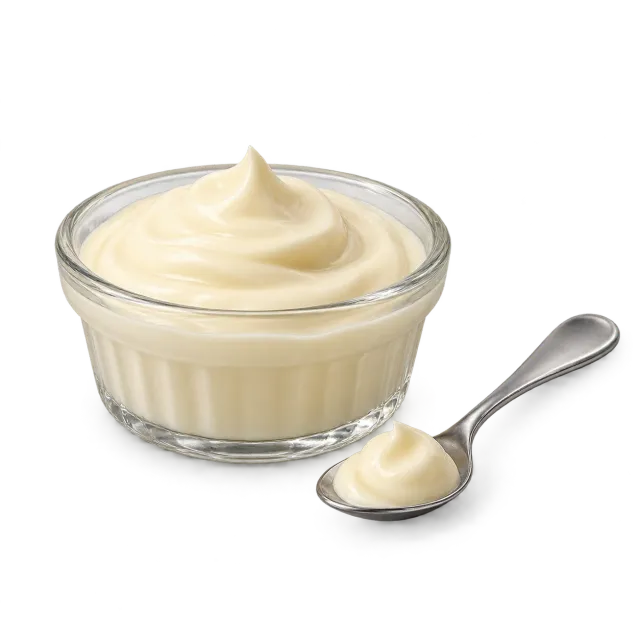
Plain commercial mayonnaiseFor dogs and cats: With restrictions
A pasteurised prepared sauce made with oil, egg and acid, with no onion, garlic, xylitol or other dangerous addition.
For dogs
Conditions and restrictions
Do not offer it deliberately. If a dog licked a very small amount of plain commercial mayonnaise with no onion, garlic, xylitol or other dangerous addition, observation is usually enough. A fatty sauce is especially unsuitable for dogs with pancreatitis, excess weight, gastrointestinal disease or a prescribed diet.
Benefits
Mayonnaise provides no nutritional benefit that a dog needs.
Risks
- A large amount may cause vomiting, diarrhoea or abdominal pain.
- Its high fat and calorie content makes mayonnaise a poor treat; the pancreatitis risk from one fatty episode cannot be predicted with a home calculation.
Already eaten — what now?
Check the ingredients and estimate the amount. After a small amount of plain mayonnaise with no symptoms, observe your dog. Call the clinic immediately if the amount was large, the ingredients are unknown, onion, garlic or xylitol is present, or repeated vomiting, pain, marked lethargy, weakness or collapse develops. Do not induce vomiting or give home remedies unless a veterinarian instructs you to.
For cats
Conditions and restrictions
Do not offer it deliberately. If a cat licked a very small amount of plain commercial mayonnaise with no onion, garlic or other dangerous addition, observation is usually enough. It is especially unsuitable for cats with excess weight, gastrointestinal disease or a prescribed diet.
Benefits
Mayonnaise provides no nutritional benefit that a cat needs.
Risks
- A large amount may cause vomiting, diarrhoea or abdominal pain.
- This fatty, calorie-dense sauce can readily displace part of a complete diet and is unsuitable as a routine treat.
Already eaten — what now?
Check the ingredients and estimate the amount. After a small amount of plain mayonnaise with no symptoms, observe your cat. Call the clinic immediately if the amount was large, the ingredients are unknown, onion or garlic is present, or repeated vomiting, pain, marked lethargy, weakness, pale gums or collapse develops. Do not induce vomiting or give home remedies unless a veterinarian instructs you to.
With onion or garlicFor dogs and cats: Dangerous · Urgent help needed
A sauce, aioli or mayonnaise mixture containing onion, garlic, their powders or another Allium.
For dogs and cats
Conditions and restrictions
Do not give a product containing onion, garlic, leek, chives or their powders.
Benefits
There is no benefit that justifies the risk.
Risks
- Onion and garlic can oxidatively damage red blood cells and cause haemolytic anaemia.
- Signs may be delayed for several days; powders and other concentrated forms are particularly hazardous.
Already eaten — what now?
Call the clinic immediately even if your pet still appears normal. Give the species, weight, time, approximate amount and ingredients, and keep the package. Weakness, rapid breathing or heartbeat, pale or yellow gums, dark urine and collapse need emergency care. Do not induce vomiting yourself.
Homemade with raw eggFor dogs and cats: With restrictions
A homemade sauce prepared with unpasteurised raw egg.
For dogs and cats
Conditions and restrictions
Do not give mayonnaise made with raw egg. Pasteurised egg reduces the microbiological risk, but the sauce remains fatty and calorie dense; every other ingredient still needs checking.
Benefits
Homemade mayonnaise provides no benefit that a pet needs.
Risks
- Raw egg may be contaminated with Salmonella.
- A large amount of fatty sauce may cause vomiting, diarrhoea or abdominal pain.
Already eaten — what now?
Remove the remainder and check the full recipe. After a small amount with no symptoms, observe your pet and use careful hygiene when cleaning. Call a veterinarian for repeated vomiting, diarrhoea, blood in the stool, fever, refusal of food or marked lethargy. If the recipe contained onion, garlic, xylitol or another dangerous ingredient, act on that exposure immediately.
Conditions and risks
For dogs
Conditions and restrictions
Do not offer it deliberately. If a dog licked a very small amount of plain commercial mayonnaise with no onion, garlic, xylitol or other dangerous addition, observation is usually enough. A fatty sauce is especially unsuitable for dogs with pancreatitis, excess weight, gastrointestinal disease or a prescribed diet.
Benefits
Mayonnaise provides no nutritional benefit that a dog needs.
Risks
- A large amount may cause vomiting, diarrhoea or abdominal pain.
- Its high fat and calorie content makes mayonnaise a poor treat; the pancreatitis risk from one fatty episode cannot be predicted with a home calculation.
For cats
Conditions and restrictions
Do not offer it deliberately. If a cat licked a very small amount of plain commercial mayonnaise with no onion, garlic or other dangerous addition, observation is usually enough. It is especially unsuitable for cats with excess weight, gastrointestinal disease or a prescribed diet.
Benefits
Mayonnaise provides no nutritional benefit that a cat needs.
Risks
- A large amount may cause vomiting, diarrhoea or abdominal pain.
- This fatty, calorie-dense sauce can readily displace part of a complete diet and is unsuitable as a routine treat.
Mayonnaise recipes vary considerably. This card separates plain commercial mayonnaise, products containing onion or garlic, and homemade mayonnaise made with raw egg. Find the package or recipe before judging the risk: appearance alone cannot reveal dangerous additions.
Sources
- Merck Veterinary Manual: Pancreatitis in Dogs and Cats
- WSAVA Nutrition Committee: Feeding Treats to Your Dog
- WSAVA Global Nutrition Committee: Frequently Asked Questions and Myths
- FDA: Think Food Safety and Be Salmonella Safe
- Merck Veterinary Manual: Garlic and Onion (Allium spp) Toxicosis in Animals
- Robertson et al.: Heinz body formation in cats fed baby food containing onion powder
- Lee et al.: Hematologic changes after garlic extract in dogs
- FDA: Paws Off Xylitol; It's Dangerous for Dogs
- Yamka et al.: High fat, high risk? Dietary fat and pancreatitis in dogs
- 21 CFR 169.140: Mayonnaise standard of identity
Comments
No comments yet.