
Already eaten — what now?
For dogs and cats
If your pet ate a little plain strawberry and feels well, remove the rest and observe. Call the clinic after a large amount or for repeated vomiting, marked diarrhoea, pain or lethargy. Choking or breathing difficulty needs immediate help. If it was a dessert, keep the packaging and check the ingredients; suspected xylitol ingestion by a dog needs an immediate call, even without symptoms. Do not induce vomiting yourself.
Variants and ingredients
Plain fresh strawberriesFor dogs and cats: Acceptable
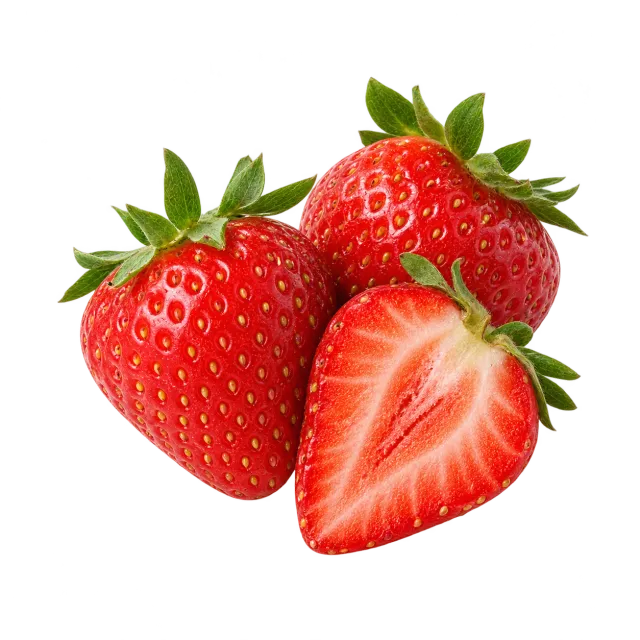
Ripe garden strawberries.
For dogs and cats
Conditions and restrictions
Offer a little ripe, washed fruit with no additions. Remove the leafy top and cut the flesh into pieces your pet can chew comfortably; offer a cat a tiny piece only if interested. Start small and watch for digestive upset. All treats together should provide less than 10% of daily calories. Ask your veterinarian first if your pet has a medical condition, a prescribed diet or a food reaction.
Benefits
Strawberries can be an occasional treat if your pet enjoys them. A pet eating a complete diet does not need strawberries for extra vitamins.
Risks
- A whole strawberry or large piece can cause choking.
- Too much fruit or unfamiliar food can upset the digestive system.
- Extra treats add calories and displace complete food.
Already eaten — what now?
If your pet ate a little plain strawberry and feels well, remove the rest and observe. Call the clinic after a large amount or for repeated vomiting, marked diarrhoea, pain or lethargy. Choking or breathing difficulty needs immediate help. If it was a dessert, keep the packaging and check the ingredients; suspected xylitol ingestion by a dog needs an immediate call, even without symptoms. Do not induce vomiting yourself.
Plain frozen strawberriesFor dogs and cats: Acceptable
The rating applies after thawing until soft, with no sugar, syrup or other additions.
For dogs and cats
Conditions and restrictions
Choose a product containing only strawberries. Let the fruit thaw until soft, remove the leafy top and cut it into small pieces. Do not offer a whole, hard frozen berry. Start small; all treats together should provide less than 10% of daily calories. Ask your veterinarian first if your pet has a medical condition or prescribed diet.
Benefits
Strawberries can be an occasional treat if your pet enjoys them. A pet eating a complete diet does not need strawberries for extra vitamins.
Risks
- A whole strawberry or large piece can cause choking.
- Too much fruit or unfamiliar food can upset the digestive system.
- Extra treats add calories and displace complete food.
Already eaten — what now?
If your pet ate a little plain strawberry and feels well, remove the rest and observe. Call the clinic after a large amount or for repeated vomiting, marked diarrhoea, pain or lethargy. Choking or breathing difficulty needs immediate help. If it was a dessert, keep the packaging and check the ingredients; suspected xylitol ingestion by a dog needs an immediate call, even without symptoms. Do not induce vomiting yourself.
Strawberry and sugar jamFor dogs and cats: With restrictions
Strawberries, ordinary sugar and water only. Products with sweeteners, chocolate, alcohol or other additions are outside this variant.
For dogs and cats
Conditions and restrictions
Do not use jam as a treat. This rating applies only to jam made from strawberries, ordinary sugar and water, with no other ingredients. A small accidental lick by a healthy pet usually does not need emergency care. Ask your veterinarian about sweet extras if your pet has diabetes, excess weight or a prescribed diet.
Benefits
Jam is not needed in the diet. Added sugar supplies extra calories.
Risks
- Too much simple sugar can cause diarrhoea and gas.
- Regular servings add excess calories and unbalance the diet.
Already eaten — what now?
After a small lick of jam with this recipe and no symptoms, remove the rest, leave fresh water available and observe. Call a veterinarian after a large or unknown amount, or if your pet has diabetes, repeated vomiting, marked diarrhoea, pain or lethargy. If the recipe differs or is unknown, keep the packaging and ask the clinic to assess it; possible xylitol ingestion by a dog needs an immediate call. Do not induce vomiting yourself.
Conditions and risks
For dogs and cats
Conditions and restrictions
Offer a little ripe, washed fruit with no additions. Remove the leafy top and cut the flesh into pieces your pet can chew comfortably; offer a cat a tiny piece only if interested. Start small and watch for digestive upset. All treats together should provide less than 10% of daily calories. Ask your veterinarian first if your pet has a medical condition, a prescribed diet or a food reaction.
Benefits
Strawberries can be an occasional treat if your pet enjoys them. A pet eating a complete diet does not need strawberries for extra vitamins.
Risks
- A whole strawberry or large piece can cause choking.
- Too much fruit or unfamiliar food can upset the digestive system.
- Extra treats add calories and displace complete food.
This card covers ripe garden strawberries. The green rating applies to a small treat for a healthy pet. Fragaria spp. leaves and tops are not classified as toxic to dogs or cats, but prepare just the flesh as a treat. Do not offer spoiled fruit or replace regular food with strawberries.
For jam, the amount of sugar and the full recipe matter. Strawberry-flavoured yoghurt, ice cream and desserts are not equivalent to plain fruit.
Sources
- ASPCA Animal Poison Control: Strawberry (Fragaria spp.)
- ASPCA: Sharing is Caring: Foods You Can Safely Share with Your Pet
- PDSA: Your dog’s diet
- WSAVA: Feeding treats to your dog
- WSAVA: Feeding treats to your cat
- VCA Animal Hospitals: Can you feed pets certain fruits and veggies
- Merck Veterinary Manual: Nutritional Requirements of Small Animals
- FDA: Paws Off Xylitol; It’s Dangerous for Dogs
- ASPCA: What to Do if Your Pet Is Poisoned
- PDSA: First aid for choking
Comments
No comments yet.