
Already eaten — what now?
For dogs and cats
After one small accidental amount of plain sour cream with no symptoms, remove the rest, leave water available and observe your pet. Call a veterinarian if the amount was large, the ingredients are unknown, or repeated vomiting, severe diarrhoea, pain or lethargy develops. Do not induce vomiting or give home remedies unless instructed.
Variants and ingredients
Plain pasteurised sour creamFor dogs and cats: With restrictions
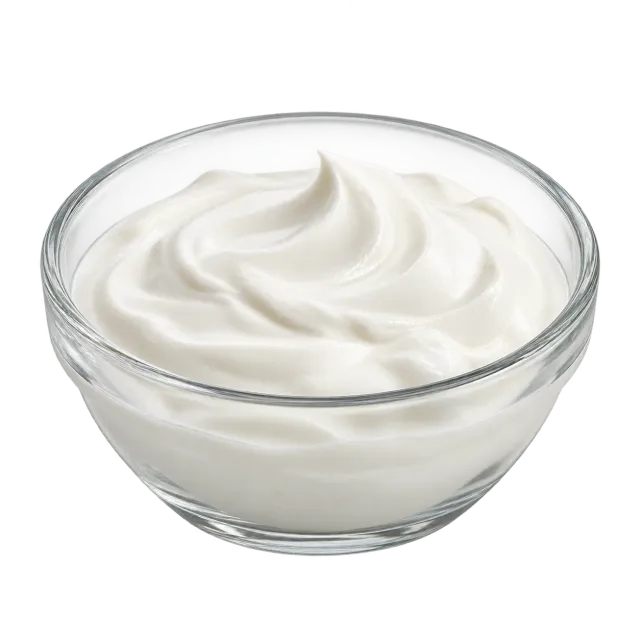
Fresh sour cream with no salt, sugar, seasoning, herbs or other additions.
For dogs and cats
Conditions and restrictions
It is better not to offer it deliberately. If a healthy adult pet is allowed a taste, keep it to a small amount of plain pasteurised sour cream with no salt, sugar, onion, garlic, herbs or other additions. Do not offer it without veterinary advice if your pet has pancreatitis, excess weight, diabetes, a sensitive stomach or a prescribed diet.
Benefits
A pet eating a complete diet does not need sour cream. Its small amount of protein and calcium does not make it a useful treat.
Risks
- Lactose may cause gas, abdominal discomfort or diarrhoea. Tolerance varies even between animals of the same species.
- Sour cream is high in fat and calories. A large amount may cause vomiting or diarrhoea and is unsuitable for pets whose fat or calorie intake is restricted.
Already eaten — what now?
After one small accidental amount of plain sour cream with no symptoms, remove the rest, leave water available and observe your pet. Call a veterinarian if the amount was large, the ingredients are unknown, or repeated vomiting, severe diarrhoea, pain or lethargy develops. Do not induce vomiting or give home remedies unless instructed.
With onion, garlic or other AlliumFor dogs and cats: Dangerous · Urgent help needed
Sour cream sauce, dip or seasoning containing onion, garlic, spring onion, chives, leek or their powders.
For dogs and cats
Conditions and restrictions
Do not offer sour cream, sauce or dip containing onion, garlic, spring onion, chives, leek, onion powder or garlic powder. Powders and dry seasoning mixes may be concentrated.
Benefits
There is no benefit for a pet.
Already eaten — what now?
Remove the product, keep the packaging or recipe, and call a veterinarian as soon as possible. Give your pet’s species and weight, the ingredients, possible amount and time. Do not wait for symptoms because blood changes may develop later. Weakness, pale or yellow mucous membranes, rapid breathing, dark urine or collapse need immediate care. Do not induce vomiting yourself.
For dogs
Risks
- Onion, garlic and related plants damage red blood cells and may cause haemolytic anaemia. Dogs are susceptible, and the seasoning concentration in a prepared sauce is usually unknown.
- Weakness, pale or yellow mucous membranes, rapid breathing, dark urine and collapse may appear several days later, so a lack of early signs does not rule out risk.
For cats
Risks
- Onion, garlic and related plants damage red blood cells and may cause haemolytic anaemia. Cats are particularly susceptible, and powders or dry seasoning mixes are often more concentrated.
- Weakness, pale or yellow mucous membranes, rapid breathing, dark urine and collapse may appear several days later, so a lack of early signs does not rule out risk.
Conditions and risks
For dogs and cats
Conditions and restrictions
It is better not to offer it deliberately. If a healthy adult pet is allowed a taste, keep it to a small amount of plain pasteurised sour cream with no salt, sugar, onion, garlic, herbs or other additions. Do not offer it without veterinary advice if your pet has pancreatitis, excess weight, diabetes, a sensitive stomach or a prescribed diet.
Benefits
A pet eating a complete diet does not need sour cream. Its small amount of protein and calcium does not make it a useful treat.
Risks
- Lactose may cause gas, abdominal discomfort or diarrhoea. Tolerance varies even between animals of the same species.
- Sour cream is high in fat and calories. A large amount may cause vomiting or diarrhoea and is unsuitable for pets whose fat or calorie intake is restricted.
The main rating covers fresh pasteurised sour cream with no additions. The fat percentage on the label changes the calorie content, but it does not make sour cream a necessary part of the diet or guarantee that a pet will tolerate the lactose. Assess homemade products from the milk used, preparation method and storage.
If dairy products give your pet gas or diarrhoea, see the cow’s milk card for more on lactose and raw milk.
Sources
- ASPCA Animal Poison Control: People Foods to Avoid Feeding Your Pets
- Batchelor et al.: Intestinal lactase expression in domestic dogs and cats
- Savaiano and Levitt: Nutritional and therapeutic aspects of fermented dairy products
- Merck Veterinary Manual: Garlic and Onion (Allium spp) Toxicosis in Animals
- WSAVA Nutrition Committee: Feeding Treats to Your Dog
- WSAVA Nutrition Committee: Feeding Treats to Your Cat
Comments
No comments yet.