
Already eaten — what now?
For dogs and cats
A pet with no symptoms after a little plain flesh usually only needs observation. Remove the leftovers and keep fresh water available. Repeated vomiting, abdominal pain, marked lethargy or breathing difficulty need immediate attention at an open clinic. For rind, stem, mould or a dish with a hazardous ingredient, check the relevant form and contact a vet.
Variants and ingredients
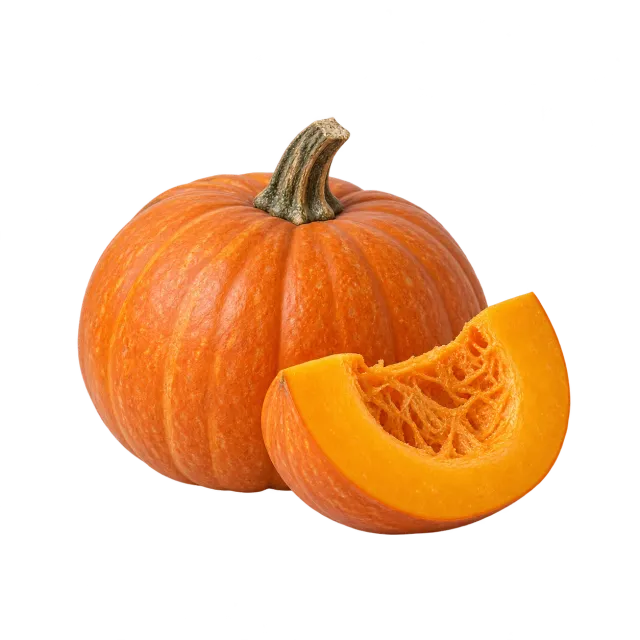
Plain cooked flesh and pureeFor dogs and cats: Acceptable
Boiled or baked pumpkin, or homemade or canned single-ingredient puree. Pumpkin pie filling is excluded.
For dogs and cats
Conditions and restrictions
Offer a little soft boiled or baked flesh, or puree containing only pumpkin. Remove the rind, stem and seeds; add no salt, sugar, oil or seasoning. Start with a small taste. All treats combined should provide less than 10% of daily calories. Check with your vet first if your pet is ill or on a prescribed diet.
Benefits
An occasional vegetable treat if your pet likes it. It provides water and fibre but is not a necessary addition to a complete diet.
Risks
- A large serving or unfamiliar food can cause digestive upset.
- Too many extras displace complete food and unbalance the diet.
Already eaten — what now?
A pet with no symptoms after a little plain flesh usually only needs observation. Remove the leftovers and keep fresh water available. Repeated vomiting, abdominal pain, marked lethargy or breathing difficulty need immediate attention at an open clinic. For rind, stem, mould or a dish with a hazardous ingredient, check the relevant form and contact a vet.
Raw fleshFor dogs and cats: With restrictions
Fresh edible pumpkin flesh without rind, seeds or additions.
For dogs and cats
Conditions and restrictions
Raw flesh is not considered poisonous, but is firmer and harder to digest. Cook it until soft for a treat. Do not offer large chunks.
Benefits
An occasional vegetable treat if your pet likes it. It provides water and fibre but is not a necessary addition to a complete diet.
Risks
- A large firm piece can cause choking.
- Vomiting or diarrhoea may occur, particularly after a large serving.
Already eaten — what now?
Observe after a small piece if your pet remains well. Call your vet after a large piece was swallowed and describe its size. Breathing difficulty, repeated vomiting or pain need urgent examination. Do not induce vomiting yourself.
Plain seedsFor dogs and cats: With restrictions
Plain pumpkin seeds without salt or seasoning. Whole seeds in their shells need particular care; mixes and extracts are excluded.
For dogs and cats
Conditions and restrictions
We do not recommend offering seeds, especially whole seeds in their shells. Choose soft flesh for a treat. Seeds do not replace prescribed parasite treatment.
Benefits
There is no benefit that justifies offering this form.
Risks
- Whole seeds can cause choking; large amounts and tough shells increase the risk of intestinal blockage.
- Digestive upset and excess calories are possible.
Already eaten — what now?
Check the amount and whether shells were eaten. Observe if your pet ate a few plain seeds and feels well. Call a vet for a large or unknown amount. Breathing difficulty, repeated vomiting, pain or refusal to eat need urgent examination.
Hard rind and stemFor dogs and cats: Dangerous · Urgent help needed
Hard parts of a whole pumpkin and large trimmings.
For dogs and cats
Conditions and restrictions
Do not feed. Remove the rind and stem before preparation and keep trimmings out of reach.
Benefits
There is no benefit that justifies offering this form.
Risks
- A hard piece can block the airway or lodge in the digestive tract. The red rating reflects this physical hazard.
Already eaten — what now?
Call a vet promptly if a piece was swallowed, giving your pet’s weight, the piece’s size and the time. Choking, repeated vomiting, a painful abdomen or sudden weakness need an immediate trip to an open clinic. Do not induce vomiting or try to push the piece down with food.
Mouldy pumpkinFor dogs and cats: Dangerous · Urgent help needed
Spoiled flesh, seeds or puree, or an old carved pumpkin with mould.
For dogs and cats
Conditions and restrictions
Do not feed. Keep spoiled pumpkin and compost beyond your pet’s reach.
Benefits
There is no benefit that justifies offering this form.
Risks
- Mould toxins can cause vomiting, poor coordination, tremors and seizures. Appearance cannot establish a safe amount.
Already eaten — what now?
Contact a vet immediately, even before symptoms appear. Keep a photo or a sample safely away from animals. Tremors, unsteady walking, seizures or vomiting need an immediate trip to an open clinic. Do not give home antidotes or induce vomiting yourself.
Dish with onion or garlicFor dogs and cats: Dangerous · Urgent help needed
Pumpkin soup, puree or another recipe containing onion, garlic or their powders.
For dogs and cats
Conditions and restrictions
Do not offer soup, puree or other dishes containing onion, garlic, leeks or their powders. Cooking does not remove this risk.
Benefits
There is no benefit that justifies offering this form.
Already eaten — what now?
Call a vet immediately rather than waiting for symptoms. Give the recipe, amount, time and your pet’s weight. Keep the packaging or recipe. Weakness, pale gums, rapid breathing or dark urine need urgent examination. Do not induce vomiting yourself.
For dogs
Risks
- Onion and garlic can damage red blood cells and cause anaemia; signs may take several days to appear.
For cats
Risks
- Cats are especially sensitive to onion and garlic: red blood cell damage and anaemia can occur. Signs may take several days to appear.
Conditions and risks
For dogs and cats
Conditions and restrictions
Offer a little soft boiled or baked flesh, or puree containing only pumpkin. Remove the rind, stem and seeds; add no salt, sugar, oil or seasoning. Start with a small taste. All treats combined should provide less than 10% of daily calories. Check with your vet first if your pet is ill or on a prescribed diet.
Benefits
An occasional vegetable treat if your pet likes it. It provides water and fibre but is not a necessary addition to a complete diet.
Risks
- A large serving or unfamiliar food can cause digestive upset.
- Too many extras displace complete food and unbalance the diet.
The green rating applies to soft flesh from an ordinary edible pumpkin with no additions. Inedible ornamental gourds, extracts and seed oil are outside this card’s scope.
Pumpkin is often suggested for constipation or diarrhoea. Fibre can be part of treatment, but its type and amount depend on the cause. A normal serving of pumpkin is not equivalent to a therapeutic diet or fibre supplement. Do not increase the serving to seek a treatment effect; discuss recurring stool problems with your vet.
Ghapama, sweet porridge, soup and pie filling have their own recipes. If ghapama contains raisins, do not offer it to your pet; call a vet promptly after ingestion. Salt, sugar, fat and other additions also need separate consideration. “Pumpkin” on the label does not mean pumpkin is the only ingredient.
Sources
- Pet Poison Helpline: Friendly Fall Foods
- Tufts, Lisa Freeman: People like giving pets pumpkin, but is it good for them?
- ASPCA: 5 Toxic Seasonal Plants You Don’t Want Your Pet To Fall For!
- WSAVA: Feeding Treats to Your Dog
- WSAVA: Feeding Treats to Your Cat
- VCA: Halloween safety tips for cats
- Merck Veterinary Manual: Garlic and Onion (Allium spp) Toxicosis in Animals
- Pet Poison Helpline: Moldy Food (Mycotoxins)
- Pet Poison Helpline: Emergency instructions for pet poisoning
Comments
No comments yet.