
Already eaten — what now?
For dogs and cats
Urgent help neededRemove the remaining food and call a veterinarian straight away without waiting for symptoms. Give your pet's species and weight, the time, possible amount and full ingredient list; keep the packaging. Do not induce vomiting yourself. Leave for an open clinic if vomiting, lethargy, loss of appetite, abdominal pain, or changes in thirst or urination occur.
Variants and ingredients
Plain raisins, sultanas and Zante currantsFor dogs: Dangerous · Urgent help neededFor cats: Insufficient evidence · Urgent help needed
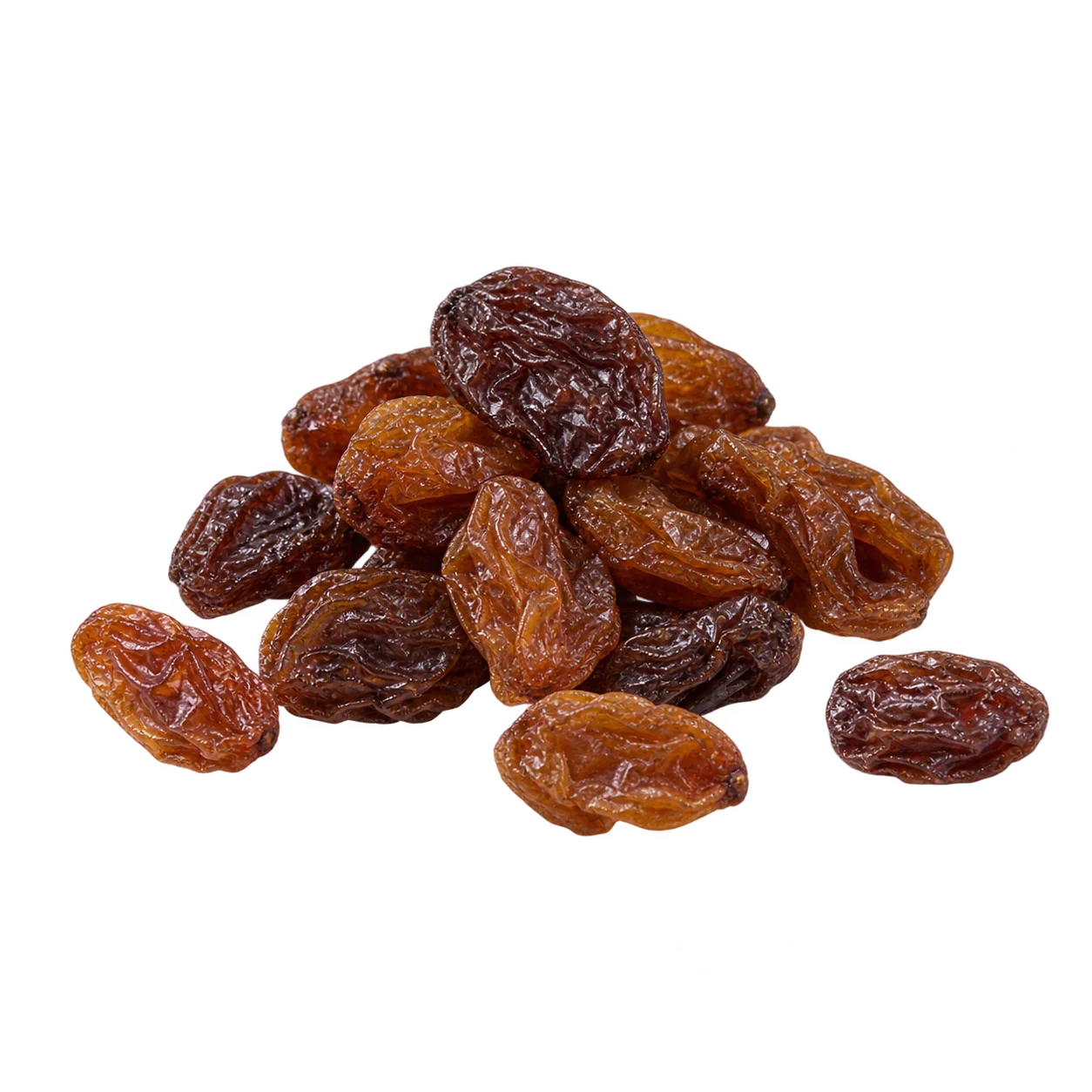
Dried grapes without other ingredients.
For dogs and cats
Benefits
There is no nutritional reason to offer raisins.
Already eaten — what now?
Remove the remaining food and call a veterinarian straight away without waiting for symptoms. Give your pet's species and weight, the time, possible amount and full ingredient list; keep the packaging. Do not induce vomiting yourself. Leave for an open clinic if vomiting, lethargy, loss of appetite, abdominal pain, or changes in thirst or urination occur.
For dogs
Conditions and restrictions
Do not offer raisins as a treat or in porridge, baked goods or mixes. There is no way to predict which dog will be susceptible, and no universal safe portion has been established.
Risks
- Raisins can cause vomiting, diarrhoea, lethargy, loss of appetite and acute kidney injury. Early signs may be absent, while kidney impairment can appear later.
For cats
Conditions and restrictions
Do not offer raisins. Kidney toxicity has not been established in cats as convincingly as it has in dogs, but the evidence is limited and no safe portion is known.
Risks
- Gastrointestinal signs have been reported in cats after grape or raisin ingestion, and there are isolated unpublished reports of kidney injury. Limited evidence does not prove safety.
Baked and cooked foods with raisinsFor dogs: Dangerous · Urgent help neededFor cats: Insufficient evidence · Urgent help needed
Bread, cookies, porridge, cereal and other foods in which raisins were heated or mixed with other ingredients.
For dogs and cats
Benefits
There is no nutritional reason to offer raisins.
Already eaten — what now?
Remove the remaining food and call a veterinarian straight away without waiting for symptoms. Give your pet's species and weight, the time, possible amount and full ingredient list; keep the packaging. Do not induce vomiting yourself. Leave for an open clinic if vomiting, lethargy, loss of appetite, abdominal pain, or changes in thirst or urination occur.
For dogs
Conditions and restrictions
Do not offer raisin bread, cookies, porridge, cereal or other foods containing raisins. Heating is not considered a reliable way to make raisins safe.
Risks
- Cooking does not reliably break down tartaric acid. Other ingredients in the food may add separate hazards.
For cats
Conditions and restrictions
Do not offer raisin bread, cookies, porridge, cereal or other foods containing raisins. Heating does not remove the uncertainty about risk in cats.
Risks
- Raisins may still cause gastrointestinal signs after heating, while their kidney effects in cats remain inadequately studied. Other ingredients may be hazardous in their own right.
Chocolate-covered raisins and mixesFor dogs and cats: Dangerous · Urgent help needed
Raisins combined with chocolate, cocoa, nuts, sweeteners or other additions.
For dogs and cats
Conditions and restrictions
Do not offer chocolate-covered raisins or a mix with an unknown ingredient list. The full label is needed for a risk assessment.
Benefits
There is no nutritional reason to offer raisins.
Already eaten — what now?
Remove the remaining food and call a veterinarian straight away without waiting for symptoms. Give your pet's species and weight, the time, possible amount and full ingredient list; keep the packaging. Do not induce vomiting yourself. Leave for an open clinic if vomiting, lethargy, loss of appetite, abdominal pain, or changes in thirst or urination occur.
For dogs
Risks
- This combines two hazards: raisins may injure the kidneys, while theobromine and caffeine in chocolate can cause abnormal heart rhythm, tremors and seizures.
For cats
Risks
- Even though the kidney risk from raisins is uncertain, chocolate itself is dangerous to cats: theobromine and caffeine can cause agitation, abnormal heart rhythm, tremors and seizures.
Conditions and risks
For dogs and cats
Benefits
There is no nutritional reason to offer raisins.
For dogs
Conditions and restrictions
Do not offer raisins as a treat or in porridge, baked goods or mixes. There is no way to predict which dog will be susceptible, and no universal safe portion has been established.
Risks
- Raisins can cause vomiting, diarrhoea, lethargy, loss of appetite and acute kidney injury. Early signs may be absent, while kidney impairment can appear later.
For cats
Conditions and restrictions
Do not offer raisins. Kidney toxicity has not been established in cats as convincingly as it has in dogs, but the evidence is limited and no safe portion is known.
Risks
- Gastrointestinal signs have been reported in cats after grape or raisin ingestion, and there are isolated unpublished reports of kidney injury. Limited evidence does not prove safety.
This card covers dried Vitis vinifera grapes: raisins, sultanas and Zante currants. True black, red and white currants belong to the Ribes genus and are not raisins.
Sources
- Merck Veterinary Manual: Grape, Raisin, and Tamarind Toxicosis in Dogs
- Dijkman et al. (2022): Incidence of Vitis fruit-induced clinical signs and acute kidney injury in dogs and cats
- Downs et al. (2024): Scoping review of Vitis vinifera toxicity in dogs
- ASPCA Animal Poison Control: People Foods to Avoid Feeding Your Pets
- US FDA: Potentially Dangerous Items for Your Pet
- VCA / Pet Poison Helpline: Grape, Raisin, and Currant Poisoning in Dogs
- BSAVA Clinical Research Abstracts 2026: Tartaric acid in Vitis vinifera fruit and baked goods
Comments
No comments yet.