
Already eaten — what now?
For dogs and cats
If your pet ate a little ripe flesh and seems well, remove the rest and observe. Call your veterinarian after a large amount, or if your pet has diabetes, follows a prescribed diet or feels unwell. After leaves, shoots, unripe fruit that releases milky sap, or sap on the skin or eyes, rinse the contaminated area with water and contact the clinic. Do not induce vomiting yourself. Repeated vomiting, heavy drooling, pain, marked swelling or breathing trouble need urgent care.
Variants and ingredients
Ripe fresh fruitFor dogs and cats: With restrictions
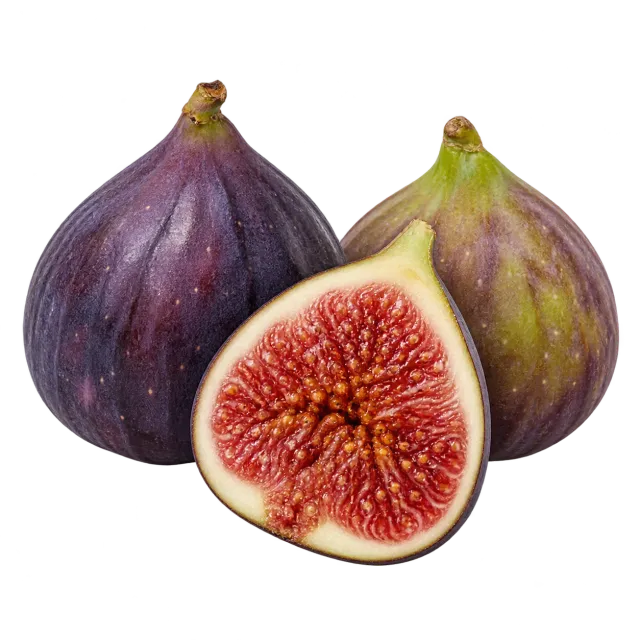
Soft, fully ripe Ficus carica fruit with no leaf, twig or oozing milky sap.
For dogs and cats
Risks
- A large serving of sweet flesh or dried fruit may cause vomiting, diarrhoea and excess calorie intake.
- Ficus leaves, shoots and milky sap can irritate the mouth, digestive tract and skin.
Already eaten — what now?
If your pet ate a little ripe flesh and seems well, remove the rest and observe. Call your veterinarian after a large amount, or if your pet has diabetes, follows a prescribed diet or feels unwell. After leaves, shoots, unripe fruit that releases milky sap, or sap on the skin or eyes, rinse the contaminated area with water and contact the clinic. Do not induce vomiting yourself. Repeated vomiting, heavy drooling, pain, marked swelling or breathing trouble need urgent care.
For dogs
Conditions and restrictions
Offer only fully ripe fresh flesh, with no leaf, twig or oozing milky sap, in a small amount and small pieces. All treats together should provide less than 10% of daily calories. Ask your veterinarian first for diabetes, excess weight, a sensitive digestive system or a prescribed diet.
Benefits
A small piece can be an occasional treat if your dog likes it. Fig is not needed as a supplement to a complete diet.
For cats
Conditions and restrictions
Offer only a tiny piece of fully ripe fresh flesh with no leaf, twig or oozing milky sap. Do not coax your cat to eat fruit. Ask your veterinarian first for diabetes, excess weight, a sensitive digestive system or a prescribed diet.
Benefits
Cats do not need fig. If your cat is interested, a tiny piece can be an occasional treat.
Plain dried figFor dogs and cats: With restrictions
Soft dried fruit when fig is the only ingredient.
For dogs and cats
Conditions and restrictions
Offer only soft dried fig with no added sugar, syrup, chocolate or other ingredients, and keep it to a very small piece. Ask your veterinarian first for diabetes, excess weight or a prescribed diet.
Benefits
It has no advantage over fresh flesh as a treat.
Risks
- Removing water concentrates sugar and calories into a smaller mass, so dried fruit is easy to overfeed.
- A sticky or large piece may cause choking, while a large serving may lead to vomiting or diarrhoea.
Already eaten — what now?
Check the ingredients. After a small piece of plain dried fig with no symptoms, observe your pet. Call your veterinarian if a lot was eaten, the ingredients are unknown, your pet has a medical condition, or vomiting, diarrhoea, pain or lethargy develops. Breathing trouble needs immediate help.
Leaves, shoots and milky sapFor dogs and cats: Dangerous
Fig tree material, fresh cuttings and unripe fruit that releases white milky sap.
For dogs and cats
Conditions and restrictions
Do not offer leaves, shoots or branches, and do not allow pets to chew unripe fruit that releases milky sap. Keep pets away from sap and fresh cuttings while pruning the tree.
Benefits
There is no benefit for a pet.
Risks
- Ficus milky sap contains irritants. Chewing may cause oral pain and irritation, drooling, vomiting or diarrhoea.
- Sap may irritate the skin. Ficus carica leaf and shoot sap contains photoactive furocoumarins, and sunlight may worsen the skin reaction.
Already eaten — what now?
Remove the plant. If plant pieces remain in the mouth, gently remove only loose material and offer water without forcing it. Rinse sap from skin or fur with water; flush the eyes with clean water and call a veterinarian straight away. After ingestion, tell the clinic the plant species, part, time and possible amount. Do not induce vomiting. Heavy drooling, repeated vomiting, a painful mouth, marked swelling or breathing trouble need urgent assessment.
Conditions and risks
For dogs and cats
Risks
- A large serving of sweet flesh or dried fruit may cause vomiting, diarrhoea and excess calorie intake.
- Ficus leaves, shoots and milky sap can irritate the mouth, digestive tract and skin.
For dogs
Conditions and restrictions
Offer only fully ripe fresh flesh, with no leaf, twig or oozing milky sap, in a small amount and small pieces. All treats together should provide less than 10% of daily calories. Ask your veterinarian first for diabetes, excess weight, a sensitive digestive system or a prescribed diet.
Benefits
A small piece can be an occasional treat if your dog likes it. Fig is not needed as a supplement to a complete diet.
For cats
Conditions and restrictions
Offer only a tiny piece of fully ripe fresh flesh with no leaf, twig or oozing milky sap. Do not coax your cat to eat fruit. Ask your veterinarian first for diabetes, excess weight, a sensitive digestive system or a prescribed diet.
Benefits
Cats do not need fig. If your cat is interested, a tiny piece can be an occasional treat.
This card covers the edible common fig, Ficus carica. Ripe fruit is not the same exposure as milky sap from leaves or shoots. A composition study did not detect the photoactive compounds psoralen and bergapten in the fruit or fruit sap, but found them in leaf and shoot sap.
Fig jam, biscuits, bars and other prepared foods need an assessment of every ingredient. Sugar and syrup add calories, while chocolate, raisins, alcohol or xylitol can change the risk completely. Read our sugar card for more on sweet products.
Sources
- Zaynoun et al. (1984): Ficus carica; isolation and quantification of the photoactive components
- Oh et al. (2011): Effects of Ficus carica paste in beagles
- Merck Veterinary Manual: Poisonous Houseplants and Ornamentals
- Pet Poison Helpline: Ficus
- AVMA: Pet First Aid
- WSAVA Nutrition Committee: Feeding Treats to Your Dog
- WSAVA Nutrition Committee: Feeding Treats to Your Cat
- USDA FoodData Central: Figs, raw and dried
Comments
No comments yet.