
Already eaten — what now?
For dogs and cats
Urgent help neededRemove the plant and any loose pieces from the mouth. Photograph the ficus or keep its label, note the time and possible amount, then call your veterinarian as soon as possible. Do not induce vomiting or give medicines or home remedies unless a veterinarian tells you to. Rinse sap thoroughly from skin and fur with water and prevent grooming. If sap entered the eyes, flush them with clean water and contact a veterinarian straight away. Repeated vomiting, marked swelling, breathing difficulty, sudden weakness, seizures or loss of consciousness require an immediate trip to an open clinic.
Variants and ingredients
Chewed leaves and stemsFor dogs and cats: Dangerous · Urgent help needed
Leaves, young shoots, stems, bark and fresh cuttings from ornamental ficus plants.
For dogs and cats
Conditions and restrictions
Do not allow chewing of leaves, stems, bark or fresh cuttings. Remove fallen plant material promptly.
Benefits
There is no benefit. Leaves and stems of an ornamental ficus are not suitable feed.
Risks
- Ficus milky sap contains irritants. Chewing may cause irritation of the mouth and digestive tract, drooling, reduced appetite, vomiting or diarrhoea.
- Sap on the skin or coat may cause irritation and dermatitis. Grooming can expose the animal to the irritants again.
Already eaten — what now?
Stop access to the plant, gently remove only loose pieces from the mouth and call your veterinarian. Report the ficus species, plant part, time and possible amount. Do not induce vomiting yourself. Repeated vomiting, heavy drooling, marked swelling, breathing difficulty, sudden weakness, seizures or loss of consciousness need an immediate trip to an open clinic.
Milky sap on skin or furFor dogs and cats: Dangerous
Skin or fur contact with white sap from a leaf, stem or fresh cut.
For dogs and cats
Conditions and restrictions
Keep pets away from fresh cuts while pruning. Do not leave cuttings or sap-contaminated tools within reach.
Benefits
There is no benefit.
Risks
- Milky sap may irritate the skin and cause dermatitis.
- Grooming sap-contaminated fur may cause mouth irritation, drooling, vomiting or diarrhoea.
Already eaten — what now?
Prevent grooming and rinse the sap thoroughly from skin and fur with water. Call your veterinarian if irritation persists, a large area was exposed, or drooling, vomiting or refusal of food develops.
Milky sap in the eyeFor dogs and cats: Dangerous · Urgent help needed
White ficus sap contacting the surface of the eye.
For dogs and cats
Conditions and restrictions
Prevent milky sap from entering the eyes. Keep your pet in another room while pruning.
Benefits
There is no benefit.
Risks
- Irritating milky sap reaches the sensitive surface of the eye and needs prompt removal with water.
Already eaten — what now?
Start flushing the eye with clean water immediately, prevent rubbing and call your veterinarian. A closed eye, obvious pain, redness or cloudiness needs urgent in-person care.
Conditions and risks
For dogs and cats
Conditions and restrictions
Do not offer leaves, shoots or milky sap. Keep the plant, fallen leaves and fresh cuttings out of your pet's reach.
Benefits
There is no benefit for a pet. An ornamental ficus is not food or a treat.
Risks
- Ficus milky sap contains irritants. Chewing may cause irritation of the mouth and digestive tract, drooling, reduced appetite, vomiting or diarrhoea.
- Sap on the skin or coat may cause irritation and dermatitis. Grooming can expose the animal to the irritants again.
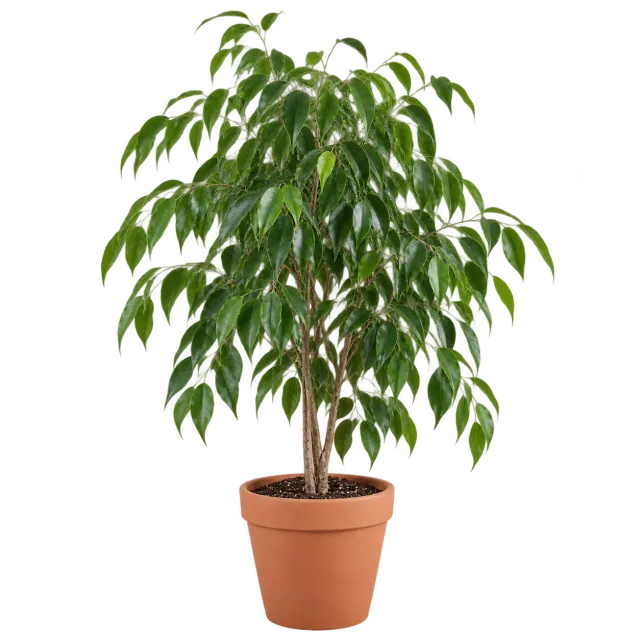
This card covers ornamental houseplants in the genus Ficus, including weeping fig, rubber plant and fiddle-leaf fig. The ripe edible fruit of Ficus carica is covered separately in our fig card.
Sources
- ASPCA: Toxic and Non-Toxic Plants, Fig (Ficus benjamina)
- MSD Veterinary Manual: Houseplants and Ornamentals Toxic to Animals
- Bertero et al. (2020): Indoor Companion Animal Poisoning by Plants in Europe
- ASPCA: Is That Houseplant Safe for Your Pets?
- Pet Poison Helpline: Ficus
- ASPCA: What to Do if Your Pet Is Poisoned
Comments
No comments yet.