
Already eaten — what now?
For dogs and cats
After a small amount of plain fresh cucumber with no symptoms, observation is enough. Call a veterinarian for repeated vomiting, diarrhoea, pain or lethargy. Choking or breathing difficulty needs immediate help.
Variants and ingredients
Fresh and plainFor dogs and cats: Acceptable
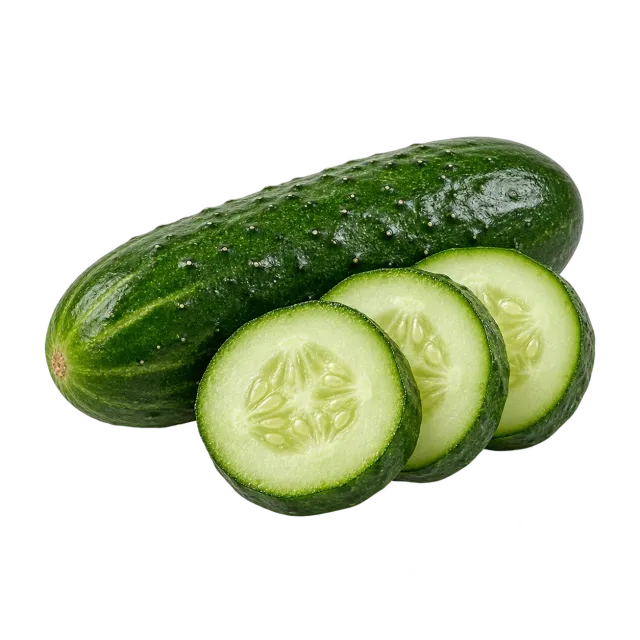
Washed ordinary cucumber in small pieces, with no salt or seasoning.
For dogs and cats
Risks
- A large piece can cause choking or lodge; too much unfamiliar food may cause vomiting or diarrhoea.
Already eaten — what now?
After a small amount of plain fresh cucumber with no symptoms, observation is enough. Call a veterinarian for repeated vomiting, diarrhoea, pain or lethargy. Choking or breathing difficulty needs immediate help.
For dogs
Conditions and restrictions
Wash thoroughly and cut into small pieces. The skin may stay on if it is soft and your pet chews well. Do not add salt, oil, sauce or spices.
Benefits
A small low-calorie treat that does not replace regular food.
For cats
Conditions and restrictions
Offer only a tiny, thin piece with no salt or seasoning if your cat is interested.
Benefits
A tiny piece can be an occasional treat; cats have no dietary need for cucumber.
Pickled, with no onion or garlicFor dogs and cats: With restrictions
Cucumber in salty or vinegar brine with a fully known ingredient list.
For dogs and cats
Conditions and restrictions
Do not use it as a treat. This rating applies only to a known recipe with no onion, garlic or other toxic ingredients.
Benefits
It offers no benefit over fresh cucumber and should not be offered deliberately.
Risks
- Brine adds sodium, while spices and vinegar may irritate the digestive tract. A large salt intake is more dangerous when water is limited or with some medical conditions.
Already eaten — what now?
After one small piece with a known recipe containing no onion or garlic, it is usually enough to remove the rest, leave fresh water available and observe. Call a veterinarian if more was eaten, brine was swallowed, the amount is unknown, or your pet has kidney, heart or urinary disease. Vomiting, marked thirst, weakness, unsteady walking, tremors or seizures need urgent care. Do not force water or induce vomiting.
With onion, garlic or their powderFor dogs and cats: Dangerous · Urgent help needed
A marinade, brine or salad containing any Allium ingredient.
For dogs and cats
Conditions and restrictions
Do not offer cucumber, brine or salad containing onion, garlic, chives, leek, shallot or their dried powders.
Benefits
There is no benefit for a pet.
Risks
- Onion and garlic can damage red blood cells and cause haemolytic anaemia. Signs may take several days to appear, and cats are more susceptible than dogs.
Already eaten — what now?
Do not wait for symptoms. Keep the package or recipe and call the clinic with your pet’s weight, the ingredients, time and possible amount. Weakness, pale or yellow gums, rapid breathing, dark urine or collapse need emergency care. Do not induce vomiting unless a veterinarian tells you to.
Conditions and risks
For dogs and cats
Risks
- A large piece can cause choking or lodge; too much unfamiliar food may cause vomiting or diarrhoea.
For dogs
Conditions and restrictions
Wash and cut into small pieces suited to your dog’s size and chewing habits. Offer a little with no salt or seasoning. All treats together should stay within 10% of daily calories; ask your veterinarian before adding them to a prescribed diet.
Benefits
A low-calorie, water-rich treat. Cucumber is not needed as a separate part of a balanced diet.
For cats
Conditions and restrictions
Offer a tiny, thin piece of washed fresh cucumber with no salt or seasoning. Do not coax your cat to eat vegetables or use them to replace complete cat food. Ask your veterinarian first if your cat has a prescribed diet.
Benefits
Cucumber has no special benefit for a cat. A tiny piece can be an occasional treat if your cat likes it.
The green rating applies to plain fresh cucumber with no salt, oil, sauce or seasoning. The skin and soft seeds are not toxic in themselves when the cucumber is washed and cut into pieces your pet can chew comfortably. Pickled cucumber needs a separate assessment because it contains brine and its recipe varies.
If your pet drank brine or ate a large amount of pickled cucumber, open our salt card. Risk depends on the amount of sodium, access to water and the animal’s health.
Sources
- ASPCA Animal Poison Control: Cucumber (Cucumis sativus)
- VCA Animal Hospitals: Can you feed pets certain fruits and veggies?
- American Kennel Club: Can Dogs Eat Cucumbers?
- WSAVA Nutrition Committee: Feeding Treats to Your Dog
- WSAVA Nutrition Committee: Feeding Treats to Your Cat
- Merck Veterinary Manual: Salt Toxicosis in Animals
- Merck Veterinary Manual: Garlic and Onion (Allium spp) Toxicosis in Animals
Comments
No comments yet.