
Already eaten — what now?
For dogs and cats
A healthy pet that ate a small piece of plain cooked egg usually only needs monitoring. Check for onion, garlic or shell. Contact a vet for vomiting, diarrhoea or itching; repeated vomiting, facial swelling, breathing difficulty or marked weakness need urgent care. Do not induce vomiting yourself.
Variants and ingredients
Fully cooked and plainFor dogs and cats: Acceptable
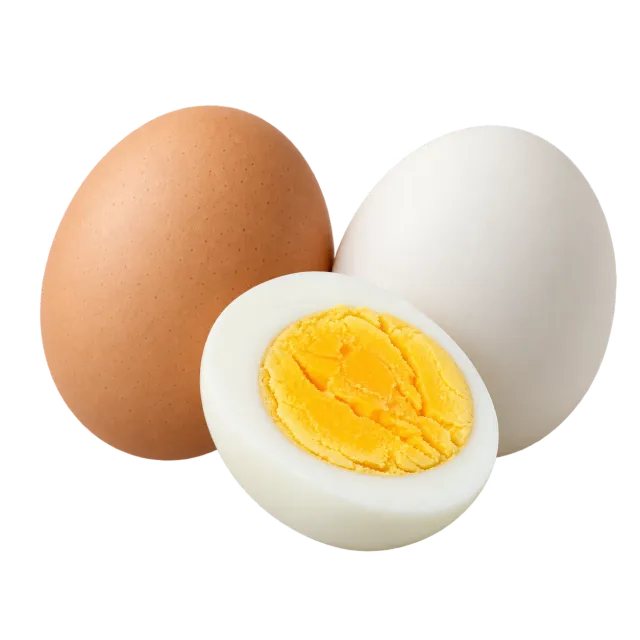
Hard-boiled or fully cooked without oil: white and yolk, together or separately, without shell.
For dogs and cats
Conditions and restrictions
Cook both white and yolk fully, remove the shell, let it cool and offer a small piece without salt, oil, milk or seasoning. All treats combined should provide less than 10% of daily calories. Ask your vet first if your pet is on a therapeutic or elimination diet; avoid egg if it has caused a known reaction.
Benefits
A source of protein. With a complete diet, egg is an optional treat.
Risks
- A large portion adds excess calories and displaces balanced food.
- An individual food reaction may cause vomiting, diarrhoea or itching.
Already eaten — what now?
A healthy pet that ate a small piece of plain cooked egg usually only needs monitoring. Check for onion, garlic or shell. Contact a vet for vomiting, diarrhoea or itching; repeated vomiting, facial swelling, breathing difficulty or marked weakness need urgent care. Do not induce vomiting yourself.
Raw or undercookedFor dogs and cats: With restrictions
Raw egg, raw white or yolk, soft-boiled egg and fried egg with runny parts.
For dogs and cats
Conditions and restrictions
Do not feed raw or undercooked eggs, including soft-boiled eggs, raw white or raw yolk. Cook both parts fully for a treat. Do not use an egg showing signs of spoilage.
Benefits
Egg contains protein, but it does not need to be raw to provide it.
Risks
- Raw egg may carry Salmonella and other bacteria that can harm pets and people.
- Regular feeding of raw white can interfere with biotin absorption because the protein avidin binds it. A single ingestion does not mean a deficiency has already developed.
Already eaten — what now?
Remove leftovers and wash your hands, the bowl and contaminated surfaces. Note the amount and time, and monitor appetite, activity and stools. Call a vet for vomiting, diarrhoea, lethargy or refusal to eat; repeated vomiting, bloody stools or marked weakness need urgent assessment. For a puppy, kitten or frail pet, discuss the exposure with a vet without waiting for symptoms. Do not induce vomiting yourself.
With oil, salt or milkFor dogs and cats: With restrictions
A fully cooked dish with known ingredients and no onion or garlic.
For dogs and cats
Conditions and restrictions
This variant covers fully cooked fried or scrambled eggs or omelettes with oil, salt or milk, but no onion or garlic. Do not offer them deliberately: set aside plain egg before adding other ingredients. Check any dish with unknown ingredients first.
Benefits
Egg provides protein; oil, salt and dairy additions do not make it a necessary part of the diet.
Risks
- Added fat and a large portion increase calorie intake and can cause digestive upset.
- Milk can cause diarrhoea in lactose-intolerant pets; very salty food needs a separate assessment of the salt amount.
Already eaten — what now?
Check the recipe and amount eaten. Monitor after a small bite without dangerous additions. Call a vet if a large amount was eaten, the dish was very salty or your pet has a therapeutic diet. Vomiting, abdominal pain, lethargy or refusal to eat need veterinary advice; repeated vomiting or marked weakness need urgent care. Do not induce vomiting yourself.
Eggshell and eggshell powderFor dogs and cats: With restrictions
Loose shell, egg eaten with its shell, or homemade calcium supplementation.
For dogs and cats
Conditions and restrictions
Remove the shell before offering egg. Do not add homemade powder by eye to complete food. If eggshell is part of a veterinary nutritionist’s recipe, follow the specified preparation and amount; this card does not prescribe a calcium dose.
Benefits
Eggshell contains calcium, but the amount in the diet must be calculated.
Risks
- Uncalculated calcium supplementation can upset mineral balance, particularly during growth.
- Raw shell may carry bacteria; large sharp pieces may injure the mouth or interfere with swallowing.
Already eaten — what now?
Remove the remaining shell. Monitor a symptom-free pet after a tiny crumb; contact a vet after a substantial amount or large pieces. Coughing, drooling, painful swallowing, vomiting or blood need assessment, and breathing difficulty needs immediate care. Do not induce vomiting or try to push pieces down with food.
With onion or garlicFor dogs and cats: Dangerous · Urgent help needed
Omelette, scrambled egg or another mixture containing Allium plants, including dried powder.
For dogs and cats
Conditions and restrictions
Do not feed egg with onion, spring onion, garlic, leek, shallot, chives or their powders. Cooking does not remove the danger of these ingredients.
Benefits
This dish is unsuitable as a treat.
Already eaten — what now?
Contact a vet immediately, even if your pet still seems well. Give the ingredients, estimated amount, time and your pet’s weight; keep the packaging or recipe. Seek urgent care for pale gums, weakness, fast or difficult breathing, or dark urine. Do not induce vomiting or give home “antidotes”.
For dogs
Risks
- Alliums damage red blood cells and may cause anaemia; signs can take several days to appear.
For cats
Risks
- Alliums damage red blood cells and may cause anaemia; signs can take several days to appear.
- Cats are more susceptible to allium toxicity than dogs.
Conditions and risks
For dogs and cats
Conditions and restrictions
Cook both white and yolk fully, remove the shell, let it cool and offer a small piece without salt, oil, milk or seasoning. All treats combined should provide less than 10% of daily calories. Ask your vet first if your pet is on a therapeutic or elimination diet; avoid egg if it has caused a known reaction.
Benefits
A source of protein. With a complete diet, egg is an optional treat.
Risks
- A large portion adds excess calories and displaces balanced food.
- An individual food reaction may cause vomiting, diarrhoea or itching.
The green rating applies to a fresh egg with both white and yolk fully cooked. Hard-boiling or cooking without oil is suitable; a runny yolk, the shell and the ingredients of a prepared dish need separate assessment.
Egg can be a treat or part of a formulated home-prepared recipe. It does not replace a complete diet; a suitable complete food does not need egg added “for vitamins”.
Sources
- CDC: About Pet Food Safety
- FDA: Think Food Safety and Be Salmonella Safe
- VCA Animal Hospitals: Calcium Supplements
- VCA Animal Hospitals: Supplements for Puppies and Kittens
- MSD Veterinary Manual: Evaluation and Initial Treatment of Dog and Cat Emergencies
- VCA Animal Hospitals: Using Food and Treats for Training Cats
- American Kennel Club: Can Dogs Eat Eggs?
- WSAVA: Feeding Treats to Your Dog
- WSAVA: Feeding Treats to Your Cat
- ASPCA Poison Control: People Foods to Avoid Feeding Your Pets
- Merck Veterinary Manual: Nutritional Requirements of Small Animals
- Merck Veterinary Manual: Garlic and Onion (Allium spp) Toxicosis in Animals
- Cornell Feline Health Center: Feeding Your Cat
Comments
No comments yet.