
Already eaten — what now?
For dogs and cats
If your pet ate a small piece of plain cheese and seems well, remove the rest, leave water available and observe. Contact a veterinarian after a large amount or if repeated vomiting, diarrhoea, pain or lethargy develops. Do not induce vomiting yourself.
Variants and ingredients
Plain cheeseFor dogs and cats: With restrictions
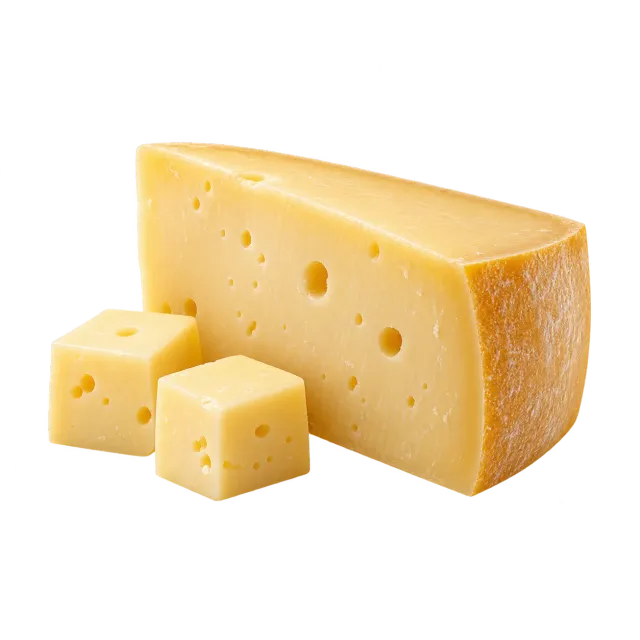
A fresh product made from pasteurised milk, with no blue mould or seasonings. Check the label for fat and salt content.
For dogs and cats
Already eaten — what now?
If your pet ate a small piece of plain cheese and seems well, remove the rest, leave water available and observe. Contact a veterinarian after a large amount or if repeated vomiting, diarrhoea, pain or lethargy develops. Do not induce vomiting yourself.
For dogs
Conditions and restrictions
A healthy adult dog may occasionally have a tiny piece of plain cheese made from pasteurised milk. Choose a lower-fat, less salty type with no additions. It is unsuitable without veterinary agreement for dogs with dairy intolerance, excess weight, pancreatitis or a prescribed diet.
Benefits
A small piece can be an occasional training reward. Cheese is not needed for a complete diet.
Risks
- Dairy can cause diarrhoea, gas or vomiting when poorly tolerated.
- Fat and extra calories make weight control harder; salt also limits the choice of cheese.
- Fatty food is particularly unsuitable for a dog with pancreatitis; dietary indiscretion is considered a risk factor in dogs.
For cats
Conditions and restrictions
It is better not to offer cheese to a cat deliberately. If you occasionally allow a lick or a crumb of plain pasteurised cheese, do not make it a habit. Avoid this treat if dairy causes symptoms, your cat is overweight or follows a prescribed diet.
Benefits
A pet eating a complete diet does not need cheese for nutrients.
Risks
- Dairy can cause diarrhoea, gas or vomiting when poorly tolerated.
- Fat and extra calories make weight control harder; salt also limits the choice of cheese.
Salty or processed cheeseFor dogs and cats: With restrictions
Brined, smoked and processed varieties differ in composition. The name alone does not establish salt content.
For dogs and cats
Conditions and restrictions
Do not choose salty or processed cheese as a treat. Check the ingredients and salt content: these vary by producer in Lori, Chanakh, brined cheese, chechil and processed cheese. This variant covers products without onion, garlic or mould.
Benefits
There is no benefit that justifies offering this cheese.
Risks
- Excess salt can cause marked thirst; a large amount can be dangerous. A variety name alone cannot establish the risk.
- Fat, calories and intolerance to dairy ingredients still matter.
Already eaten — what now?
After a small accidental piece with no symptoms, leave water available and observe. If a lot was eaten, brine was drunk, or marked thirst, vomiting or lethargy occurs, call a veterinarian promptly and show the packaging. Unsteadiness, tremors or seizures need immediate care. Do not force water or induce vomiting.
With onion or garlicFor dogs and cats: Dangerous · Urgent help needed
Cheese, cheese spread or sauce containing Allium ingredients, including powders.
For dogs and cats
Conditions and restrictions
Do not offer cheese containing onion, garlic or chives, including dried powders. Heating does not make these additions safe.
Benefits
There is no benefit that justifies offering this cheese.
Already eaten — what now?
Call a veterinarian now, even if there are no symptoms yet. Report the ingredients, approximate amount, time and your pet’s weight. Pale gums, severe weakness or breathing difficulty require immediate veterinary care. Do not induce vomiting unless instructed.
For dogs
Risks
- Red blood cell damage and anaemia are possible; signs can take several days to appear.
For cats
Risks
- Red blood cell damage and anaemia are possible; signs can take several days to appear.
- Cats are particularly sensitive to Allium plants.
Blue cheeseFor dogs and cats: Dangerous · Urgent help needed
Cheese made with intentionally grown blue mould. Being edible for people does not make it suitable for pets.
For dogs and cats
Conditions and restrictions
Do not give blue-veined cheeses such as Roquefort, Gorgonzola or Stilton to your pet.
Benefits
There is no benefit that justifies offering this cheese.
Risks
- Some mould toxins cause vomiting, unsteadiness, tremors and seizures. Their amount cannot be judged from the cheese’s appearance.
Already eaten — what now?
Contact a veterinarian immediately and report the type and amount of cheese eaten. Go straight to a clinic for tremors, unsteadiness or seizures. Keep the packaging or a photo of the product; do not induce vomiting or give home remedies.
Spoiled, mouldy cheeseFor dogs and cats: Dangerous · Urgent help needed
Mould developed during storage on cheese that was not meant to contain it.
For dogs and cats
Conditions and restrictions
Discard spoiled cheese with unexpected mould where your pet cannot reach it. Do not offer even a small piece.
Benefits
There is no benefit that justifies offering this cheese.
Risks
- Some mould toxins cause vomiting, unsteadiness, tremors and seizures. Their amount cannot be judged from the cheese’s appearance.
Already eaten — what now?
Contact a veterinarian immediately and report the type and amount of cheese eaten. Go straight to a clinic for tremors, unsteadiness or seizures. Keep the packaging or a photo of the product; do not induce vomiting or give home remedies.
Conditions and risks
For dogs
Conditions and restrictions
A healthy adult dog may occasionally have a tiny piece of plain cheese made from pasteurised milk. Choose a lower-fat, less salty type with no additions. It is unsuitable without veterinary agreement for dogs with dairy intolerance, excess weight, pancreatitis or a prescribed diet.
Benefits
A small piece can be an occasional training reward. Cheese is not needed for a complete diet.
Risks
- Dairy can cause diarrhoea, gas or vomiting when poorly tolerated.
- Fat and extra calories make weight control harder; salt also limits the choice of cheese.
- Fatty food is particularly unsuitable for a dog with pancreatitis; dietary indiscretion is considered a risk factor in dogs.
For cats
Conditions and restrictions
It is better not to offer cheese to a cat deliberately. If you occasionally allow a lick or a crumb of plain pasteurised cheese, do not make it a habit. Avoid this treat if dairy causes symptoms, your cat is overweight or follows a prescribed diet.
Benefits
A pet eating a complete diet does not need cheese for nutrients.
Risks
- Dairy can cause diarrhoea, gas or vomiting when poorly tolerated.
- Fat and extra calories make weight control harder; salt also limits the choice of cheese.
The main rating covers plain cheese made from pasteurised milk. Raw-milk cheeses, plant-based substitutes and prepared cheese dishes need a separate ingredient assessment. A lactose-free label does not remove fat or salt.
If dairy upsets your pet’s digestion, also read the cow’s milk card: wanting a food does not mean it agrees with them.
Sources
- VCA Animal Hospitals: Treats to skip and treats to share with your pet
- Cats Protection: Can cats eat cheese?
- ASPCA Poison Control: People foods to avoid feeding your pets
- Animal PoisonLine: Mouldy food and compost, dangers to dogs and cats
- Pet Poison Helpline: Moldy food (mycotoxins)
- PDSA: Poisons and hazards in pets
- Merck Veterinary Manual: Garlic and onion (Allium spp) toxicosis in animals
- MSD Veterinary Manual: Pancreatitis in dogs and cats
- ASPCA: Is it ever safe to induce vomiting?
Comments
No comments yet.