
Already eaten — what now?
For dogs and cats
If your pet ate a small piece of plain baked bread and seems well, remove the rest and monitor them. Call a vet after a large amount, unknown ingredients, swallowed packaging or signs of illness. Raw yeast dough, mold, raisins, onion, garlic or chocolate need an immediate call; for dogs, so does xylitol. A swollen painful abdomen, unproductive retching, staggering, seizures or difficulty breathing mean you should go straight to an open veterinary clinic. Do not induce vomiting yourself.
Variants and ingredients
Raw yeast dough and sourdough starterFor dogs and cats: Dangerous · Especially dangerous
Unbaked dough containing active yeast, including sourdough. Fully baked plain sourdough bread falls under the main assessment.
For dogs and cats
Conditions and restrictions
Do not offer even a taste. Keep rising dough and starter out of reach.
Benefits
This bread is not worth offering as food or a treat.
Risks
- Yeast produces gas and ethanol: dough expands in the stomach and alcohol enters the bloodstream.
- Painful bloating, depression, staggering, seizures and breathing problems can occur.
Already eaten — what now?
Call a vet immediately and prepare to travel, even if there are no symptoms yet. Give the time, estimated amount, dough ingredients and pet's weight. Leave immediately if there is bloating, unproductive retching, drowsiness or staggering. Do not induce vomiting or try home remedies to stop fermentation.
Moldy breadFor dogs and cats: Dangerous · Urgent help needed
Bread with visible mold or spoiled bread from the trash.
For dogs and cats
Conditions and restrictions
Do not feed. Dispose of spoiled bread where your pet cannot reach it.
Benefits
This bread is not worth offering as food or a treat.
Risks
- Some molds produce toxins that can cause vomiting, incoordination, tremors and seizures.
- The bread's appearance cannot tell you whether a dangerous toxin is present or how much.
Already eaten — what now?
Contact a vet immediately with the amount and time. Photograph the bread; keep any sample sealed and out of animals' reach. Go straight to a clinic for vomiting, tremors, staggering, seizures or marked agitation. Do not induce vomiting yourself.
Raisin breadFor dogs and cats: Dangerous · Urgent help needed
Bread and rolls containing raisins, sultanas or Zante currants.
For dogs and cats
Conditions and restrictions
Do not feed raisin bread or rolls. Baking or picking out visible raisins does not make this bread a suitable treat.
Benefits
This bread is not worth offering as food or a treat.
Already eaten — what now?
Call a vet immediately, even if your pet looks well. Keep the recipe or packaging and estimate the amount eaten and possible number of raisins. Do not wait for vomiting, lethargy or changes in urination, and do not induce vomiting yourself.
For dogs
Risks
- Raisins can cause acute kidney injury. Susceptibility varies between dogs and no universal safe serving is established.
For cats
Risks
- Vomiting and loss of appetite have been reported in cats after grapes or raisins. Kidney risk is less well studied than in dogs; poison specialists recommend a cautious approach and veterinary assessment of ingestion.
Onion or garlic breadFor dogs and cats: Dangerous · Urgent help needed
Bread with onion, garlic, their powders or a garlic spread.
For dogs and cats
Conditions and restrictions
Do not feed bread containing onion or garlic, including their powders or seasoning blends. Cooking does not remove the risk.
Benefits
This bread is not worth offering as food or a treat.
Already eaten — what now?
Call a vet immediately: the amount of bread, onion or garlic content, time and pet's weight matter. Keep the packaging or recipe. Weakness, pale gums, breathing difficulty or dark urine require an immediate trip to a clinic. Do not induce vomiting yourself.
For dogs
Risks
- Onion and garlic damage red blood cells and can cause anemia. Signs may take several days to appear.
For cats
Risks
- Onion and garlic damage red blood cells and can cause anemia. Signs may take several days to appear.
- Cats are more susceptible to onion and garlic toxicity than dogs.
Bread containing xylitolFor dogs: Dangerous · Especially dangerousFor cats: With restrictions
Baked bread with the sweetener xylitol (E967). A sugar-free label alone does not mean the product contains xylitol.
For dogs and cats
Conditions and restrictions
Do not choose bread containing xylitol as a treat. This variant covers baked bread without other hazardous ingredients; check the full ingredient list.
Benefits
This bread is not worth offering as food or a treat.
For dogs
Risks
- Xylitol can cause a rapid drop in blood sugar, seizures and liver injury. Its concentration in baked goods varies.
Already eaten — what now?
Call a vet immediately and prepare to travel without waiting for symptoms. Give the dog's weight, time and amount, and take the full packaging. Do not induce vomiting or give any home treatment unless directed by a vet.
For cats
Risks
- A small study in healthy cats found no toxic effects from xylitol. This does not establish the safety of every amount or of the whole baked product.
- Extra calories and other ingredients still matter; this assessment does not apply when the ingredients are unknown.
Already eaten — what now?
Remove the rest and check all ingredients. Monitor a cat that ate a small piece and feels well. Contact a vet for a large or unknown amount, uncertain ingredients or signs of illness. Call immediately if the bread also contains raisins, onion, garlic or chocolate. Go straight to a clinic for staggering, seizures or breathing difficulty; do not induce vomiting yourself.
Conditions and risks
For dogs and cats
Conditions and restrictions
A healthy adult pet can occasionally have a small, soft piece of fully baked bread with no mold, filling or added ingredients. Check the ingredients. Keep all treats together below 10% of daily calories. For a pet with a food allergy, illness or prescribed diet, check with your vet first.
Benefits
Bread provides energy, but a pet on a complete diet does not need it for extra nutritional benefit.
Risks
- Frequent treats add calories and can promote weight gain; large portions displace complete food.
- Unfamiliar food may cause vomiting or diarrhea. Bread is unsuitable if the pet is allergic to an ingredient.
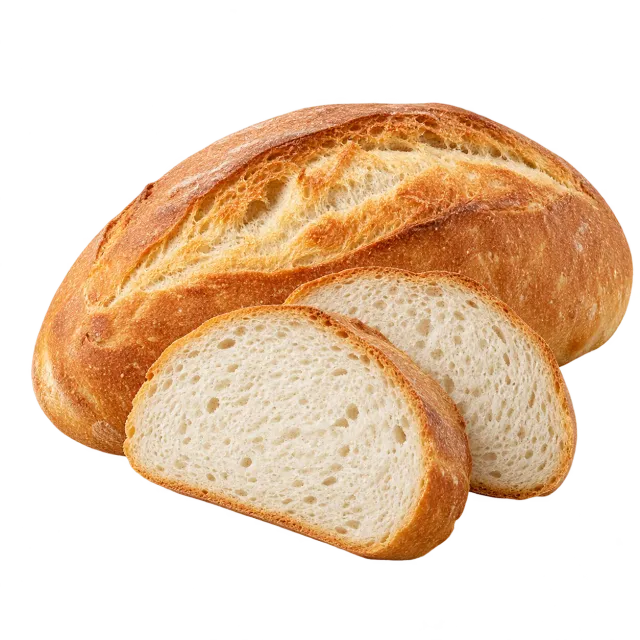
The main assessment covers plain, fully baked wheat bread: white or wholemeal loaves, baguettes, the crumb and soft crust. Plain toast without butter or spreads has the same assessment. Judge sandwiches, sweet rolls and bread with added ingredients by their full ingredient list.
Bread containing raisins has its own assessment. Kidney injury is a concern for dogs; evidence in cats is more limited, but ingestion still needs an immediate call to a vet.
Sources
- WSAVA: Feeding treats to your dog
- WSAVA: Feeding treats to your cat
- American Kennel Club: Can Dogs Eat Bread?
- Sandra C. Mitchell, DVM, DABVP: Can Cats Eat Bread? (PetMD)
- Morris et al. (1977): Carbohydrate digestion by the domestic cat
- Pet Poison Helpline: Bread Dough
- Pet Poison Helpline: Bread Dough Is a Don't for Pets
- Pet Poison Helpline: Moldy Food (Mycotoxins)
- Hocking et al. (1988): Intoxication by tremorgenic mycotoxin (penitrem A) in a dog
- Dijkman et al. (2022): Incidence of Vitis fruit-induced clinical signs and acute kidney injury in dogs and cats
- Pet Poison Helpline: Feline Safety
- Merck Veterinary Manual: Garlic and Onion (Allium spp) Toxicosis in Animals
- FDA: Paws Off! Xylitol is Toxic to Dogs
- Jerzsele et al. (2018): Effects of p.o. administered xylitol in cats
- ASPCA Poison Control: People Foods to Avoid Feeding Your Pets
- Pet Poison Helpline: Xylitol
Comments
No comments yet.