
Already eaten — what now?
For dogs and cats
If your pet ate a small amount of prepared flesh and seems normal, remove the rest and observe. Call the veterinarian for repeated vomiting, severe diarrhoea, pain, lethargy or refusal to eat.
Variants and ingredients
Flesh without rind or seedsFor dogs and cats: Acceptable
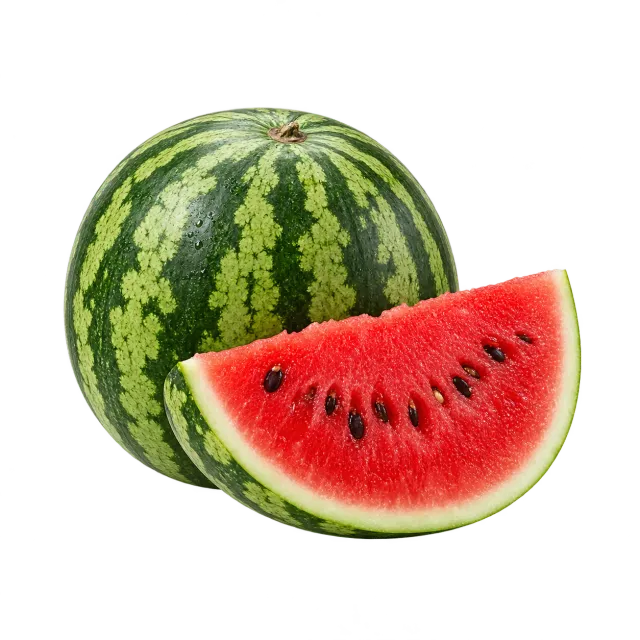
Fresh ripe flesh, washed and cut into small pieces.
For dogs and cats
Conditions and restrictions
Offer only washed, ripe flesh with the rind and large dark seeds removed, cut into small pieces suited to the animal. All treats combined should provide less than 10% of daily calories. Check with the veterinarian before adding a treat to a prescribed diet.
Benefits
An optional small treat. Watermelon is not needed for a complete diet and does not replace drinking water.
Risks
- A large serving or unfamiliar food may cause vomiting, soft stool, diarrhoea or abdominal discomfort.
- Regular extra calories can interfere with weight control and unbalance the diet.
Already eaten — what now?
If your pet ate a small amount of prepared flesh and seems normal, remove the rest and observe. Call the veterinarian for repeated vomiting, severe diarrhoea, pain, lethargy or refusal to eat.
Flesh with large seedsFor dogs and cats: With restrictions
Watermelon with large dark seeds that have not been removed.
For dogs and cats
Conditions and restrictions
Remove large dark seeds. Do not offer flesh containing many seeds or give the seeds separately.
Benefits
The seeds offer no benefit to a pet.
Risks
- Seeds may cause choking, and a large number may create a risk of gastrointestinal blockage.
Already eaten — what now?
After a few accidentally swallowed seeds with no signs, observe. If many seeds were eaten, the animal is small, is choking, vomits repeatedly, refuses food or seems painful, call the veterinarian urgently. Do not induce vomiting yourself.
Rind or a large firm pieceFor dogs and cats: Dangerous · Urgent help needed
Green rind with the white layer, or a large slice that the pet may swallow almost whole.
For dogs and cats
Conditions and restrictions
Do not offer the rind or leave whole slices within reach. Large pieces swallowed almost whole are especially dangerous.
Benefits
The rind offers no justified benefit to a pet.
Risks
- The tough fibrous rind is poorly digested and may lodge in the gastrointestinal tract, causing partial or complete obstruction.
- An obstruction may lead to dehydration, intestinal injury and the need for endoscopy or surgery.
Already eaten — what now?
Call the veterinarian straight away and report the pet’s weight, the approximate size and amount of rind, the time and any signs. Leave for an open clinic immediately for choking, repeated vomiting, a painful or swollen abdomen, marked lethargy, or refusal of food and water. Do not induce vomiting yourself.
Sweetened drink or dessertFor dogs and cats: With restrictions
Watermelon juice, drink, jelly, ice, ice cream or confectionery with a known full ingredient list.
For dogs and cats
Conditions and restrictions
Do not deliberately offer it. This variant covers only a product with known ingredients and no grapes, raisins, chocolate, alcohol, caffeine, xylitol, onion or garlic.
Benefits
It has no advantage over a small piece of fresh flesh.
Risks
- Added sugar and calories may cause digestive upset and contribute to weight gain.
- Recipes for drinks, jelly, ice cream and confectionery vary widely; another ingredient may be more dangerous than the watermelon.
Already eaten — what now?
After a small amount of a product with known simple ingredients and no signs, observe. If the ingredients are unknown, the product was sugar-free, or vomiting, weakness, tremors, unsteady walking or other signs develop, keep the package and call the veterinarian straight away.
With grapes or raisinsFor dogs and cats: Dangerous · Urgent help needed
Fruit salad, drink, ice or dessert containing grapes or raisins.
For dogs and cats
Conditions and restrictions
Do not offer fruit salad, drinks or desserts containing grapes or raisins. Check the full ingredient list.
Benefits
There is no benefit that justifies offering a mixture containing grapes or raisins.
Risks
- Grapes and raisins may cause severe poisoning. Acute kidney injury is an established risk in dogs, while the risk in cats is less predictable.
- Other ingredients in the mixture may add separate hazards.
Already eaten — what now?
Remove the rest and call the veterinarian straight away, even if your pet still seems normal. Report the species, weight, ingredients, possible amount and time. Do not wait for signs or induce vomiting yourself.
Conditions and risks
For dogs and cats
Conditions and restrictions
Offer only washed, ripe flesh with the rind and large dark seeds removed, cut into small pieces suited to the animal. All treats combined should provide less than 10% of daily calories. Check with the veterinarian before adding a treat to a prescribed diet.
Benefits
An optional small treat. Watermelon is not needed for a complete diet and does not replace drinking water.
Risks
- A large serving or unfamiliar food may cause vomiting, soft stool, diarrhoea or abdominal discomfort.
- Regular extra calories can interfere with weight control and unbalance the diet.
This card covers fresh edible watermelon. The green rating applies only to prepared flesh. Rind, seeds and products with complex ingredients are assessed separately.
If a salad, drink or dessert contains grapes or raisins, follow the grapes card. The added ingredient creates the risk, not the watermelon flesh.
Sources
- VCA Animal Hospitals: Can you feed pets certain fruits and veggies
- VCA Animal Hospitals: Using Food and Treats for Training Cats
- VCA Animal Hospitals: Summer Fun and Follies
- WSAVA Nutrition Committee: Feeding treats to your dog
- WSAVA Nutrition Committee: Feeding treats to your cat
- MSD Veterinary Manual: Gastrointestinal Obstruction in Small Animals
- American College of Veterinary Surgeons: Gastrointestinal Foreign Bodies
- ASPCA Animal Poison Control: Is It Ever Safe to Induce Vomiting?
Comments
No comments yet.