
Already eaten — what now?
For dogs and cats
Urgent help neededRemove the plant and call the clinic. Give your pet’s weight, the part eaten, the possible amount and the time. Keep a photograph or sample of the plant. Do not induce vomiting or give home remedies unless a veterinarian instructs you to. Repeated vomiting, marked lethargy, abdominal pain, breathing changes or rapid deterioration mean leaving for an open clinic immediately.
Variants and ingredients
Flower, leaves and stemFor dogs and cats: Dangerous · Urgent help needed
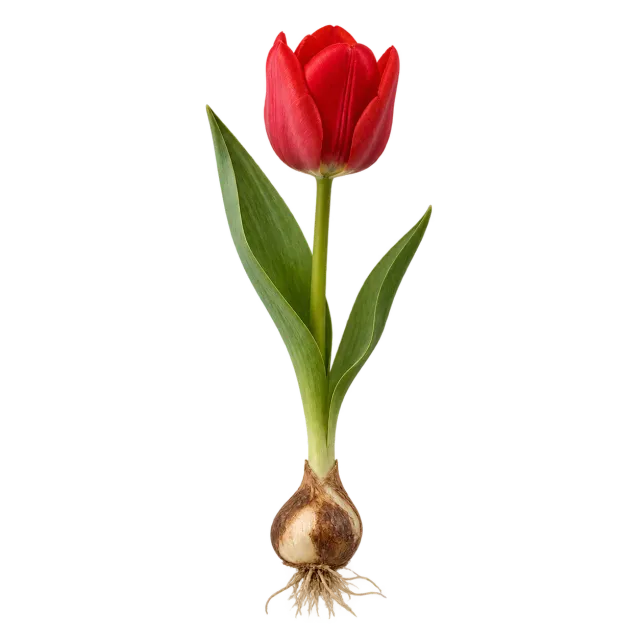
The above-ground parts of a growing or cut tulip.
For dogs and cats
Conditions and restrictions
Do not let pets chew the flower, petals, leaves or stem. Pick up any fallen parts of a bouquet.
Benefits
There is no benefit for a pet.
Risks
- The above-ground parts are also toxic. A small amount more often causes nausea, drooling, vomiting or diarrhoea, but the response depends on the amount and the pet’s condition.
Already eaten — what now?
Remove the remaining plant and call a veterinarian even if there are no signs yet. Give the part eaten, the time and possible amount. Do not induce vomiting yourself. Repeated vomiting, weakness or deterioration needs a trip to the clinic.
BulbFor dogs and cats: Dangerous · Urgent help needed
The underground part of the plant and planting material.
For dogs and cats
Conditions and restrictions
Do not offer bulbs or leave them where a pet can dig them up or swallow them. Store planting bulbs away from food.
Benefits
There is no benefit for a pet.
Risks
- The bulb has the highest toxin concentration. Persistent vomiting, diarrhoea, drooling, loss of appetite and lethargy may follow.
- Large ingestions have been associated with increased heart rate and breathing changes. A whole or large bulb can cause an obstruction.
Already eaten — what now?
Call the clinic immediately. Give your pet’s weight, the size and number of bulbs, the time and any signs. Keep the packaging or a photograph of the plant. Do not feed your pet or induce vomiting unless a veterinarian tells you to. Leave for an open clinic immediately if a whole bulb was swallowed, the amount is unknown, vomiting is repeated, or pain, weakness or breathing changes appear.
Conditions and risks
For dogs and cats
Conditions and restrictions
Do not offer flowers, leaves, stems or bulbs. Keep bouquets, fallen petals and planting bulbs out of reach.
Benefits
Tulips have no place in a pet’s diet and are not a home treatment.
Risks
- Tulips contain tulipalin A and B. Ingestion can cause drooling, vomiting, diarrhoea, lethargy and loss of appetite.
- The bulb contains the highest concentration of toxins. A swallowed whole bulb can also obstruct the digestive tract.
This card covers tulips in the genus Tulipa. They are different from the “true lilies” that can cause acute kidney injury in cats, but tulips are still toxic to both cats and dogs. You can check other flowers and plants in our guide to hazardous houseplants.
Comments
No comments yet.