
Already eaten — what now?
For dogs and cats
After a few licks of cooled plain tea with no symptoms, remove the cup and observe. Call the clinic immediately if more was drunk, the amount is unknown, leaves, matcha or a tea bag were swallowed, or symptoms develop. Give your pet’s weight, the type and strength of tea, additives, time and possible amount. Do not induce vomiting yourself.
Variants and ingredients
Brewed caffeinated teaFor dogs and cats: With restrictions
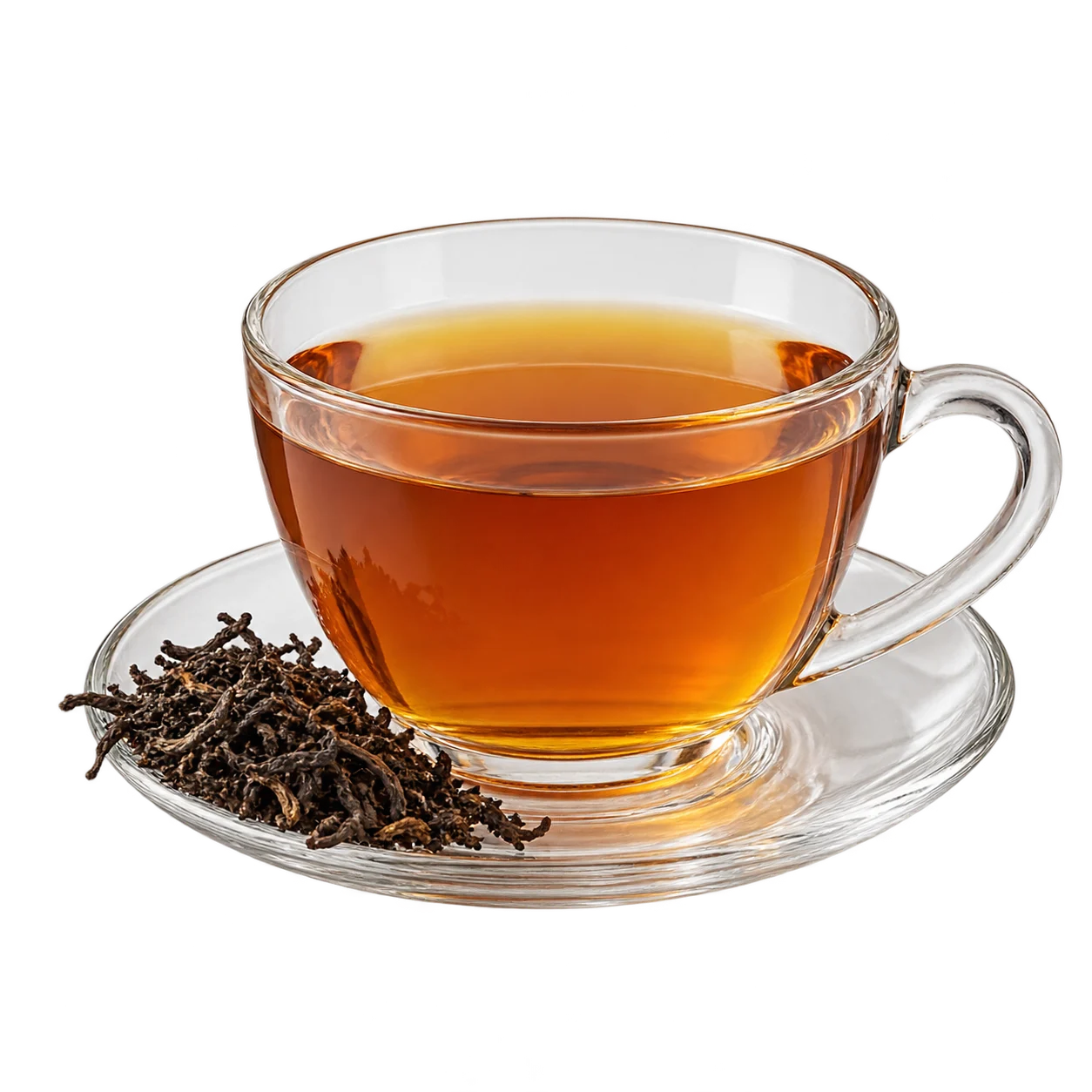
Cooled black, green, white or oolong tea without additions.
For dogs and cats
Conditions and restrictions
Do not offer tea deliberately. Risk depends on its strength and amount, the pet’s weight and health, and any added ingredients.
Benefits
Tea has no dietary benefit for a pet. Fresh water is the suitable drink.
Risks
- Caffeine can cause vomiting, restlessness, a rapid heart rate, high blood pressure, overheating, tremors, abnormal heart rhythms and seizures.
Already eaten — what now?
After a few licks of cooled plain tea with no symptoms, remove the cup and observe. Call the clinic immediately if more was drunk, the amount is unknown, leaves, matcha or a tea bag were swallowed, or symptoms develop. Give your pet’s weight, the type and strength of tea, additives, time and possible amount. Do not induce vomiting yourself.
Dry leaves, a tea bag or matchaFor dogs and cats: Dangerous · Urgent help needed
Dry leaf, matcha powder, or a used or unused tea bag.
For dogs and cats
Conditions and restrictions
Keep dry leaves, matcha and tea bags out of reach. Do not let pets chew or lick them.
Benefits
There is no benefit for a pet.
Risks
- Dry leaf and matcha provide a more concentrated caffeine exposure than a few licks of brewed tea. A swallowed bag can also obstruct the digestive tract.
Already eaten — what now?
Remove the remainder and call the clinic immediately, even if there are no signs yet. Keep the packaging and give your pet’s weight, the product, time and possible amount. Agitation, a racing heart, vomiting, tremors, poor coordination or seizures require immediate travel. Do not induce vomiting unless a veterinarian tells you to.
Decaffeinated teaFor dogs and cats: With restrictions
Camellia sinensis tea with most caffeine removed.
For dogs and cats
Conditions and restrictions
Do not offer it regularly. “Decaffeinated” means less caffeine, not always none; assess added ingredients separately.
Benefits
There is no dietary benefit. Fresh water is more suitable.
Risks
- Residual caffeine and added ingredients can change the risk; a hot drink can burn the mouth.
Already eaten — what now?
After a few licks of a cooled plain drink with no symptoms, observe. Call the clinic if a large amount was drunk, the ingredients or amount are unknown, or vomiting, restlessness, tremors or a racing heart develop.
Herbal or flavoured teaFor dogs and cats: Insufficient evidence
A blend of botanicals, flavourings, spices or sweeteners; ingredients vary widely.
For dogs and cats
Conditions and restrictions
Do not offer a blend until every ingredient and sweetener has been checked for that species. “Natural” does not mean safe.
Benefits
Benefit cannot be assessed without the exact ingredients. Fresh water is the suitable drink.
Risks
- A blend may contain caffeine, unsafe plants, chocolate, spices, essential oils or xylitol. Its name alone is not enough to assess the risk.
Already eaten — what now?
Photograph the ingredient list. Call the clinic after an unknown blend, a swallowed bag, a large amount or any symptoms. Weakness, repeated vomiting, tremors, seizures or breathing difficulty need urgent travel. Do not induce vomiting yourself.
Conditions and risks
For dogs and cats
Conditions and restrictions
Do not offer tea deliberately. Risk depends on its strength and amount, the pet’s weight and health, and any added ingredients.
Benefits
Tea has no dietary benefit for a pet. Fresh water is the suitable drink.
Risks
- Caffeine can cause vomiting, restlessness, a rapid heart rate, high blood pressure, overheating, tremors, abnormal heart rhythms and seizures.
Here, tea means drinks and leaves from Camellia sinensis: black, green, white and oolong tea. Matcha is powdered whole leaf, so it should not be assessed like a few licks of a weak infusion. Herbal infusions are not Camellia sinensis and must be assessed from their exact ingredients.
Milk, syrups, chocolate, spices, sweeteners and botanical ingredients change the risk. Keep the packaging or photograph the full ingredient list. A drink with unknown ingredients is not safe simply because its label says “tea”.
Sources
- Pet Poison Helpline: Caffeine
- Pet Poison Helpline: Can Dogs Drink Tea?
- ASPCA Animal Poison Control: People Foods to Avoid Feeding Your Pets
- MSD Veterinary Manual: Chocolate Toxicosis in Animals
- MSD Veterinary Manual: Principles of Toxicosis Treatment in Animals
- FDA: Spilling the Beans: How Much Caffeine is Too Much?
- FDA: Science and Our Food Supply — Caffeine Content in Beverages
- Tawde et al.: Death by Caffeine — Presumptive Malicious Poisoning of a Dog
Comments
No comments yet.