
Already eaten — what now?
For dogs and cats
If the dish contains onion or garlic, call your veterinarian straight away without waiting for symptoms. If a healthy pet ate a little plain spinach and seems well, keep an eye on them. Call your veterinarian with the ingredients, amount and time if they ate a lot, the amount is unknown, or they have kidney or urinary disease. Repeated vomiting or lethargy needs an examination. Straining without passing urine, breathing difficulty or sudden marked weakness needs immediate help, regardless of what was eaten. Do not induce vomiting yourself.
Variants and ingredients
Plain fresh leavesFor dogs and cats: With restrictions
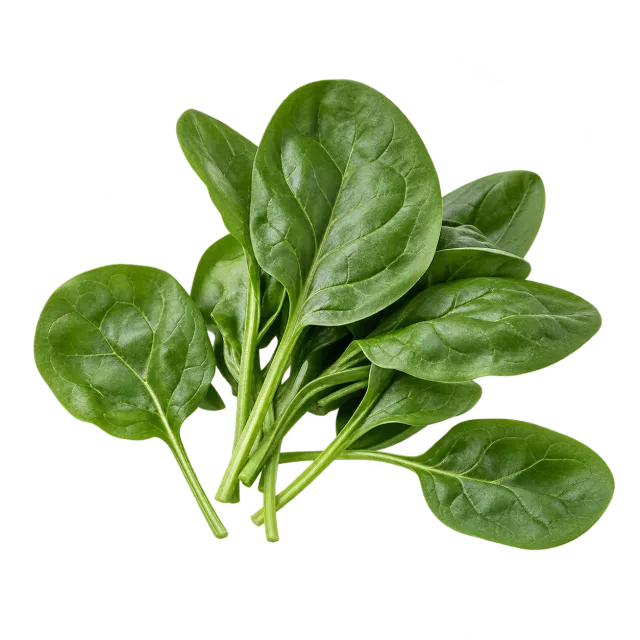
Ordinary spinach, including baby spinach leaves.
For dogs and cats
Conditions and restrictions
Wash fresh leaves and chop them finely. Soft cooked spinach is easier to offer as a treat. Offer only a little, occasionally, without salt, oil or seasoning. Do not give spinach to pets with calcium oxalate stones. For other kidney or urinary disease, or a prescribed diet, discuss any additions with your veterinarian first.
Benefits
Spinach is not needed in a complete diet. A little can be an occasional treat if your pet likes it.
Risks
- Spinach is high in oxalates and is unsuitable as a treat for pets with calcium oxalate stones.
- Unfamiliar plant food may cause vomiting or diarrhoea.
Already eaten — what now?
If a healthy pet ate a little plain spinach and seems well, keep an eye on them. Call your veterinarian with the ingredients, amount and time if they ate a lot, the amount is unknown, or they have kidney or urinary disease. Repeated vomiting or lethargy needs an examination. Straining without passing urine, breathing difficulty or sudden marked weakness needs immediate help, regardless of what was eaten. Do not induce vomiting yourself.
Cooked without additionsFor dogs and cats: With restrictions
Fresh or frozen spinach cooked without salt, oil, sauce or seasoning.
For dogs and cats
Conditions and restrictions
Boil without additions, drain, cool and chop. Choose frozen spinach without sauce and prepare it according to the package instructions. Boiling reduces some oxalates but does not remove the restrictions; do not offer the cooking water. Offer only a little, occasionally, without salt, oil or seasoning. Do not give spinach to pets with calcium oxalate stones. For other kidney or urinary disease, or a prescribed diet, discuss any additions with your veterinarian first.
Benefits
Spinach is not needed in a complete diet. A little can be an occasional treat if your pet likes it.
Risks
- Spinach is high in oxalates and is unsuitable as a treat for pets with calcium oxalate stones.
- Unfamiliar plant food may cause vomiting or diarrhoea.
Already eaten — what now?
If a healthy pet ate a little plain spinach and seems well, keep an eye on them. Call your veterinarian with the ingredients, amount and time if they ate a lot, the amount is unknown, or they have kidney or urinary disease. Repeated vomiting or lethargy needs an examination. Straining without passing urine, breathing difficulty or sudden marked weakness needs immediate help, regardless of what was eaten. Do not induce vomiting yourself.
With onion or garlicFor dogs and cats: Dangerous · Urgent help needed
Soup, sautéed spinach or another dish containing onion, garlic or other Allium plants.
For dogs and cats
Conditions and restrictions
Do not give spinach with onion, garlic, leeks, spring onions or their powders. Cooking does not make these additions safe.
Benefits
This dish is unsuitable as a pet treat.
Already eaten — what now?
Call your veterinarian straight away to assess the risk, even if there are no signs yet. Give your pet’s weight, the recipe or package ingredients, approximate amount and time. Pale gums, breathing difficulty, marked weakness or dark urine require urgent veterinary care. Do not induce vomiting or give medicines without veterinary instructions.
For dogs
Risks
- Onion and garlic damage red blood cells and can cause anaemia. Signs may take several days to appear.
For cats
Risks
- Onion and garlic damage red blood cells and can cause anaemia. Signs may take several days to appear.
- Cats are more sensitive than dogs to onion and garlic toxicity.
Conditions and risks
For dogs and cats
Conditions and restrictions
Offer only a little, occasionally, without salt, oil or seasoning. Do not give spinach to pets with calcium oxalate stones. For other kidney or urinary disease, or a prescribed diet, discuss any additions with your veterinarian first.
Benefits
Spinach is not needed in a complete diet. A little can be an occasional treat if your pet likes it.
Risks
- Spinach is high in oxalates and is unsuitable as a treat for pets with calcium oxalate stones.
- Unfamiliar plant food may cause vomiting or diarrhoea.
This card covers edible spinach, Spinacia oleracea. Sorrel, aveluk and other plants called “spinach” may have a different composition. Assess soup, pie or sauce by its full recipe; one ingredient does not establish the safety of the dish.
For pets with urinary stones, the diet depends on the stone composition. Do not add spinach to a prescribed diet yourself or try to “balance” it with calcium or other supplements.
Sources
- Palm CA, Westropp JL. Cats and Calcium Oxalate: Strategies for managing lower and upper tract stone disease (2011)
- Purina Institute: Feline Calcium Oxalate Urolithiasis
- University of Minnesota, Minnesota Urolith Center: Treatment recommendations
- Chai W, Liebman M. Effect of different cooking methods on vegetable oxalate content (2005)
- American Kennel Club: Can Dogs Eat Spinach?
- Purina Pet Expert Team: Can Cats Eat Spinach?
- Merck Veterinary Manual: Garlic and Onion (Allium spp) Toxicosis in Animals
- VCA / Pet Poison Helpline: Onion, Garlic, Chive, and Leek Poisoning in Dogs
- Cornell Feline Health Center: Feline Lower Urinary Tract Disease
- ASPCA Poison Control: Toxic and Non-Toxic Plants, general guidance
- MSD Veterinary Manual: General Treatment of Poisoning
Comments
No comments yet.