
Already eaten — what now?
For dogs and cats
Remove the rest and identify the wood species, treatment and approximate amount. After only a few clean, dry particles with no signs, monitor your pet. Call a veterinarian if the amount was large or unknown, or if repeated vomiting, loss of appetite, pain, swelling, lethargy or difficulty swallowing develops. Do not induce vomiting.
Variants and ingredients
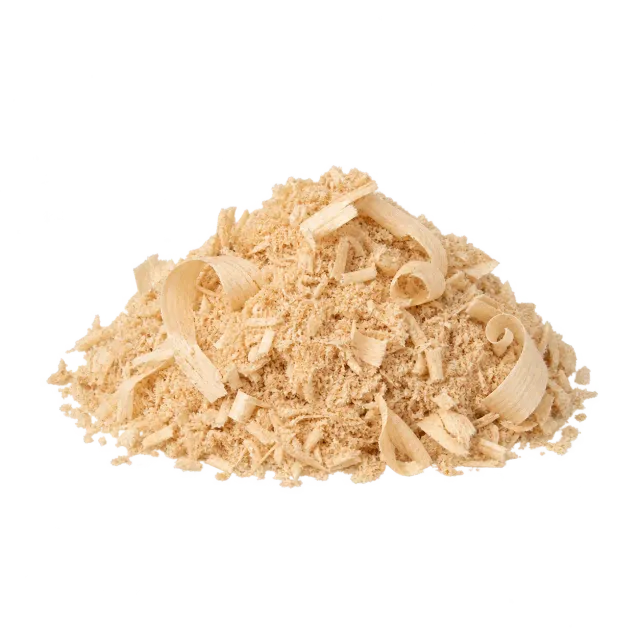
Small amount of clean untreated sawdustFor dogs and cats: With restrictions
A few dry particles from known non-toxic wood, with no paint, varnish, preservative, glue or mould.
For dogs and cats
Conditions and restrictions
Do not offer sawdust. This variant covers only a small accidental ingestion of clean material.
Benefits
There is no nutritional benefit.
Risks
- Brief vomiting, diarrhoea or mouth irritation may occur.
Already eaten — what now?
Remove the rest and monitor your pet. Call a veterinarian if your pet coughs, gags, vomits repeatedly, refuses food, seems painful or becomes lethargic. Do not induce vomiting.
Large, repeated or clumped amountFor dogs and cats: Dangerous · Urgent help needed
A noticeable pile, repeated ingestion, or wet or clumped sawdust when the exact amount may be unknown.
For dogs and cats
Conditions and restrictions
Keep sawdust out of reach and away from places where your pet eats or licks the paws.
Benefits
There is no benefit; this is indigestible material.
Risks
- An indigestible mass may remain in the stomach or intestine and cause partial or complete obstruction.
- Shavings and wood fragments may lodge in the oesophagus or injure tissue.
- Delay during ongoing vomiting and refusal of food increases the risk of complications.
Already eaten — what now?
Call a veterinarian now and report the wood species, amount, time, your pet’s weight and any signs. Go to an open clinic for repeated vomiting, a painful or swollen abdomen, marked lethargy, unproductive retching or difficulty swallowing. Do not feed or induce vomiting unless a veterinarian tells you to.
Painted, preserved or contaminated sawdustFor dogs and cats: Dangerous · Urgent help needed
Sawdust from repairs or from sawing painted, varnished, preserved, glued or contaminated wood.
For dogs and cats
Conditions and restrictions
Keep pets away from the work area until dust has been removed. Identify the coating or preservative from the packaging or timber information.
Benefits
There is no nutritional benefit.
Risks
- Risk depends on the chemical composition; paint, solvent, glue or preservative may cause poisoning or irritation.
- Old and some treated materials may contain arsenic compounds or other hazardous substances.
- Sawdust still carries an obstruction risk regardless of chemical composition.
Already eaten — what now?
Prevent further access, keep the packaging, a photo or a sample, and call a veterinarian immediately. Report the ingredients, amount, time and your pet’s weight. Leave for a clinic at once for drooling, repeated vomiting, diarrhoea, unsteadiness, tremors, weakness or breathing difficulty. Do not induce vomiting.
From creosote-treated woodFor dogs and cats: Dangerous · Urgent help needed
Dark, oily, strongly scented timber that may have been used for railway sleepers, posts or outdoor structures.
For dogs and cats
Benefits
There is no benefit.
Already eaten — what now?
Call a veterinarian immediately, keep a sample, and report the approximate amount and time. Leave at once for weakness, vomiting, pain, yellow-tinged tissues, breathing difficulty or collapse. Do not induce vomiting.
For dogs
Conditions and restrictions
Do not allow a dog to chew creosote-treated timber or reach sawdust from cutting it.
Risks
- Creosote contains coal-tar compounds, including phenol and cresols; liver injury, anaemia and severe poisoning may occur.
- The sawdust may also cause irritation and obstruction.
For cats
Conditions and restrictions
Do not allow a cat to contact creosote-treated timber or sawdust from cutting it.
Risks
- Creosote contains phenol and cresols; cats are especially sensitive to these compounds.
- Liver injury, anaemia, irritation and obstruction may occur.
Yew sawdust or shavingsFor dogs and cats: Dangerous · Especially dangerous
Material from a Taxus yew; confirm the common name or appearance with a photograph of the plant.
For dogs and cats
Conditions and restrictions
Do not use yew sawdust around pets or leave branches, bark or shavings within reach.
Already eaten — what now?
Call an open veterinary clinic and leave immediately, even if no signs are present yet. Take a photograph of the plant and a wood sample if this does not delay you. Do not induce vomiting or give home remedies.
For dogs
Benefits
There is no benefit; yew is toxic to dogs.
Risks
- Taxines can disrupt heart function; tremors, unsteadiness, breathing difficulty, seizures, collapse and sudden death may occur.
- Yew bark is also a toxic part of the plant.
For cats
Benefits
There is no benefit; yew is toxic to cats.
Risks
- Taxines can disrupt heart function; tremors, unsteadiness, breathing difficulty, collapse and sudden death may occur.
- Cats are believed to be more sensitive to yew than dogs.
Conditions and risks
For dogs and cats
Conditions and restrictions
Do not offer sawdust deliberately. The main rating applies only to clean, dry sawdust from known untreated wood.
Benefits
Sawdust provides no nutritional benefit to a dog or cat.
Risks
- Sawdust may irritate the stomach and gut, causing vomiting or diarrhoea.
- Enough indigestible material may collect into a mass and obstruct the gastrointestinal tract.
- A toxic wood species, paint, varnish, preservative or contamination changes the risk.
This card covers loose sawdust and small wood shavings. Wood-pellet litter, ash, charcoal, particleboard and manufactured firelogs have different compositions and need separate assessment.
Sources
- ASPCA Animal Poison Control: Keeping Pets Safe During Home Repairs
- MSD Veterinary Manual: Gastrointestinal Obstruction in Small Animals
- Hayes (2009): Gastrointestinal foreign bodies in dogs and cats, 208 cases
- Gastrointestinal Phytobezoars in Small Animals: 18 cases
- MSD Veterinary Manual: Esophageal Foreign Bodies in Small Animals
- MSD Veterinary Manual: Coal-tar Poisoning
- MSD Veterinary Manual: Inorganic Arsenical Toxicosis in Animals
- ASPCA Animal Poison Control: English Yew
- MSD Veterinary Manual: Houseplants and Ornamentals Toxic to Animals
Comments
No comments yet.