
Already eaten — what now?
For dogs and cats
A small amount of plain cooked potato without symptoms usually only needs observation. Contact a veterinarian if your pet ate a green or sprouted tuber, sprouts, the plant, an unknown amount of raw potato, or a dish containing onion or garlic. Report the animal’s weight, the time, ingredients and possible amount. Repeated vomiting, marked weakness, tremors, poor coordination, seizures or trouble breathing need emergency care. Do not induce vomiting or give home remedies unless a veterinarian tells you to.
Variants and ingredients
Plain boiled or baked potatoFor dogs and cats: With restrictions
Peeled potato cooked through in water, steam or the oven.
For dogs and cats
Conditions and restrictions
Let it cool, mash it or cut it into small pieces. Do not add salt, fat, milk, sauce or seasoning.
Risks
- A large portion can upset digestion and add excess calories.
Already eaten — what now?
A small amount with nothing added usually only needs observation. Call a veterinarian if vomiting, diarrhoea, pain or lethargy develops.
For dogs
Benefits
A small source of starch and energy, not an essential part of the diet.
For cats
Benefits
An occasional treat with no specific nutritional benefit for a cat.
Raw, green, sprouted or plant partsFor dogs and cats: Dangerous · Urgent help needed
This includes a raw tuber, green areas, sprouts, leaves and potato stems.
For dogs and cats
Conditions and restrictions
Do not feed and keep out of reach. Discard a green or sprouted potato completely.
Benefits
There is no benefit that justifies this risk.
Risks
- The glycoalkaloids solanine and chaconine may cause severe gastrointestinal upset, drooling, weakness, tremors, poor coordination and other neurological signs.
- Toxin levels vary widely between tubers, so a safe amount cannot be judged at home.
Already eaten — what now?
Contact a veterinarian as soon as possible, especially if the potato was green or sprouted, the pet ate sprouts or plant material, the amount is unknown, or symptoms have started. Report the animal’s weight, what was eaten, when and how much. Do not induce vomiting on your own.
French fries and potato chipsFor dogs and cats: With restrictions
Fried potato and packaged snacks are usually high in fat and salt.
For dogs and cats
Conditions and restrictions
Do not offer them deliberately. One small piece eaten accidentally without hazardous seasoning is usually not a poisoning event, but it should not become a regular treat.
Benefits
They offer no useful benefit as a treat.
Risks
- Fat and high calorie density can upset digestion and promote weight gain.
- A large salt load is more dangerous when water is limited; seasonings may contain onion or garlic.
Already eaten — what now?
Remove the rest and check the ingredients. Call a veterinarian promptly after a large amount, a very salty product, onion or garlic powder, or if vomiting, weakness, tremors or seizures occur. Keep fresh water available, but do not use salt as a remedy or induce vomiting.
Mash, casserole or another dish with onion or garlicFor dogs: Dangerous · Urgent help neededFor cats: Dangerous · Especially dangerous
Onion and garlic in the dish remain toxic after cooking and in powdered form.
For dogs and cats
Conditions and restrictions
Do not feed. Check instant mash, sauces, seasoning blends, soups and ready-made dishes.
Benefits
There is no benefit that justifies exposure to onion or garlic.
Risks
- Onion and garlic damage red blood cells and can cause haemolytic anaemia; cats are more susceptible than dogs.
- Weakness, pale gums, rapid breathing, dark urine or jaundice may be delayed for several days.
Already eaten — what now?
Contact a veterinarian immediately and report the ingredients, possible amount, time and the animal’s weight. Do not wait for symptoms in a cat. Do not induce vomiting or give home remedies unless instructed by a veterinarian.
Conditions and risks
For dogs and cats
Risks
- A large portion can cause vomiting or diarrhoea and add unnecessary calories.
- Raw, green or sprouted tubers, green peel, sprouts and the potato plant may contain more solanine and chaconine.
- Fat, salt, onion and garlic in a prepared dish add separate risks.
For dogs
Conditions and restrictions
Offer only peeled potato that is fully boiled or baked, with no salt, fat, milk, sauce or seasoning. Let it cool and give a small piece. All treats together should stay within 10% of daily calories; ask your veterinarian first if your dog is on a therapeutic diet.
Benefits
Cooked potato provides starch and energy, but a balanced canine diet does not need it as a separate ingredient.
For cats
Conditions and restrictions
Offer only peeled potato that is fully boiled or baked, with no salt, fat, milk, sauce or seasoning. Let it cool and offer only a tiny amount. Potato does not replace complete cat food; ask your veterinarian first if your cat is on a therapeutic diet.
Benefits
Cats have no specific dietary need for potato. A tiny piece can be an occasional treat if the cat likes and tolerates it.
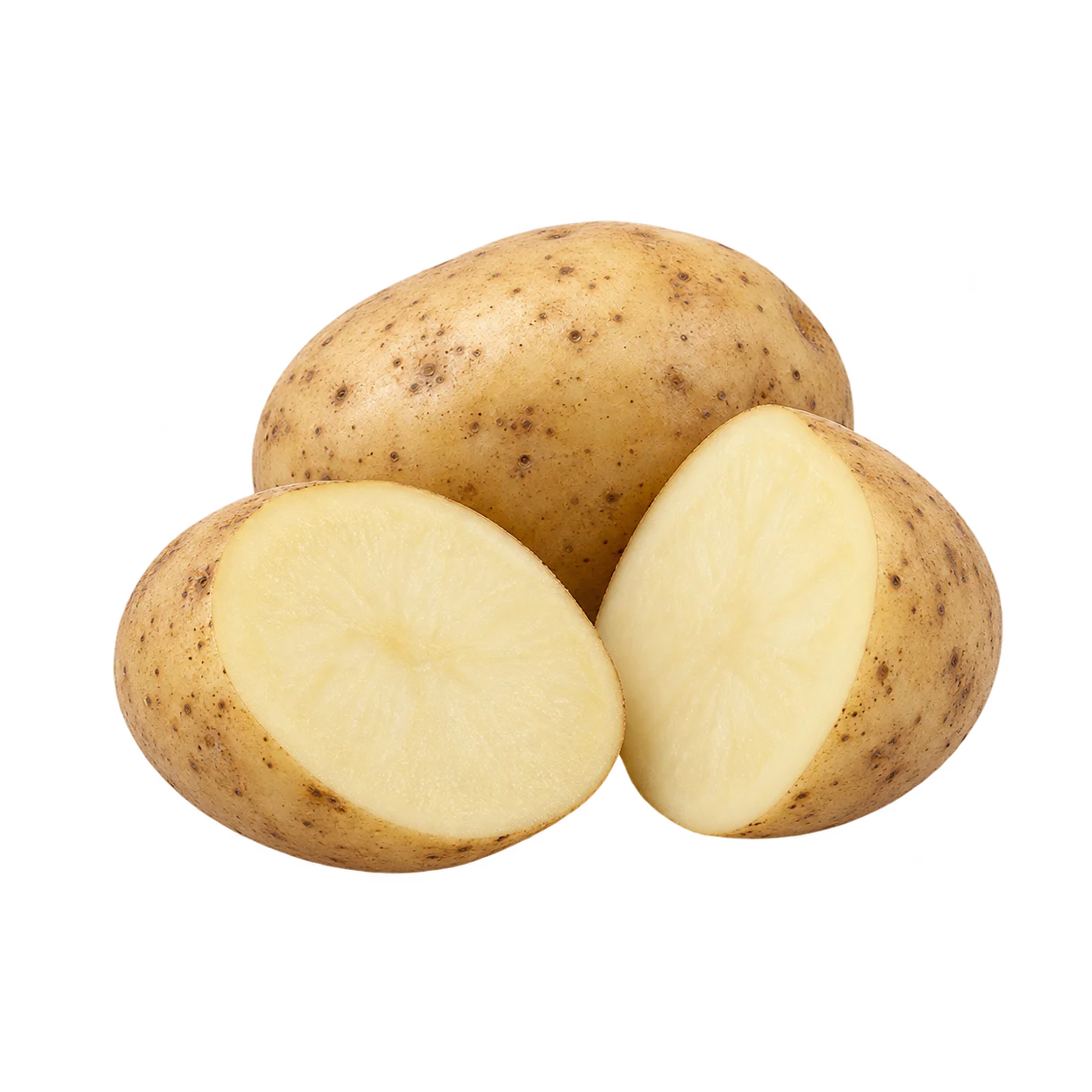
This card covers ordinary potato (Solanum tuberosum), not sweet potato. Preparation changes the answer: the safer form is a small piece of peeled, fully cooked potato with nothing added. Green areas, sprouts and the potato plant contain more glycoalkaloids and should not be fed.
Sources
- EFSA Journal: Risk assessment of glycoalkaloids in feed and food
- Merck Veterinary Manual: Range Plants of Temperate North America
- Pet Poison Helpline: Are Tomatoes Bad for Dogs? (potato section)
- ASPCA: Pets and Produce — Vegetable Garden Safety
- AAHA: Feeding Plans for Healthy, Appropriate Weight Cats and Dogs
- Merck Veterinary Manual: Garlic and Onion Toxicosis
- Merck Veterinary Manual: Pancreatitis in Dogs
- Merck Veterinary Manual: Salt Toxicosis in Animals
- PetMD: Can Cats Eat Potatoes?
Comments
No comments yet.