
Already eaten — what now?
For dogs and cats
If your pet ate a few arils and feels well, remove the rest and observe. Call the clinic after a large amount, swallowed rind or a product with an unknown ingredient list. Give the species, weight, time, amount and ingredients. Repeated vomiting, unproductive retching, a painful abdomen, marked lethargy or breathing difficulty need urgent care. Do not induce vomiting yourself.
Variants and ingredients
Fresh arilsFor dogs and cats: With restrictions
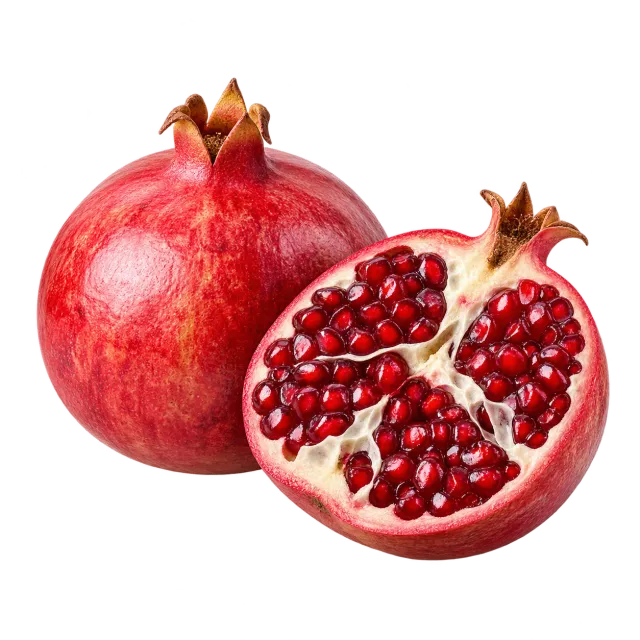
The juicy flesh around the inner seed, fully separated from rind and white membrane.
For dogs and cats
Conditions and restrictions
Offer only a few fresh arils with all rind and white membrane removed. Do not combine them with chocolate, grapes, raisins, alcohol, onion, garlic or sweeteners. Mash an aril for a small pet.
Benefits
A few arils can only be an occasional treat. Fresh pomegranate has no proven benefit for dogs or cats, and a complete food should already provide the nutrients they need.
Risks
- A large amount or unfamiliar food can cause vomiting, diarrhoea and abdominal pain.
- The firm seed inside each aril and larger pieces can cause choking or obstruction, especially in a small pet.
- Pomegranate adds sugar and calories but does not replace complete food.
Already eaten — what now?
If your pet ate a few arils and feels well, remove the rest and observe. Call the clinic after a large amount, swallowed rind or a product with an unknown ingredient list. Give the species, weight, time, amount and ingredients. Repeated vomiting, unproductive retching, a painful abdomen, marked lethargy or breathing difficulty need urgent care. Do not induce vomiting yourself.
Rind, crown and white membranesFor dogs and cats: Dangerous · Urgent help needed
Firm, poorly digestible parts of the fruit.
For dogs and cats
Conditions and restrictions
Do not offer these parts. Keep discarded rind where your pet cannot reach it.
Benefits
The rind, crown and white membranes provide no useful treat.
Risks
- A firm piece can lodge in the throat, stomach or intestines.
- Rind and membranes can cause vomiting, diarrhoea and abdominal pain.
- Obstruction risk depends on the size of the piece and the patient and cannot be ruled out at home.
Already eaten — what now?
If your pet swallowed rind, the crown or a wad of membrane, call the clinic the same day. Give the piece size, time, weight and symptoms. Leave immediately after choking, repeated vomiting, unproductive retching, inability to keep water down, or a painful or swollen abdomen. Do not pull on a lodged piece or induce vomiting yourself.
Plain pomegranate juiceFor dogs and cats: With restrictions
Juice with no added sugar, sweeteners, grape, alcohol or other ingredients.
For dogs and cats
Conditions and restrictions
Do not offer juice regularly. A small accidental sip of plain juice with no added sugar, sweeteners, grape or other ingredients usually calls for observation. Assess concentrates, syrups and supplements from the full label.
Benefits
Plain juice is unnecessary for dogs or cats and does not treat disease.
Risks
- Juice adds sugar and calories without the value of complete food.
- A large amount can cause digestive upset.
- Drinks and syrups may contain other ingredients with separate risks.
Already eaten — what now?
After a small sip of plain juice with no additives, observe. Call the clinic if the amount was large, the ingredients are unknown, or vomiting, diarrhoea, pain, weakness or unusual behaviour develops. Keep the package.
Product containing xylitolFor dogs: Dangerous · Especially dangerousFor cats: With restrictions
A drink, syrup, sweet, chewable product or supplement listing xylitol as an ingredient.
For dogs
Conditions and restrictions
Never give a dog pomegranate drinks, syrups, sweets, chewable products or supplements containing xylitol. Also check for the names birch sugar and wood sugar.
Benefits
A xylitol-containing product provides no benefit to a dog.
Risks
- Xylitol can rapidly cause severe hypoglycaemia.
- Vomiting, weakness, poor coordination, collapse and seizures may follow.
- Some exposures lead to liver injury and clotting problems.
Already eaten — what now?
Call an open veterinary clinic and leave immediately, even if the dog still looks well. Bring the package and give the weight, time, amount and xylitol concentration if listed. Do not wait for symptoms or induce vomiting unless a veterinarian directly tells you to.
For cats
Conditions and restrictions
Do not offer cats human products containing xylitol. Severe canine toxicity cannot be assumed in cats, but the full ingredient list still needs review.
Benefits
A sweetened xylitol product is unnecessary for a cat.
Risks
- FDA says xylitol does not appear as dangerous to cats as it is to dogs, but direct evidence is limited.
- Other ingredients in the sweet, drink or supplement may carry their own risk.
- A large amount of the mixture can cause digestive upset.
Already eaten — what now?
Remove the product, keep the package and check the full ingredient list. Call the clinic promptly if the amount is unknown, another hazardous ingredient is present, or vomiting, weakness, poor coordination, seizures or unusual behaviour develops.
Conditions and risks
For dogs and cats
Conditions and restrictions
Do not offer pomegranate regularly. If a healthy adult pet wants a taste, give no more than a few fresh arils with all rind and white membrane removed. All treats together should stay within 10% of daily calories. Ask your veterinarian first if your pet has diabetes, excess weight, digestive disease or a prescribed diet.
Benefits
A few arils can only be an occasional treat. Fresh pomegranate has no proven benefit for dogs or cats, and a complete food should already provide the nutrients they need.
Risks
- A large amount or unfamiliar food can cause vomiting, diarrhoea and abdominal pain.
- The firm seed inside each aril and larger pieces can cause choking or obstruction, especially in a small pet.
- Pomegranate adds sugar and calories but does not replace complete food.
This card covers edible pomegranate, Punica granatum. An aril includes juicy flesh around an inner seed. Rind, white membrane, juice, extract and a prepared mixture carry different risks and should not be treated as one product.
Sources
- American Kennel Club: Can Dogs Eat Pomegranates?
- PetMD: Can Dogs Eat Pomegranate?
- Webvet: Can cats eat pomegranate?
- Merck Veterinary Manual: Gastrointestinal Obstruction in Small Animals
- WSAVA: Selecting a Pet Food for Your Pet
- U.S. FDA: Paws Off! Xylitol is Toxic to Dogs
- Gawor, Ziemann & Nicolas: A water additive with pomegranate can reduce dental plaque and calculus accumulation in dogs
- Bava et al.: Pomegranate in Veterinary Medicine
- USDA FoodData Central: Pomegranates, raw, FDC 169134
Comments
No comments yet.