
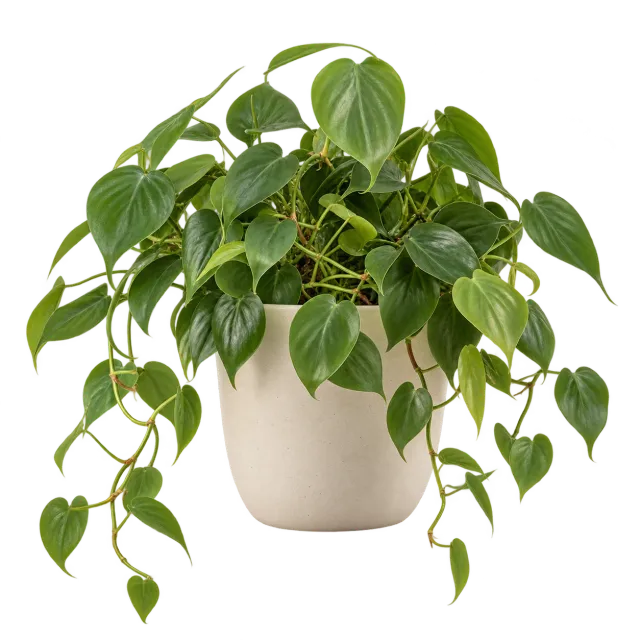
Already eaten — what now?
For dogs and cats
Urgent help neededRemove the plant and prevent further chewing. If it is safe, take visible pieces from the front of the mouth; do not force the mouth open or induce vomiting. Photograph the plant, estimate the amount and contact a veterinarian. Leave immediately for breathing or swallowing difficulty, increasing swelling, repeated vomiting or marked weakness.
Variants and ingredients
One small bite without severe signsFor dogs and cats: Dangerous
Brief chewing of a small piece with normal breathing and swallowing.
For dogs and cats
Conditions and restrictions
One brief bite or a small chewed piece, with normal breathing and swallowing. This does not make the plant safe: even a small exposure can be painful.
Benefits
There is no nutritional or therapeutic benefit. Philodendron is not pet food.
Risks
- Chewing releases insoluble needle-shaped calcium oxalate crystals that injure the lining of the mouth and throat.
- Possible signs include sudden mouth pain, drooling, pawing at the face, retching, vomiting, refusal of food and difficulty swallowing.
- In rare severe cases, swelling at the back of the throat can interfere with breathing.
Already eaten — what now?
Remove the plant and visible material from the front of the mouth if your pet calmly allows it. Contact a veterinarian for assessment and watch for drooling, pain, vomiting or refusal of food. Leave immediately if breathing or swallowing becomes difficult.
Several pieces or an unknown amountFor dogs and cats: Dangerous · Urgent help needed
A noticeable or unknown amount of leaves, stems, aerial roots or cuttings was chewed or swallowed.
For dogs and cats
Conditions and restrictions
The pet chewed several leaves or vines, swallowed a noticeable amount, or the amount is unknown.
Benefits
There is no nutritional or therapeutic benefit. Philodendron is not pet food.
Risks
- Chewing releases insoluble needle-shaped calcium oxalate crystals that injure the lining of the mouth and throat.
- Possible signs include sudden mouth pain, drooling, pawing at the face, retching, vomiting, refusal of food and difficulty swallowing.
- In rare severe cases, swelling at the back of the throat can interfere with breathing.
Already eaten — what now?
Call a veterinarian promptly and give the species, weight, plant part, estimated amount, time and signs. Keep a photograph or sample of the plant out of the pet’s reach. Do not induce vomiting. Breathing or swallowing difficulty, increasing swelling or marked weakness needs immediate care.
Breathing or swallowing difficultyFor dogs and cats: Dangerous · Especially dangerous
A rare severe scenario with a risk of throat swelling and airway obstruction.
For dogs and cats
Conditions and restrictions
There is breathing or swallowing difficulty, noisy breathing, or marked or increasing swelling of the tongue, lips or throat.
Benefits
There is no nutritional or therapeutic benefit. Philodendron is not pet food.
Risks
- Chewing releases insoluble needle-shaped calcium oxalate crystals that injure the lining of the mouth and throat.
- Possible signs include sudden mouth pain, drooling, pawing at the face, retching, vomiting, refusal of food and difficulty swallowing.
- In rare severe cases, swelling at the back of the throat can interfere with breathing.
Already eaten — what now?
Leave for an open veterinary clinic immediately and call on the way. Do not offer food or water, do not try to induce vomiting, and do not wait for the swelling to settle on its own.
Conditions and risks
For dogs and cats
Conditions and restrictions
Do not offer leaves, stems, aerial roots, cuttings or plant sap. Keep the pot and trailing vines out of reach and clear away trimmings at once.
Benefits
There is no nutritional or therapeutic benefit. Philodendron is not pet food.
Risks
- Chewing releases insoluble needle-shaped calcium oxalate crystals that injure the lining of the mouth and throat.
- Possible signs include sudden mouth pain, drooling, pawing at the face, retching, vomiting, refusal of food and difficulty swallowing.
- In rare severe cases, swelling at the back of the throat can interfere with breathing.
This card covers plants in the genus Philodendron. Common houseplant names are often mixed up, so photograph the whole plant and its label if possible. Monstera, Epipremnum and other aroids may look similar, but they are not synonyms for philodendron.
Our guide to ten hazardous houseplants explains where to keep philodendron and which signs may follow chewing.
Comments
No comments yet.