
Already eaten — what now?
For dogs and cats
Urgent help neededRemove the remainder and keep the packaging. If your pet reached loose powder, a whole seed, oil or an unknown amount, call a veterinarian promptly and give the species, weight, product, amount and time. After one small bite of prepared food with no other hazardous ingredient, observation is usually enough if the pet remains well. Do not induce vomiting unless a veterinarian tells you to.
Variants and ingredients
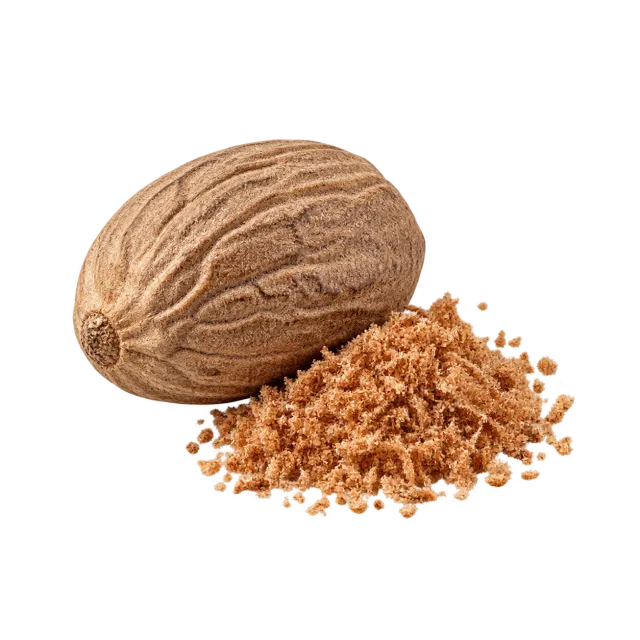
Whole seed, grated or ground nutmegFor dogs and cats: Dangerous · Urgent help needed
Plain spice in accessible packaging, spilled powder or a whole seed.
For dogs and cats
Conditions and restrictions
Do not offer a whole seed, grated nutmeg or loose powder as a treat or add it to a homemade diet.
Benefits
There is no nutritional reason to feed nutmeg to a pet.
Already eaten — what now?
Call a veterinarian promptly if your pet ate loose powder, part of a whole seed or an unknown amount. Give the weight, product form, estimated amount and time. Leave immediately for disorientation, marked drowsiness or agitation, tremors, seizures, collapse or breathing difficulty.
For dogs
Risks
- At a sufficient exposure, myristicin and other nutmeg constituents can cause abdominal pain, vomiting, agitation or drowsiness, disorientation, a fast heart rate, tremors and seizures.
- Signs may be delayed and can persist for up to two days.
- Baked goods and drinks may also contain chocolate, raisins, alcohol, xylitol or a large amount of fat.
For cats
Risks
- At a sufficient exposure, myristicin and other nutmeg constituents can cause abdominal pain, vomiting, agitation or drowsiness, disorientation, a fast heart rate, tremors and seizures.
- Experimental data indicate that cats are particularly sensitive to myristicin. No safe household threshold has been established for them.
- Signs may be delayed and can persist for up to two days.
Small culinary amount in prepared foodFor dogs and cats: With restrictions
One small accidental bite of baked food or another dish with known ingredients.
For dogs and cats
Conditions and restrictions
Only a small accidental bite of prepared food in which nutmeg was used as an ordinary culinary seasoning. The ingredients must be known and must not include chocolate, raisins, alcohol, xylitol or another hazard.
Benefits
Nutmeg does not make a dish beneficial to a pet. This variant only covers an accidental small bite.
Risks
- Even a small amount of unfamiliar rich or sweet food may cause vomiting or diarrhoea.
- The amount of spice in homemade or restaurant food may be unknown, and another ingredient may be more dangerous than nutmeg.
Already eaten — what now?
Check the recipe and remove the rest. After one small bite with no hazardous additions, observe if your pet remains well. Call a veterinarian if the amount or recipe is unknown, a larger amount was eaten, or vomiting, unusual drowsiness, agitation, poor coordination, tremors or a fast heartbeat develops.
Concentrated oil or extractFor dogs and cats: Dangerous · Urgent help needed
Essential oil, aromatic extract or another bottled concentrate.
For dogs and cats
Conditions and restrictions
Do not give concentrated oil or extract from a bottle by mouth or apply it to fur or skin. A controlled flavouring level in manufactured complete feed is not equivalent to using a concentrate at home.
Benefits
There is no nutritional reason to feed nutmeg to a pet.
Already eaten — what now?
Contact a veterinarian promptly and give the product, concentration, route of exposure, time and possible amount. Move the pet away from the source and prevent grooming of contaminated fur. Do not induce vomiting. Neurological signs, collapse or breathing difficulty need immediate care.
For dogs
Risks
- The oil concentrates myristicin, safrole, elemicin and other active constituents.
- Skin, eye and airway irritation, vomiting, altered behaviour, a fast heart rate, tremors and seizures are possible.
For cats
Risks
- The oil concentrates myristicin, safrole, elemicin and other active constituents.
- Cats are particularly sensitive to myristicin and may ingest more oil while grooming contaminated fur.
- Irritation, vomiting, altered behaviour, a fast heart rate, tremors, seizures and central nervous system depression are possible.
Conditions and risks
For dogs and cats
Conditions and restrictions
Do not deliberately feed the spice. Keep powder, whole seeds, extracts and oil out of reach. In prepared food, both the amount of spice and the full ingredient list matter.
Benefits
There is no nutritional reason to feed nutmeg to a pet.
For dogs
Risks
- At a sufficient exposure, myristicin and other nutmeg constituents can cause abdominal pain, vomiting, agitation or drowsiness, disorientation, a fast heart rate, tremors and seizures.
- Signs may be delayed and can persist for up to two days.
- Baked goods and drinks may also contain chocolate, raisins, alcohol, xylitol or a large amount of fat.
For cats
Risks
- At a sufficient exposure, myristicin and other nutmeg constituents can cause abdominal pain, vomiting, agitation or drowsiness, disorientation, a fast heart rate, tremors and seizures.
- Experimental data indicate that cats are particularly sensitive to myristicin. No safe household threshold has been established for them.
- Signs may be delayed and can persist for up to two days.
This card covers the seed of Myristica fragrans, the ground spice and oil made from it. Mace comes from another part of the fruit and is not assessed separately here. Check every ingredient in a mixed dish because chocolate, raisins, alcohol and xylitol can change the urgency.
If the dessert contains cocoa, also open the chocolate card. Risk depends on the product, amount and the pet’s weight.
Sources
- Pet Poison Helpline: Nutmeg and Cinnamon Toxicity
- EFSA FEEDAP Panel: Safety and efficacy of nutmeg oil as a feed additive
- National Toxicology Program: Nomination Background, Myristicin
- Hallström and Thuvander: Toxicological evaluation of myristicin
- National Toxicology Program: Toxicity Studies of Myristicin
Comments
No comments yet.