
Already eaten — what now?
For dogs and cats
Urgent help neededMake the electrical source safe first. Then call a veterinarian immediately and report whether the cable was connected, how much is missing, when it happened, your pet’s weight, and any burns, coughing, difficult breathing, vomiting or weakness. Do not pull visible wire from the mouth or anus, and do not induce vomiting.
Variants and ingredients
Live or possibly live cableFor dogs and cats: Dangerous · Especially dangerous
The pet chewed a cable connected to a socket, or its power status is unknown.
For dogs and cats
Conditions and restrictions
Treat any possible contact with mains electricity as an emergency, even if the pet currently looks normal.
Benefits
There is no benefit.
Risks
- Respiratory or cardiac arrest, burns and loss of consciousness can occur.
- Swelling of the mouth, throat or lungs may cause breathing difficulty after a delay.
- Powerful muscle contractions can cause additional injury.
Already eaten — what now?
Do not touch the pet or cable until the power is safely off. Once it is off, call an open clinic and leave immediately. If your pet is not breathing, follow the veterinarian’s instructions by phone; do not delay departure to inspect the burn at home.
Long piece or wire visible from the mouth or anusFor dogs and cats: Dangerous · Urgent help needed
A flexible length was swallowed; part may be anchored under the tongue, in the stomach or in the intestines.
For dogs and cats
Conditions and restrictions
Do not allow cable chewing. A visible end does not mean the object can be pulled out safely.
Benefits
There is no benefit.
Risks
- A linear foreign body can bunch the intestines and saw through the intestinal wall.
- Obstruction, perforation, peritonitis and surgery may result.
- Linear foreign bodies are especially common in cats, but dogs are affected too.
Already eaten — what now?
Do not pull or cut the visible end yourself. Do not feed your pet or induce vomiting. Limit movement, call a veterinarian immediately and arrange an examination.
Short piece swallowed or amount unknownFor dogs and cats: Dangerous · Urgent help needed
Some insulation, copper strand or cable is missing; its exact size may be unknown.
For dogs and cats
Conditions and restrictions
A pet’s appearance cannot show whether the piece will pass safely.
Benefits
There is no benefit.
Risks
- The piece can lodge in the oesophagus, stomach or intestines.
- Sharp metal strands can cut or puncture tissue.
- Vomiting, loss of appetite, drooling, pain and lethargy may develop later.
Already eaten — what now?
Remove the remainder, photograph the cable and estimate the missing length. Call a veterinarian immediately rather than waiting for signs. Do not induce vomiting or offer food until the veterinarian advises you.
Unplugged cable chewed but all parts remainFor dogs and cats: Dangerous
The cable was definitely not live, no material is missing, and nothing protrudes from the mouth.
For dogs and cats
Conditions and restrictions
This variant applies only when the absence of current and swallowed material is certain.
Benefits
There is no benefit. The cable is still not a suitable toy.
Risks
- Exposed strands and damaged insulation can cut the lips, tongue or gums and may fracture a tooth.
- The damaged cable becomes dangerous when it is next connected.
- Drooling, blood, pain, coughing or refusal to eat can indicate injury.
Already eaten — what now?
Remove the cable and do not reconnect it. If your pet is calm, look only at the front of the mouth without forcing the jaws open. Call a veterinarian promptly for blood, a burn, drooling, pain, coughing, difficulty swallowing, or any doubt that the cable is intact.
Conditions and risks
For dogs and cats
Conditions and restrictions
Keep cables out of reach. The main assessment covers both possible electrical contact and swallowing an unknown piece.
Benefits
There is no nutritional benefit. A cable is not a suitable chew or toy.
Risks
- Electric current can cause oral burns, abnormal breathing or heart rhythm, loss of consciousness and death.
- Airway or lung oedema may develop after an electrical injury rather than being obvious immediately.
- Insulation, metal strands and a long flexible piece can lodge, obstruct, cut or perforate the digestive tract.
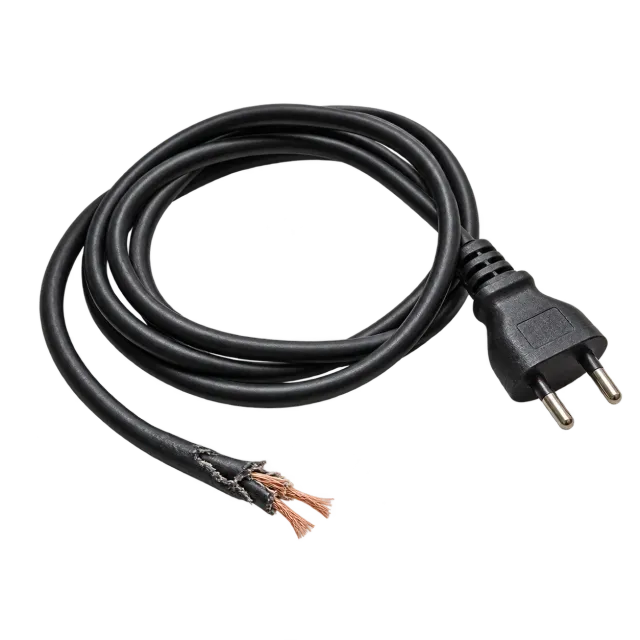
This card covers insulated household electrical wires and cables, including appliance cords, mains leads and charging cables. Batteries, separate adaptors, an extension unit as a whole and non-electrical string need separate assessment.
Sources
- Merck Veterinary Manual: Lightning Strike and Electrical Injury in Animals
- Díaz et al. (2024): Successful management of pulmonary edema secondary to accidental electrocution in a young dog
- Merck Veterinary Manual: Gastrointestinal Obstruction in Small Animals
- Hayes (2009): Gastrointestinal foreign bodies in dogs and cats: a retrospective study of 208 cases
- American College of Veterinary Surgeons: Gastrointestinal Foreign Bodies
Comments
No comments yet.