
Already eaten — what now?
For dogs and cats
After a small piece of plain fruit, observation is usually enough if your pet has no symptoms. Call a veterinarian without waiting for symptoms if the amount is large or unknown, or if leaves, stems, the calyx or a dish with onion or garlic were eaten. Repeated vomiting, pain or lethargy need veterinary advice; difficulty breathing, seizures or loss of consciousness need immediate care. Do not induce vomiting yourself.
Variants and ingredients
Plain cooked eggplantFor dogs and cats: With restrictions
Soft flesh of a boiled or baked food eggplant.
For dogs and cats
Conditions and restrictions
For a healthy pet, offer only a small soft piece of boiled or baked fruit without salt, oil or seasoning. Remove the stalk and green calyx. Ask your veterinarian first if your pet has a prescribed diet or has reacted to eggplant before.
Benefits
Eggplant is not needed in a complete diet and is not a treatment.
Risks
- Nausea and digestive upset are possible; a large portion is not considered safe.
- A large or firm piece can be a choking hazard.
Already eaten — what now?
Observe after a small plain piece if there are no symptoms. Contact a veterinarian for a large or unknown amount, vomiting, pain or lethargy. Choking with impaired breathing needs immediate help. Do not induce vomiting yourself.
Raw food eggplantFor dogs and cats: With restrictions
An accidentally eaten piece of flesh without the stalk or calyx.
For dogs and cats
Conditions and restrictions
Do not deliberately feed raw eggplant. This variant covers accidental ingestion of the flesh of an ordinary food eggplant without green plant parts or added ingredients.
Benefits
Eggplant is not needed in a complete diet and is not a treatment.
Risks
- Nausea and digestive upset are possible; a large portion is not considered safe.
- A large or firm piece can be a choking hazard.
Already eaten — what now?
Observe after a small plain piece if there are no symptoms. Contact a veterinarian for a large or unknown amount, vomiting, pain or lethargy. Choking with impaired breathing needs immediate help. Do not induce vomiting yourself.
Leaves, stems and green calyxFor dogs and cats: Dangerous · Urgent help needed
Non-food parts of eggplant, including stalks, flowers and roots.
For dogs and cats
Conditions and restrictions
Do not feed leaves, stems, flowers, roots, stalks or the green calyx. Keep plants and kitchen trimmings out of reach.
Benefits
No dietary benefit.
Risks
- Non-food parts contain toxic alkaloids and can cause poisoning. A small nibble does not mean severe poisoning is inevitable.
Already eaten — what now?
Remove the rest and call a veterinarian to assess the amount and plant part eaten. Keep a photo or sample. Repeated vomiting or marked weakness needs urgent examination; seizures, loss of consciousness or difficulty breathing need immediate care. Do not induce vomiting or give home remedies without veterinary instructions.
With onion or garlicFor dogs and cats: Dangerous · Urgent help needed
Spreads, rolls and other dishes containing onion, garlic or their powders.
For dogs and cats
Conditions and restrictions
Do not feed eggplant with onion, garlic or their powders. Boiling, baking and frying do not remove the toxicity of these ingredients.
Benefits
Unsuitable for feeding.
Already eaten — what now?
Call a veterinarian promptly, even if your pet seems normal. Give the ingredients, estimated amount, time and your pet’s weight. Pale gums, marked weakness or difficulty breathing need immediate help. Do not induce vomiting yourself.
For dogs
Risks
- Onion and garlic damage red blood cells and can cause anaemia. Signs may take several days to appear.
For cats
Risks
- Onion and garlic damage red blood cells and can cause anaemia. Cats are more susceptible than dogs; signs may take several days to appear.
Conditions and risks
For dogs and cats
Conditions and restrictions
For a healthy pet, offer only a small soft piece of boiled or baked fruit without salt, oil or seasoning. Remove the stalk and green calyx. Ask your veterinarian first if your pet has a prescribed diet or has reacted to eggplant before.
Benefits
Eggplant is not needed in a complete diet and is not a treatment.
Risks
- Nausea and digestive upset are possible; a large portion is not considered safe.
- A large or firm piece can be a choking hazard.
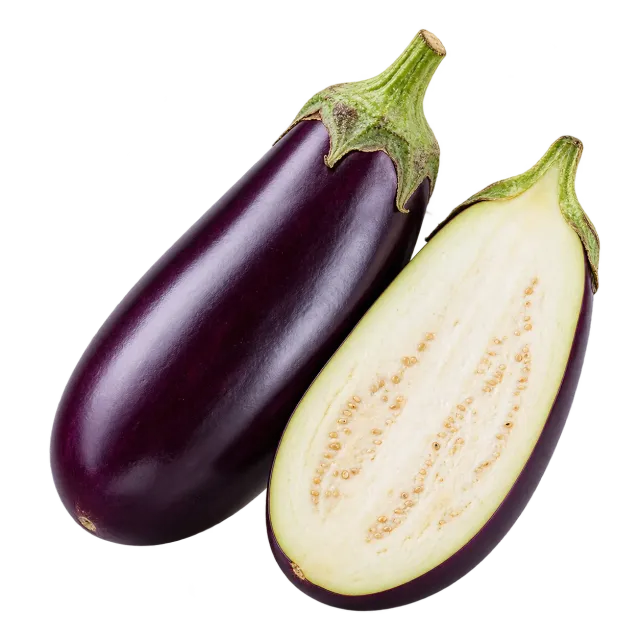
This card covers the ordinary food crop Solanum melongena. Eggplants are eaten at harvest maturity; there is no need to wait for yellowing fruit and hard seeds. Skin colour depends on the variety and does not determine safety by itself. The veterinary sources used here do not specify an exact safe serving of eggplant for dogs or cats.
Check the full recipe of eggplant spreads, fried slices and rolls. A dish name does not tell you whether it contains onion or garlic. Fatty and salty dishes are unsuitable treats; call a veterinarian after ingestion if the ingredients are unknown.
Sources
- Pet Poison Helpline: Nightshades
- Pet Poison Helpline: Other Nightshade Plants to Know About
- NC State Extension: Solanum melongena
- Lelario et al., 2019: glycoalkaloids in eggplant
- WSAVA: Feeding treats to your dog
- WSAVA: Feeding treats to your cat
- Merck Veterinary Manual: Garlic and Onion (Allium spp) Toxicosis in Animals
- ASPCA: What to Do if Your Pet Is Poisoned
- Cornell Feline Health Center: Common Cat Hazards
Comments
No comments yet.