
Already eaten — what now?
For dogs and cats
After a small amount of plain herb with no symptoms, observation is enough. Call the clinic immediately if your pet swallowed essential oil, got it on the skin or coat, or the product ingredients are unknown. Drooling, vomiting, lethargy, tremors, poor coordination, coughing or difficulty breathing need urgent assessment. Do not induce vomiting yourself.
Variants and ingredients
Fresh or dried herbFor dogs and cats: Acceptable
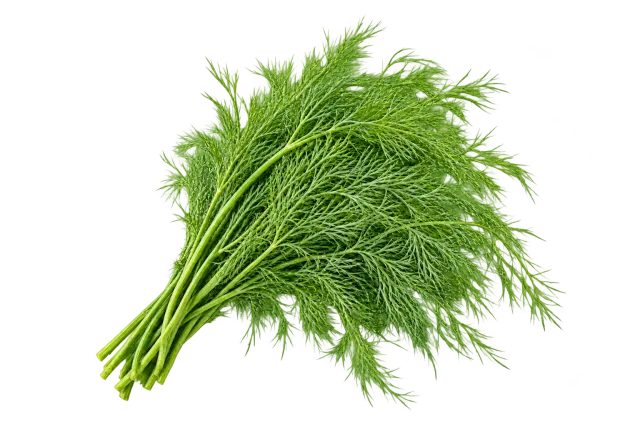
Dill leaves and fine stems with no oil, salt, sauce or other additions.
For dogs and cats
Conditions and restrictions
Offer only a pinch of washed fresh herb or plain dried dill with no additions. Ask your veterinarian first if your pet is unwell, has a food sensitivity or eats a prescribed diet.
Benefits
No special benefit is expected; it is only a flavouring alongside the normal diet.
Already eaten — what now?
After a small amount with no symptoms, simply observe. Call a veterinarian if repeated vomiting, diarrhoea, marked lethargy or another unusual sign develops.
Dill essential oilFor dogs and cats: Dangerous · Urgent help needed
A concentrated volatile oil used for fragrance, cosmetics or other purposes.
For dogs and cats
Conditions and restrictions
Do not give it by mouth, apply it to the skin or coat, or use it as a home treatment. The word “natural” does not reveal its concentration.
Benefits
There is no benefit for a pet.
Already eaten — what now?
After ingestion, skin exposure or licking oil from the coat, contact the clinic immediately. Prevent further licking and keep the bottle and label. Do not induce vomiting. Leave for urgent care if drooling, vomiting, lethargy, tremors, poor coordination, coughing or difficulty breathing develops.
For dogs
Risks
- Skin and mucous-membrane irritation, drooling, vomiting, lethargy, tremors and poor coordination may occur; risk rises with concentration.
For cats
Risks
- Cats are especially sensitive to essential oils. Irritation, drooling, vomiting, lethargy, tremors, poor coordination and other severe complications may occur.
Conditions and risks
For dogs and cats
Conditions and restrictions
This applies only to a small amount of fresh or dried herb with no salt, onion, garlic, sauce or other additions. Essential oil, supplements, medicinal extracts, seeds and “dill water” are outside this assessment.
Benefits
Dill is not nutritionally necessary. A pinch of the herb can be used only as flavouring alongside the usual diet.
Risks
- Dill essential oil is a concentrated form. It can be absorbed through the mouth, skin and lungs, and cats are more sensitive to essential oils.
The overall yellow rating reflects the form of the product. Plain dill herb is considered non-toxic and is suitable in small amounts. Essential oil is a concentrate and needs a separate assessment. The ingredients of a dish matter more than the dill garnish: onion, garlic, excess salt and other ingredients need their own assessment.
Sources
- ASPCA Animal Poison Control: Dill
- Kew Science, Plants of the World Online: Anethum graveolens L.
- Merck Veterinary Manual: Toxicoses From Essential Oils in Animals
- Pet Poison Helpline: Essential Oils
- WSAVA Nutrition Committee: Feeding Treats to Your Dog
- WSAVA Nutrition Committee: Feeding Treats to Your Cat
Comments
No comments yet.