
Already eaten — what now?
For dogs and cats
If your pet ate a little plain fresh cilantro and remains well, remove the rest and observe. Contact a veterinarian for vomiting, diarrhoea, drooling, lethargy, poor coordination, tremors or breathing difficulty. Call promptly if essential oil was swallowed, reached the coat or skin, or the dish has an unknown ingredient list. Do not induce vomiting unless a veterinarian tells you to.
Variants and ingredients
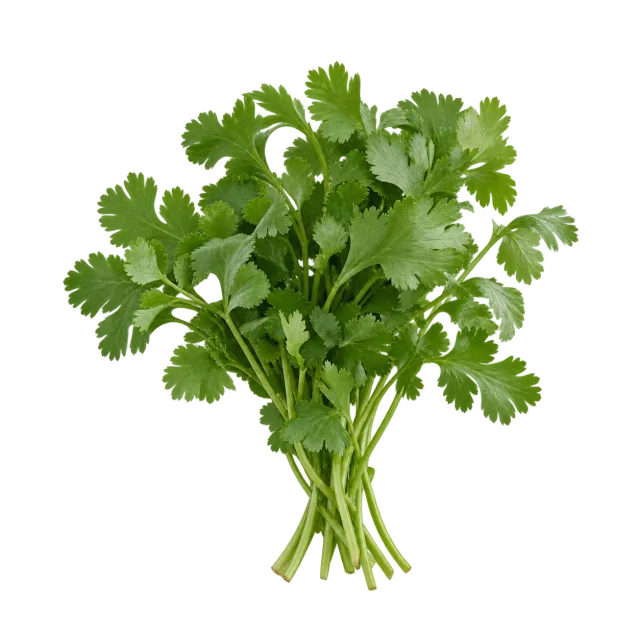
Fresh leaves and stemsFor dogs and cats: Acceptable
Plain fresh cilantro without sauce, seasoning or other ingredients.
For dogs and cats
Conditions and restrictions
Wash it, discard spoiled parts and offer only a small amount, chopping long stems. Serve without salt, oil, sauce, onion or garlic.
Benefits
A non-toxic aromatic herb, but pets do not need it added to their diet.
Risks
- Too much unfamiliar plant material may upset digestion.
- Long, tough stems and an oversized bunch can be awkward to swallow.
Already eaten — what now?
If a small amount of plain herb was eaten and there are no signs, observation is usually enough. Seek veterinary advice for repeated vomiting, diarrhoea, pain, coughing or breathing difficulty.
Coriander seedsFor dogs and cats: With restrictions
Whole or ground ripe coriander fruits used as a spice, without salty blends or extracts.
For dogs and cats
Conditions and restrictions
If used at all, limit it to a pinch of ground coriander without salt or other spices. Do not give concentrated supplements or medicinal extracts unless prescribed.
Benefits
A culinary amount may add aroma, but there is no proven benefit from adding coriander seed at home.
Risks
- Direct clinical evidence on feeding coriander seed to pet dogs and cats is limited.
- A large amount may upset digestion, and a seasoning blend may contain hazardous ingredients.
Already eaten — what now?
After a pinch of plain coriander with no signs, observe. Call a veterinarian if a large amount was eaten, the blend is unknown, or vomiting, diarrhoea, lethargy or pain develops.
Coriander essential oilFor dogs and cats: Dangerous · Urgent help needed
Concentrated oil distilled from coriander fruit in a bottle, not a trace flavouring level in manufactured feed.
For dogs and cats
Conditions and restrictions
Do not feed the oil, apply it to skin or coat, or add it to water. A controlled low concentration in manufactured feed is not the same as concentrated oil from a bottle.
Benefits
Using essential oil at home has no proven benefit for the pet.
Already eaten — what now?
Contact a veterinarian promptly and give the product, concentration, route of exposure, time and possible amount. Move the pet away from the source. Do not induce vomiting because oil can be aspirated into the lungs. Drooling, vomiting, lethargy, poor coordination, tremors, seizures or breathing difficulty require emergency care.
For dogs
Risks
- Essential oil is readily absorbed through the gastrointestinal tract, skin, lungs and mucous membranes.
- Drooling, vomiting, lethargy, poor coordination, tremors, skin or airway irritation may occur; severe reactions can affect the liver, kidneys and nervous system.
For cats
Risks
- Essential oil is readily absorbed through the gastrointestinal tract, skin, lungs and mucous membranes.
- Drooling, vomiting, lethargy, poor coordination, tremors, skin or airway irritation may occur; severe reactions can affect the liver, kidneys and nervous system.
- Cats are particularly vulnerable to essential oils because of their metabolism and their tendency to groom contaminated fur.
Conditions and risks
For dogs and cats
Conditions and restrictions
Identify the form first. A little plain, washed herb is acceptable. Use seeds only as a small culinary addition without salt or seasoning blends. Do not feed or apply essential oil.
Benefits
Fresh cilantro is non-toxic to dogs and cats. There is no established dietary benefit that makes it necessary to add it to their food.
Risks
- A large amount of an unfamiliar herb or seeds may cause vomiting, diarrhoea or reduced appetite.
- In salads, sauces and blends, the hazard often comes from another ingredient rather than cilantro.
- Essential oil is concentrated, readily absorbed and can irritate the skin, eyes, airways and gastrointestinal tract.
This card separates fresh cilantro leaves and stems, coriander seeds and essential oil. The rating does not cover salads, sauces or other dishes; check every ingredient first. Cilantro does not replace complete pet food.
Sources
- ASPCA Animal Poison Control: Cilantro
- ASPCA Animal Poison Control: Toxic and Non-Toxic Plants List
- EFSA FEEDAP Panel (2023): Safety and efficacy of coriander oil as a feed additive
- Merck Veterinary Manual: Toxicoses From Essential Oils in Animals
- WSAVA Global Nutrition Committee: Frequently Asked Questions and Myths
Comments
No comments yet.