
Already eaten — what now?
For dogs and cats
Urgent help neededRemove the drink, keep the bottle and call the clinic immediately. Give your pet’s species and weight, the cider’s alcohol strength, the possible amount and the time. Do not wait for symptoms or induce vomiting yourself. If your pet is unsteady, very drowsy, repeatedly vomiting, trembling, seizing, unconscious or struggling to breathe, leave for an open clinic while you call.
Variants and ingredients
Standard alcoholic ciderFor dogs and cats: Dangerous · Urgent help needed
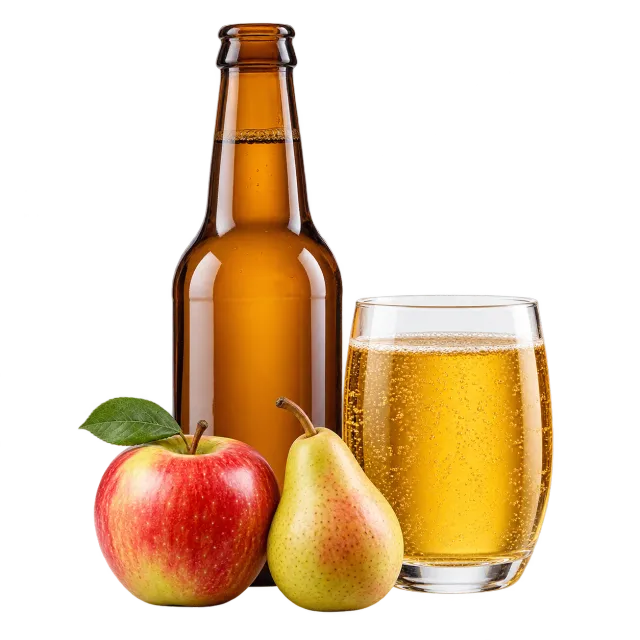
Apple or pear, still or sparkling cider containing ethanol.
For dogs and cats
Conditions and restrictions
Do not offer apple, pear, dry, sweet, still or sparkling cider that contains ethanol. A fruit base, sweetness and bubbles do not reduce the ethanol risk.
Benefits
Cider has no benefit for dogs or cats. Do not offer it as a drink, treat or way to “calm” a pet.
Risks
- Ethanol is absorbed quickly. Vomiting, drooling, poor coordination, disorientation, marked drowsiness and weakness may follow.
- Severe poisoning can lower body temperature and blood glucose and may cause metabolic acidosis, tremors, seizures, coma and respiratory depression.
- Vomiting while consciousness is depressed raises the risk of aspiration. Risk rises with alcohol strength and the amount swallowed relative to the pet’s size.
Already eaten — what now?
Remove the drink, keep the bottle and call the clinic immediately. Give your pet’s species and weight, the cider’s alcohol strength, the possible amount and the time. Do not wait for symptoms or induce vomiting yourself. If your pet is unsteady, very drowsy, repeatedly vomiting, trembling, seizing, unconscious or struggling to breathe, leave for an open clinic while you call.
Flavoured cider and cocktailsFor dogs and cats: Dangerous · Urgent help needed
Cider combined with other alcohol, sweeteners, spices or fruit additions.
For dogs and cats
Conditions and restrictions
Do not offer flavoured cider or a cider cocktail. The full recipe matters because other alcohol, sweeteners, spices and fruit additions may add separate hazards.
Benefits
Cider has no benefit for dogs or cats. Do not offer it as a drink, treat or way to “calm” a pet.
Risks
- Ethanol is absorbed quickly. Vomiting, drooling, poor coordination, disorientation, marked drowsiness and weakness may follow.
- Severe poisoning can lower body temperature and blood glucose and may cause metabolic acidosis, tremors, seizures, coma and respiratory depression.
- Vomiting while consciousness is depressed raises the risk of aspiration. Risk rises with alcohol strength and the amount swallowed relative to the pet’s size.
- Added ingredients can change the urgency and treatment needed. The drink name is not a substitute for the full ingredient list.
Already eaten — what now?
Remove the drink, keep the bottle and call the clinic immediately. Give your pet’s species and weight, the cider’s alcohol strength, the possible amount and the time. Do not wait for symptoms or induce vomiting yourself. If your pet is unsteady, very drowsy, repeatedly vomiting, trembling, seizing, unconscious or struggling to breathe, leave for an open clinic while you call.
Cider labelled 0.0%For dogs and cats: With restrictions
Only a product clearly labelled 0.0% with a known full ingredient list.
For dogs and cats
Conditions and restrictions
Do not offer it deliberately. The yellow rating applies only to a product clearly labelled 0.0% with a known ingredient list. “Non-alcoholic” without an actual percentage does not confirm that ethanol is absent.
Benefits
Even cider labelled 0.0% is unnecessary for a pet.
Risks
- Acids, sugar, carbonation and other additions may upset digestion.
- Some products described as non-alcoholic contain residual ethanol. Labelling differs by country, so the actual percentage on the bottle matters.
Already eaten — what now?
Check for a 0.0% label and read the full ingredient list. After one small accidental sip of that product, a pet with no symptoms can usually be observed with water available. Call the clinic if the percentage is missing, more was swallowed, hazardous ingredients are present, or vomiting, weakness or poor coordination develops.
Conditions and risks
For dogs and cats
Conditions and restrictions
Do not give apple or pear cider if it contains ethanol. Read the label for the alcohol strength and full ingredient list.
Benefits
Cider has no benefit for dogs or cats. Do not offer it as a drink, treat or way to “calm” a pet.
Risks
- Ethanol is absorbed quickly. Vomiting, drooling, poor coordination, disorientation, marked drowsiness and weakness may follow.
- Severe poisoning can lower body temperature and blood glucose and may cause metabolic acidosis, tremors, seizures, coma and respiratory depression.
- Vomiting while consciousness is depressed raises the risk of aspiration. Risk rises with alcohol strength and the amount swallowed relative to the pet’s size.
This card covers fermented apple or pear drinks. Fresh apple, apple juice and vinegar are assessed separately.
The red rating is based on ethanol. Our wine card covers another alcoholic drink, but alcohol strength and added ingredients must always be checked on the specific bottle.
Sources
- Merck Veterinary Manual: Toxicoses From Alcohols in Animals
- ASPCA Animal Poison Control: Drunk and Disorderly, Ethanol and Yeast Dough Intoxications
- Cornell University College of Veterinary Medicine: Small Animal Toxins
- Kammerer et al. (2001): Ethanol toxicosis from the ingestion of rotten apples by a dog
- Keno and Langston (2011): Treatment of accidental ethanol intoxication with hemodialysis in a dog
- UK HMRC: Alcoholic products technical guide, cider definition
- US TTB (2026): Low and No Alcohol Products
Comments
No comments yet.