
Already eaten — what now?
For dogs and cats
Urgent help neededRemove the drink, keep the bottle and call the clinic immediately. Give your pet’s species and weight, the beer’s alcohol strength, the possible amount and the time. Do not wait for symptoms or induce vomiting yourself. If your pet is unsteady, very drowsy, repeatedly vomiting, trembling, seizing, unconscious or struggling to breathe, leave for an open clinic while you call.
Variants and ingredients
Ordinary beerFor dogs and cats: Dangerous · Urgent help needed
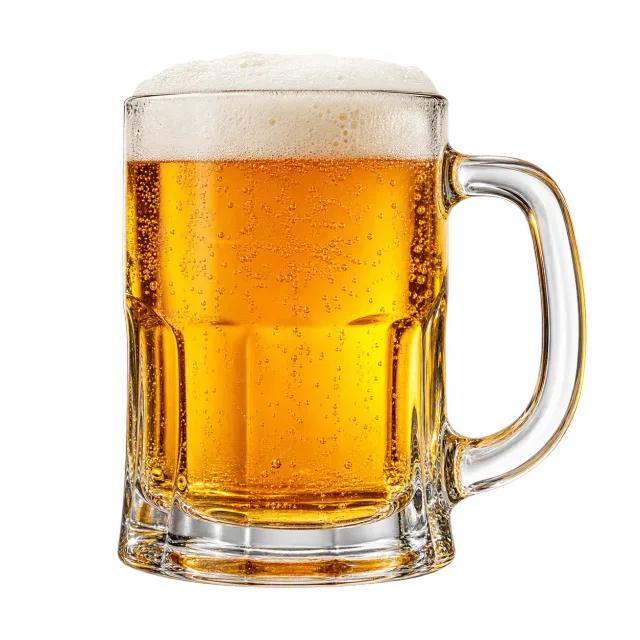
Lager, ale, stout, wheat, craft or unfiltered beer containing ethanol.
For dogs and cats
Conditions and restrictions
Do not offer ordinary beer containing ethanol. Colour, filtration, style and fermentation method do not remove the alcohol-poisoning risk.
Benefits
Beer has no benefit for dogs or cats. Do not offer it as a drink, treat or way to “calm” a pet.
Risks
- Ethanol is absorbed quickly. Vomiting, drooling, poor coordination, disorientation, marked drowsiness and weakness may follow.
- Severe poisoning can lower body temperature and blood glucose and may cause metabolic acidosis, tremors, seizures, coma and respiratory depression.
- Vomiting while consciousness is depressed raises the risk of aspiration. Risk rises with alcohol strength and the amount swallowed relative to the pet’s size.
Already eaten — what now?
Remove the drink, keep the bottle and call the clinic immediately. Give your pet’s species and weight, the beer’s alcohol strength, the possible amount and the time. Do not wait for symptoms or induce vomiting yourself. If your pet is unsteady, very drowsy, repeatedly vomiting, trembling, seizing, unconscious or struggling to breathe, leave for an open clinic while you call.
Strong beerFor dogs and cats: Dangerous · Urgent help needed
Beer with a higher alcohol content; the actual percentage depends on the product.
For dogs and cats
Conditions and restrictions
Do not offer strong beer. A higher alcohol percentage means more ethanol in the same volume. Check the label for the actual strength.
Benefits
Beer has no benefit for dogs or cats. Do not offer it as a drink, treat or way to “calm” a pet.
Risks
- Ethanol is absorbed quickly. Vomiting, drooling, poor coordination, disorientation, marked drowsiness and weakness may follow.
- Severe poisoning can lower body temperature and blood glucose and may cause metabolic acidosis, tremors, seizures, coma and respiratory depression.
- Vomiting while consciousness is depressed raises the risk of aspiration. Risk rises with alcohol strength and the amount swallowed relative to the pet’s size.
Already eaten — what now?
Remove the drink, keep the bottle and call the clinic immediately. Give your pet’s species and weight, the beer’s alcohol strength, the possible amount and the time. Do not wait for symptoms or induce vomiting yourself. If your pet is unsteady, very drowsy, repeatedly vomiting, trembling, seizing, unconscious or struggling to breathe, leave for an open clinic while you call.
Beer cocktails and flavoured beerFor dogs and cats: Dangerous · Urgent help needed
Beer combined with spirits, sweeteners, caffeine, fruit, spices or other additions.
For dogs and cats
Conditions and restrictions
Do not offer beer cocktails or flavoured beer. The full recipe matters because spirits, caffeine, chocolate, xylitol, grapes or other additions may create separate hazards.
Benefits
Beer has no benefit for dogs or cats. Do not offer it as a drink, treat or way to “calm” a pet.
Risks
- Ethanol is absorbed quickly. Vomiting, drooling, poor coordination, disorientation, marked drowsiness and weakness may follow.
- Severe poisoning can lower body temperature and blood glucose and may cause metabolic acidosis, tremors, seizures, coma and respiratory depression.
- Vomiting while consciousness is depressed raises the risk of aspiration. Risk rises with alcohol strength and the amount swallowed relative to the pet’s size.
- Added ingredients can change the urgency and treatment needed. A cocktail name is not a substitute for the full recipe.
Already eaten — what now?
Remove the drink, keep the bottle and call the clinic immediately. Give your pet’s species and weight, the beer’s alcohol strength, the possible amount and the time. Do not wait for symptoms or induce vomiting yourself. If your pet is unsteady, very drowsy, repeatedly vomiting, trembling, seizing, unconscious or struggling to breathe, leave for an open clinic while you call.
Beer labelled 0.0%For dogs and cats: With restrictions
Only a product clearly labelled 0.0% with a known full ingredient list.
For dogs and cats
Conditions and restrictions
Do not offer it deliberately. The yellow rating applies only to a product clearly labelled 0.0% with a known ingredient list. “Non-alcoholic” without an actual percentage does not confirm that ethanol is absent.
Benefits
Even beer labelled 0.0% gives a pet no useful reason to drink it.
Risks
- Acids, sugar and other additions may upset digestion.
- Some products described as non-alcoholic contain residual ethanol. Labelling differs by country, so the actual percentage on the bottle matters.
Already eaten — what now?
Check for a 0.0% label and read the full ingredient list. After one small accidental sip of that product, a pet with no symptoms can usually be observed with water available. Call the clinic if the percentage is missing, more was swallowed, hazardous ingredients are present, or vomiting, weakness or poor coordination develops.
Conditions and risks
For dogs and cats
Conditions and restrictions
Do not offer lager, ale, stout, wheat, unfiltered, craft or strong beer. Assessment needs the alcohol strength, amount swallowed and full ingredient list.
Benefits
Beer has no benefit for dogs or cats. Do not offer it as a drink, treat or way to “calm” a pet.
Risks
- Ethanol is absorbed quickly. Vomiting, drooling, poor coordination, disorientation, marked drowsiness and weakness may follow.
- Severe poisoning can lower body temperature and blood glucose and may cause metabolic acidosis, tremors, seizures, coma and respiratory depression.
- Vomiting while consciousness is depressed raises the risk of aspiration. Risk rises with alcohol strength and the amount swallowed relative to the pet’s size.
This card covers finished beer as a drink. Other alcoholic drinks have separate cards for wine and cognac or brandy.
Hops, hop pellets and wet spent hops from home brewing need a separate assessment. Swallowing hop plant material can cause dangerous overheating in dogs. Ethanol remains the main confirmed hazard in finished beer.
Sources
- Merck Veterinary Manual: Toxicoses From Alcohols in Animals
- ASPCA Animal Poison Control: Drunk and Disorderly, Ethanol and Yeast Dough Intoxications
- Merck Veterinary Manual: Hops Toxicosis in Animals
- Duncan et al. (1997): Malignant hyperthermia-like reaction secondary to ingestion of hops in five dogs
- Kammerer et al. (2001): Ethanol toxicosis from the ingestion of rotten apples by a dog
- Hovda et al. (2011): Treatment of accidental ethanol intoxication with hemodialysis in a dog
- US TTB (2026): Low and No Alcohol Products
Comments
No comments yet.