
Already eaten — what now?
For dogs and cats
If a healthy pet ate a little plain flesh and seems well, remove the rest and observe. Call your veterinarian for a large portion relative to your pet’s size, diabetes or signs of illness. Repeated vomiting, abdominal pain or marked lethargy need an urgent examination; breathing difficulty needs immediate help. For swallowed peel, see the separate variant.
Variants and ingredients
Plain ripe fleshFor dogs and cats: With restrictions
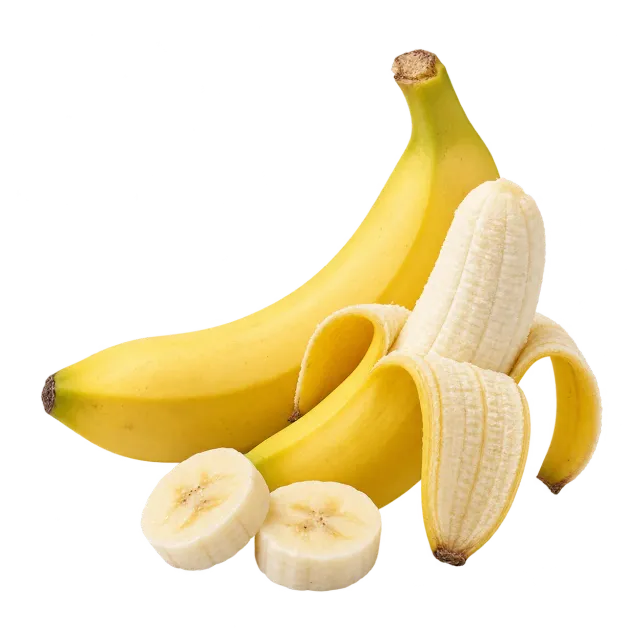
Fresh peeled banana in pieces or mashed. Let frozen mash soften before offering it; do not offer a whole hard frozen banana.
For dogs and cats
Conditions and restrictions
Peel a ripe banana and offer a little soft flesh in small pieces or mashed. Do not add sugar, syrup or other foods. All treats together should provide less than 10% of daily calories. Ask your veterinarian first if your pet has diabetes, excess weight or a prescribed diet.
Risks
- Too many treats add excess calories and displace complete food.
- Unfamiliar food or a large portion may upset the digestive system.
- A large piece can cause choking.
Already eaten — what now?
If a healthy pet ate a little plain flesh and seems well, remove the rest and observe. Call your veterinarian for a large portion relative to your pet’s size, diabetes or signs of illness. Repeated vomiting, abdominal pain or marked lethargy need an urgent examination; breathing difficulty needs immediate help. For swallowed peel, see the separate variant.
For dogs
Benefits
An occasional treat if your dog enjoys it. Banana is not necessary with a complete diet.
For cats
Benefits
Cats do not need banana. A tiny piece is acceptable as an occasional treat if your cat is interested.
PeelFor dogs and cats: Dangerous · Urgent help needed
Includes a banana swallowed with its peel.
For dogs and cats
Conditions and restrictions
Remove the entire peel and keep it out of reach. The red rating concerns swallowing peel, especially a whole peel or a long piece.
Benefits
Do not use the peel as a treat.
Risks
- Tough peel is difficult to digest; a large piece can lodge and cause an obstruction.
- Choking, vomiting and abdominal pain are possible. The red rating reflects a physical hazard; it does not classify the peel as a poison.
Already eaten — what now?
If peel was swallowed, call your veterinarian straight away with the piece size, time and your pet’s weight. Do not wait for symptoms after a whole peel or large piece. Simply licking the peel without swallowing it is a different situation. Do not induce vomiting yourself. Repeated vomiting, pain or refusal to eat need an urgent examination; leave for care immediately if your pet cannot breathe properly.
Plain dried bananaFor dogs and cats: With restrictions
Dried flesh, including chips only when banana is the sole ingredient and they have not been fried in oil.
For dogs and cats
Conditions and restrictions
Only peeled banana with no sugar, oil, coating or other additions. If offered, keep it to a tiny soft piece; do not offer hard slices. Ask your veterinarian first for diabetes, excess weight or a prescribed diet. Fried chips and mixed products are outside this variant.
Benefits
It has no advantage over fresh flesh as a treat.
Risks
- Removing water concentrates calories into a smaller mass, so a small-looking piece is easy to underestimate.
- A hard piece can cause choking; a large portion may upset the digestive system.
Already eaten — what now?
Check the ingredients. After a tiny piece of plain dried banana with no symptoms, observation is usually enough. Call your veterinarian if a lot was eaten, the ingredients are unknown or your pet has a medical condition. Repeated vomiting, pain or marked lethargy need an urgent examination; breathing difficulty needs immediate help.
Conditions and risks
For dogs and cats
Conditions and restrictions
Peel a ripe banana and offer a little soft flesh in small pieces or mashed. Do not add sugar, syrup or other foods. All treats together should provide less than 10% of daily calories. Ask your veterinarian first if your pet has diabetes, excess weight or a prescribed diet.
Risks
- Too many treats add excess calories and displace complete food.
- Unfamiliar food or a large portion may upset the digestive system.
- A large piece can cause choking.
For dogs
Benefits
An occasional treat if your dog enjoys it. Banana is not necessary with a complete diet.
For cats
Benefits
Cats do not need banana. A tiny piece is acceptable as an occasional treat if your cat is interested.
This card covers ordinary dessert bananas. The main yellow rating applies to ripe, peeled flesh: banana is sweet, so keep the portion small. Do not use banana to treat diarrhoea or constipation.
Banana bread, ice cream, smoothies and fried chips need an assessment of every ingredient. If a dessert contains chocolate or cocoa, call a veterinarian straight away. A dog that has eaten a product containing xylitol needs immediate help. The same xylitol risk has not been established in cats; still tell your veterinarian the ingredients and amount of dessert eaten.
Sources
- ASPCA Poison Control: Banana (Musa acuminata)
- PDSA: Vet-approved cat-friendly pancake recipe
- WSAVA: Feeding treats to your dog
- WSAVA: Feeding treats to your cat
- VCA Animal Hospitals: Can you feed pets certain fruits and veggies
- AKC: Can dogs eat bananas?
- PDSA: Gut blockages in dogs
- VCA Animal Hospitals: Ingestion of foreign bodies in cats
- Colorado State University Extension: Drying fruits
- ASPCA Poison Control: People foods to avoid feeding your pets
- FDA: Paws off xylitol; it is dangerous for dogs
- Jerzsele et al., 2018: Effects of p.o. administered xylitol in cats
Comments
No comments yet.