
Already eaten — what now?
For dogs and cats
After a small piece of plain flesh with no symptoms, observe your pet. Call a veterinarian if a large or unknown amount was eaten, or if repeated vomiting, abdominal pain, marked lethargy or refusal to eat develops. Do not induce vomiting yourself.
Variants and ingredients
Ripe fleshFor dogs and cats: With restrictions
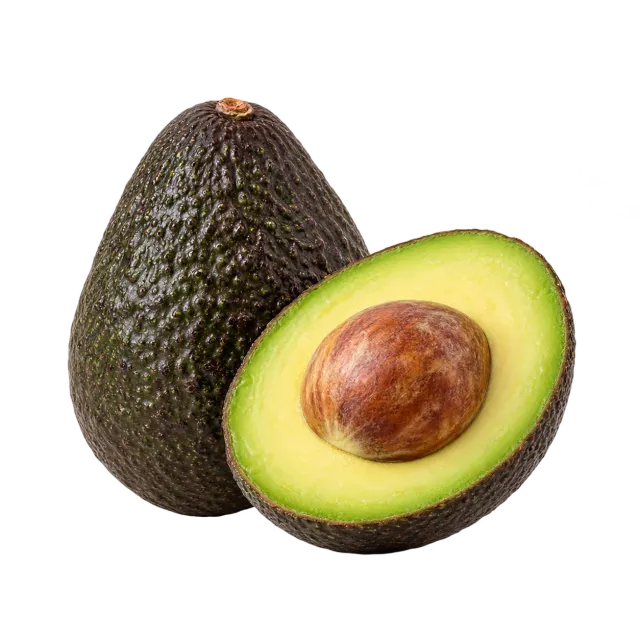
Plain flesh with no skin, pit or added ingredients.
For dogs and cats
Conditions and restrictions
Only ripe flesh with no skin, pit, salt, seasoning, sauce, onion or garlic. If you offer it at all, limit it to a small piece. Do not offer it without veterinary advice if your pet has pancreatitis, excess weight, a sensitive stomach or a prescribed diet.
Benefits
Avocado contains fat and fibre, but pets do not need it: a complete diet already meets their nutritional needs.
Risks
- Because it is high in fat, a large amount may cause vomiting or diarrhoea and can trigger pancreatitis in a susceptible pet.
- Evidence about persin in cats and dogs is limited; the flesh should not be treated as suitable for unrestricted feeding.
Already eaten — what now?
After a small piece of plain flesh with no symptoms, observe your pet. Call a veterinarian if a large or unknown amount was eaten, or if repeated vomiting, abdominal pain, marked lethargy or refusal to eat develops. Do not induce vomiting yourself.
Whole pit or large fragmentFor dogs and cats: Dangerous · Urgent help needed
A mechanical hazard even when the pit has not been chewed.
For dogs and cats
Conditions and restrictions
Do not offer a whole pit or large pit fragments as a toy or chew.
Benefits
There is no benefit for a pet.
Risks
- A whole pit or large fragment can lodge in the throat, stomach or intestine and cause choking or an obstruction.
- If an obstruction develops, delay raises the risk of intestinal injury and surgery.
Already eaten — what now?
If your pet swallowed the pit or a large fragment, call an open clinic immediately. Leave at once for choking, unproductive retching, repeated vomiting, pain, abdominal swelling, weakness or refusal to eat. Do not assume the pit will pass and do not induce vomiting unless a veterinarian tells you to.
Skin, leaves or stemFor dogs and cats: With restrictions · Urgent help needed
Inedible fruit and plant parts with no established persin dose for dogs or cats.
For dogs and cats
Conditions and restrictions
Do not offer the skin, leaves or stems, and keep the plant out of reach.
Benefits
There is no benefit for a pet.
Risks
- Persin occurs in several parts of avocado, and the leaves are considered the most toxic part of the plant for susceptible species.
- No precise toxic dose has been established for dogs or cats, and the skin may also cause digestive upset or act as a foreign body.
Already eaten — what now?
Call a veterinarian the same day and report the species, weight, part of the avocado and possible amount eaten. Leave immediately for difficult breathing, weakness, collapse, repeated vomiting or rapid deterioration. Do not induce vomiting yourself.
Guacamole with onion or garlicFor dogs and cats: Dangerous · Urgent help needed
A mixture whose risk is driven by toxic Allium ingredients.
For dogs and cats
Conditions and restrictions
Do not offer guacamole or other dishes containing onion, garlic, chives or onion powder.
Benefits
There is no benefit for a pet.
Risks
- Raw, cooked and concentrated onion or garlic can damage red blood cells and cause haemolytic anaemia.
- Signs of anaemia may be delayed for several days; cats are more susceptible than dogs.
Already eaten — what now?
Call a veterinarian immediately and keep the recipe or packaging. Give your pet’s weight, the full ingredient list, possible amount and time. Leave at once for weakness, pale gums, rapid breathing, dark urine or collapse. Do not wait for symptoms or induce vomiting yourself.
Conditions and risks
For dogs and cats
Conditions and restrictions
Only ripe flesh with no skin, pit, salt, seasoning, sauce, onion or garlic. If you offer it at all, limit it to a small piece. Do not offer it without veterinary advice if your pet has pancreatitis, excess weight, a sensitive stomach or a prescribed diet.
Benefits
Avocado contains fat and fibre, but pets do not need it: a complete diet already meets their nutritional needs.
Risks
- Because it is high in fat, a large amount may cause vomiting or diarrhoea and can trigger pancreatitis in a susceptible pet.
- Evidence about persin in cats and dogs is limited; the flesh should not be treated as suitable for unrestricted feeding.
This card assesses ripe flesh, the pit, skin and plant parts separately, along with guacamole containing onion or garlic. Persin is hazardous to some animals, especially birds and large herbivores. Rare suspected heart injury has been reported in dogs, although dogs appear relatively resistant; evidence in cats is even thinner. We therefore assess the form and circumstances instead of treating avocado as unconditionally safe.
Sources
- Merck Veterinary Manual: Avocado (Persea spp) Toxicosis in Animals
- ASPCA Animal Poison Control: The Scoop on Avocado and Your Pets
- Buoro et al. (1994): Putative avocado toxicity in two dogs
- Dainton et al. (2022): Avocado meal as a dietary fibre source in an extruded canine diet
- Merck Veterinary Manual: Garlic and Onion (Allium spp) Toxicosis in Animals
- WSAVA Nutrition Committee: Feeding Treats to Your Dog
- WSAVA Nutrition Committee: Feeding Treats to Your Cat
Comments
No comments yet.